In late March there began eBird Florida Rare Bird Alerts from Government Road in Broward County for White-tailed Kite which is a species I have had great difficulty in observing at close range successfully.
The Common Grackle above (image 1) was photographed at Snake Road in April 2016.
Government Road, which is more appropriately named Snake Road due to its curvaceous design, can lead one north from Alligator Alley (I-75) at mile marker 49 and the Miccosukee Service Plaza. It is this road where the White-tailed Kite had been seen and reported to eBird by Steven Kaplan, Nick DeCesare, Mark Berney, Nancy Price and David Hall prior to my visit in early April. David Hall's photography of the White-tailed Kites from 3 April is nothing less than extraordinary.
The Eastern Meadowlark above (image 2) was photographed at Snake Road in April 2016.
The Cattle Egret above (image 3) was photographed at Snake Road in April 2016.
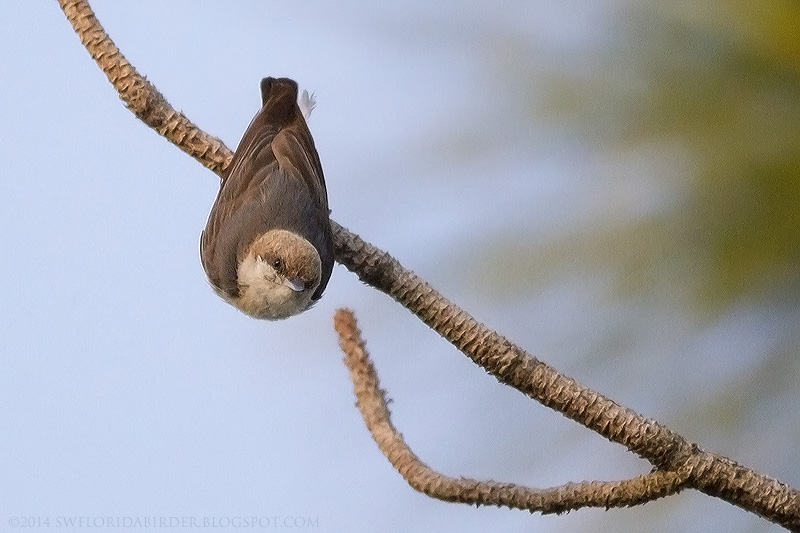
The Brown Thrasher above (image 4) was photographed at Snake Road in April 2016.
Patches of fog burned off quickly after sunrise. My primary observation point (looking west) was at the tank structures on the east side of Snake Road less than a few miles from Alligator Alley. The facility handles petroleum crude oil as indicated by the Department of Transportation warning on the trucks that came and went from the site.
The Tree Swallow above (image 5) was photographed at Snake Road in April 2016.
The Barn Swallow above (image 6) was photographed at Snake Road in April 2016.
The Red-shouldered Hawk with prey above (image 7) was photographed at Snake Road in April 2016.
The Wood Stork above (image 8) was photographed at Snake Road in April 2016.
There had previously been speculation as to what the tanks contain. This landmark is on the opposite side of the road where the White-tailed Kites had most recently been reported. There was a significant amount of other traffic on the highway that made the environment less than ideal for observations. I was surprised by the number of vehicles passing at a much higher speed than the limit.
The Wood Stork above (image 9) was photographed at Snake Road in April 2016.
The Brown Thrasher above (image 10) was photographed at Snake Road in April 2016.
The Black-crowned Night-Heron above (image 11) was photographed at Snake Road in April 2016.
The Black-crowned Night-Heron above (image 12) was photographed at Snake Road in April 2016.
A pair of Swallow-tailed Kites made a flyover from west to east very late in the morning. Earlier a Northern Harrier was observed soaring at a great distance to the west. Its photograph is diagnostic. There were a number of bird calls heard that I could not identify which otherwise would have been helpful in creating a more accurate list for the morning beyond the 30 species seen.
The Eastern Meadowlark with Red-winged Blackbird above (image 13) was photographed at Snake Road in April 2016.
The Eastern Meadowlark above (image 14) was photographed at Snake Road in April 2016.
The Anhinga above (image 15) was photographed at Snake Road in April 2016.
The Wood Stork above (image 16) was photographed at Snake Road in April 2016.
It was rewarding to find that Eastern Meadowlark is dominant over Red-winged Blackbird. Image #2 reminds me why I will never use the lens extender again (last time, I promise). I drove as far as the Big Cypress Seminole Reservation before heading back home to yet again have White-tailed Kites elude me.
The Great Egret above (image 17) was photographed at Snake Road in April 2016.
The Wood Stork above (image 18) was photographed at Snake Road in April 2016.
The Swallow-tailed Kite above (image 19) was photographed at Snake Road in April 2016.
The Turkey Vulture above (image 20) was photographed at Snake Road in April 2016.
Please be sure to be reminded about this weekly Southwest Florida Wildlife Blog with the email gadget located at the top of the page.
The Swallow-tailed Kite above (image 21) was photographed at Snake Road in April 2016.
Showing posts with label eastern meadowlark. Show all posts
Friday, April 22, 2016
Friday, May 22, 2015
Dinner Island Ranch WMA
Well worth the drive from the southwest Florida Gulf beaches is another wildlife venue called Dinner Island Ranch Wildlife Management Area that can occupy your entire day.
The Swallow-tailed Kite above (image 1) was photographed at Dinner Island Ranch WMA in May 2015.
The observations made at Dinner Island Ranch WMA on 16 May were better than expected, with photo documentation unfortunately not anywhere near representative of that which was seen and heard.
The Swallow-tailed Kite above (image 2) was photographed at Dinner Island Ranch WMA in May 2015.
The Swallow-tailed Kite above (image 3) was photographed at Dinner Island Ranch WMA in May 2015.
The Swallow-tailed Kite above (image 4) was photographed at Dinner Island Ranch WMA in May 2015.
The Swallow-tailed Kite above (image 5) was photographed at Dinner Island Ranch WMA in May 2015.
The first birds seen after entering the huge wildlife venue were Eastern Meadowlark. They could additionally be heard throughout the WMA. While the Northern Bobwhite was heard in seemingly equal numbers, the elusive species was not seen.
The Swallow-tailed Kite above (image 6) was photographed at Dinner Island Ranch WMA in May 2015.
The Swallow-tailed Kite above (image 7) was photographed at Dinner Island Ranch WMA in May 2015.
The Swallow-tailed Kite above (image 8) was photographed at Dinner Island Ranch WMA in May 2015.
The Swallow-tailed Kite above (image 9) was photographed at Dinner Island Ranch WMA in May 2015.
A pair of Swallow-tailed Kite were observed early and were followed west until they could no longer be seen. A lone Limpkin was observed very close to the roadway, but was not tolerant for a photo op even at a great range.
The Limpkin above (image 10) was photographed at Dinner Island Ranch WMA in May 2015.
The cattle above (image 11) was photographed at Dinner Island Ranch WMA in May 2015.
The Eastern Meadowlark above (image 12) was photographed at Dinner Island Ranch WMA in May 2015.
The Eastern Meadowlark above (image 13) was photographed at Dinner Island Ranch WMA in May 2015.
Perhaps the most enjoyable moment was when a Red-shouldered Hawk was observed to carry away what appeared a three foot Black Racer snake. This was an occasion when I was reminded of Frank Constantin telling me of his success by using the car as a blind for photography.
The Eastern Meadowlark above (image 14) was photographed at Dinner Island Ranch WMA in May 2015.
The Red-shouldered Hawk above (image 15) was photographed at Dinner Island Ranch WMA in May 2015.
The Common Ground Dove above (image 16) was photographed at Dinner Island Ranch WMA in May 2015.
The Cattle Egret above (image 17) was photographed at Dinner Island Ranch WMA in May 2015.
This trip to Dinner Island Ranch WMA was extremely enjoyable with the venue recommended to you for your potential interest. The cattle were in much larger numbers on this trip to the "working ranch," and had to be prodded out of the way from the middle of the road on occasion.
The cattle above (image 17) was photographed at Dinner Island Ranch WMA in May 2015.
The White-tailed Deer above (image 18) was photographed at Dinner Island Ranch WMA in May 2015.
The White-tailed Deer above (image 19) was photographed at Dinner Island Ranch WMA in May 2015.
The White-tailed Deer above (image 20) was photographed at Dinner Island Ranch WMA in May 2015.
Hunting at this venue is permitted, so you are encouraged to be aware of approved hunt dates.
The Turkey Vulture above (image 21) was photographed at Dinner Island Ranch WMA in May 2015.
Please see my initial report about this venue for additional thoughts and observations.
The Swallow-tailed Kite above (image 1) was photographed at Dinner Island Ranch WMA in May 2015.
The observations made at Dinner Island Ranch WMA on 16 May were better than expected, with photo documentation unfortunately not anywhere near representative of that which was seen and heard.
The Swallow-tailed Kite above (image 2) was photographed at Dinner Island Ranch WMA in May 2015.
The Swallow-tailed Kite above (image 3) was photographed at Dinner Island Ranch WMA in May 2015.
The Swallow-tailed Kite above (image 4) was photographed at Dinner Island Ranch WMA in May 2015.
The Swallow-tailed Kite above (image 5) was photographed at Dinner Island Ranch WMA in May 2015.
The first birds seen after entering the huge wildlife venue were Eastern Meadowlark. They could additionally be heard throughout the WMA. While the Northern Bobwhite was heard in seemingly equal numbers, the elusive species was not seen.
The Swallow-tailed Kite above (image 6) was photographed at Dinner Island Ranch WMA in May 2015.
The Swallow-tailed Kite above (image 7) was photographed at Dinner Island Ranch WMA in May 2015.
The Swallow-tailed Kite above (image 8) was photographed at Dinner Island Ranch WMA in May 2015.
The Swallow-tailed Kite above (image 9) was photographed at Dinner Island Ranch WMA in May 2015.
A pair of Swallow-tailed Kite were observed early and were followed west until they could no longer be seen. A lone Limpkin was observed very close to the roadway, but was not tolerant for a photo op even at a great range.
The Limpkin above (image 10) was photographed at Dinner Island Ranch WMA in May 2015.
The cattle above (image 11) was photographed at Dinner Island Ranch WMA in May 2015.
The Eastern Meadowlark above (image 12) was photographed at Dinner Island Ranch WMA in May 2015.
The Eastern Meadowlark above (image 13) was photographed at Dinner Island Ranch WMA in May 2015.
Perhaps the most enjoyable moment was when a Red-shouldered Hawk was observed to carry away what appeared a three foot Black Racer snake. This was an occasion when I was reminded of Frank Constantin telling me of his success by using the car as a blind for photography.
The Eastern Meadowlark above (image 14) was photographed at Dinner Island Ranch WMA in May 2015.
The Red-shouldered Hawk above (image 15) was photographed at Dinner Island Ranch WMA in May 2015.
The Common Ground Dove above (image 16) was photographed at Dinner Island Ranch WMA in May 2015.
The Cattle Egret above (image 17) was photographed at Dinner Island Ranch WMA in May 2015.
This trip to Dinner Island Ranch WMA was extremely enjoyable with the venue recommended to you for your potential interest. The cattle were in much larger numbers on this trip to the "working ranch," and had to be prodded out of the way from the middle of the road on occasion.
The cattle above (image 17) was photographed at Dinner Island Ranch WMA in May 2015.
The White-tailed Deer above (image 18) was photographed at Dinner Island Ranch WMA in May 2015.
The White-tailed Deer above (image 19) was photographed at Dinner Island Ranch WMA in May 2015.
The White-tailed Deer above (image 20) was photographed at Dinner Island Ranch WMA in May 2015.
Hunting at this venue is permitted, so you are encouraged to be aware of approved hunt dates.
The Turkey Vulture above (image 21) was photographed at Dinner Island Ranch WMA in May 2015.
Please see my initial report about this venue for additional thoughts and observations.
Friday, May 23, 2014
A Garden Of Eden: Part I
Before this writing, nearly a week had passed since Tom Wymelenberg advised me of a Northern Flicker nest cavity at the Babcock-Webb Wildlife Management Area resulting in my re-visit to the magnificent wildlife venue on the morning of 21 May.
The scene above was photographed at Babcock-Webb wildlife management area in May 2014.
Tom W had given very good directions to the nest, but I failed to see activity at dawn and at the later noon time observation. If I were looking in the right area, I would speculate that my relatively brief observation time of an hour at this spot was poor, that there was a tragic event of predation, or the birds simply fledged the nest which is my hope.
The Pine Warbler above was photographed at Babcock/ Webb Wildlife Management Area in May 2014.
The Brown-headed Nuthatch above was photographed at Babcock/ Webb Wildlife Management Area in May 2014.
While I have not made many trips to Babcock-Webb WMA, this latest visit was immensely enjoyable with greater time spent here in a day than compared to any other venue that I recall.
The banded Red-cockaded Woodpecker above was photographed at Babcock/ Webb Wildlife Management Area in May 2014.
Tom had advised of Common Nighthawk on the ground. Not knowing where he was referring to, I as well had a very close encounter with the species which nests here.
The banded Red-cockaded Woodpecker above was photographed at Babcock/ Webb Wildlife Management Area in May 2014.
The Eastern Meadowlark above was photographed at Babcock/ Webb Wildlife Management Area in May 2014.
It was rewarding to see that the Red-cockaded Woodpeckers were active and banded. It is possible that the birds are merely establishing relationships at this point.
The Eastern Meadowlark above was photographed at Babcock/ Webb Wildlife Management Area in May 2014.
The Common Nighthawk above was photographed at Babcock/ Webb Wildlife Management Area in May 2014.
While the Babcock-Webb Wildlife Management Area can certainly be considered as near nirvana which I have known for some time, it wasn't until this week that I found what I would describe as a wildlife garden of eden.
The Common Nighthawk above was photographed at Babcock/ Webb Wildlife Management Area in May 2014.
The Northern Flicker above was photographed at Babcock/ Webb Wildlife Management Area in May 2014.
This place will hopefully be able to be revisited before it floods while certainly reported about further next week.
The Common Ground Dove above was photographed at Babcock/ Webb Wildlife Management Area in May 2014.
Please also see: A Garden Of Eden Part II
Please also see: A Garden Of Eden Part III
The scene above was photographed at Babcock-Webb wildlife management area in May 2014.
Tom W had given very good directions to the nest, but I failed to see activity at dawn and at the later noon time observation. If I were looking in the right area, I would speculate that my relatively brief observation time of an hour at this spot was poor, that there was a tragic event of predation, or the birds simply fledged the nest which is my hope.
The Pine Warbler above was photographed at Babcock/ Webb Wildlife Management Area in May 2014.
The Brown-headed Nuthatch above was photographed at Babcock/ Webb Wildlife Management Area in May 2014.
While I have not made many trips to Babcock-Webb WMA, this latest visit was immensely enjoyable with greater time spent here in a day than compared to any other venue that I recall.
The banded Red-cockaded Woodpecker above was photographed at Babcock/ Webb Wildlife Management Area in May 2014.
Tom had advised of Common Nighthawk on the ground. Not knowing where he was referring to, I as well had a very close encounter with the species which nests here.
The banded Red-cockaded Woodpecker above was photographed at Babcock/ Webb Wildlife Management Area in May 2014.
The Eastern Meadowlark above was photographed at Babcock/ Webb Wildlife Management Area in May 2014.
It was rewarding to see that the Red-cockaded Woodpeckers were active and banded. It is possible that the birds are merely establishing relationships at this point.
The Eastern Meadowlark above was photographed at Babcock/ Webb Wildlife Management Area in May 2014.
The Common Nighthawk above was photographed at Babcock/ Webb Wildlife Management Area in May 2014.
While the Babcock-Webb Wildlife Management Area can certainly be considered as near nirvana which I have known for some time, it wasn't until this week that I found what I would describe as a wildlife garden of eden.
The Common Nighthawk above was photographed at Babcock/ Webb Wildlife Management Area in May 2014.
The Northern Flicker above was photographed at Babcock/ Webb Wildlife Management Area in May 2014.
This place will hopefully be able to be revisited before it floods while certainly reported about further next week.
The Common Ground Dove above was photographed at Babcock/ Webb Wildlife Management Area in May 2014.
Please also see: A Garden Of Eden Part II
Please also see: A Garden Of Eden Part III
Subscribe to:
Posts (Atom)