
 The Least Tern above was photographed at Estero Lagoon in June 2011.
Although the visits to the Refuge were made on consecutive days, the experiences were remarkably different.
By far the most evident species seen was the Least Tern which is nesting successfully at the Lagoon.
 The Least Tern above was photographed at Estero Lagoon in June 2011.
I would guestimate their numbers at about thirty-five individuals including those already hatched.
The Least Tern was seen in its greatest numbers at one time when a Fish Crow made an overflight of the nesting area.
 The Least Tern above was photographed at Estero Lagoon in June 2011.
The terns were very aggressive in defending their territory chasing the crow from the area successfully.
Another interesting phenomenon observed were large numbers of Florida fighting conch washed up on the beach both days, though not as abundantly on the second visit.
 The Florida fighting conch above was photographed at Estero Lagoon in June 2011.
These shells all contained live mollusks and would of course be against the law to collect.
Although the Least Terns have already been successful in producing their young, waves of late arrivals in their migration from South America will offer the opportunity to observe different stages of young through August as has been my experience.
 The shelling enthusiast above was photographed at Estero Lagoon in June 2011.
Several pairs of Least Tern were observed engaging in the start of their mating rituals this week.
The latest an adult has been observed in the area was either very late October or early November last year as I recall.
 The Least Tern above was photographed at Estero Lagoon in June 2011.
Little Estero Critical Wildlife Area as the Lagoon is officially known utilizes Least Tern decoys that are placed in pairs and are in greater numbers than those at Lovers Key State Park immediately to the south.
This might explain why there have been more terns observed at the Lagoon than at Lovers Key this season.
 The Least Tern decoys above were photographed at Estero Lagoon in June 2011.
Brown Pelicans were seen in numbers less than a dozen on both visits though apparently feeding well.
Royal Terns, Laughing Gulls (harassing the pelicans), White Ibis, Osprey, Snowy Plover, Great Egret, Little Blue Heron, and Sanderling were otherwise seen both days on or flying over the beach.
 The Brown Pelican above was photographed at Estero Lagoon in June 2011.
As sunset arrived on day one, I was of course struggling to capture an interesting wildlife image in very poor light.
It was at that time that an American Oystercatcher arrived on the scene.
 The American Oystercatcher above was photographed at Estero Lagoon in June 2011.
I managed to capture a lot of blurry shots of it, fearing to push the ISO equivalent of the camera beyond 800 which I've noted should not be done to avoid excessive graininess (or noise) in the image.
It would have been an extraordinary and first observation to see the oystercatcher with a juvenile which I'll continue to seek in future observations.
 The Green Flash above was photographed at Estero Lagoon in June 2011.
As I began my walk back to the Holiday Inn, I passed a photographer that told me he was there to "photograph with light."
I found that comment intriguing enough to stop me in my tracks and see what he meant.
 The glow sticks above were photographed at Estero Lagoon in June 2011.
A short while later in near complete darkness, if not for a bright moon, I observed that he was quite literal.
Chad had told me that his uncle and brother, as I recall, were there to assist him in his craft with glow sticks.
 The glow sticks above were photographed at Estero Lagoon in June 2011.
I found the whole concept extremely interesting to observe and a challenge to photograph.
At times I was about thirty feet in the Gulf in shallow water which was quite exhilarating while I had concern for the waves placing the camera's level off kilter with the tripod impossibly stable.
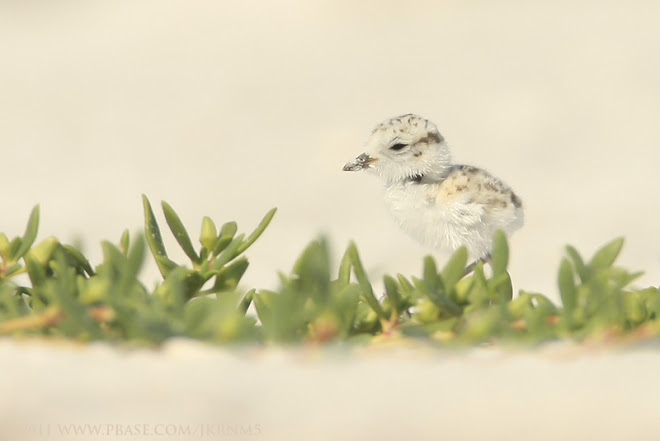 The Snowy Plover juvenile above was photographed at Estero Lagoon in June 2011.
I made best guesses with that concern and the focus on the subject as it was too dark for the auto focus to work which was proven with many of the +/- ten second exposures required to capture the scene.
By the time Chad's work was done, my walk to the car was intimidating as uncharted areas of the beach had to be crossed with the tide coming in rapidly.
 The Snowy Plover above was photographed at Estero Lagoon in June 2011.
The bright moonlight was greatly appreciated at that point.
My arrival at the Lagoon on the second visit was again an afternoon visit with a favorably low tide.
 The Snowy Plover juvenile above was photographed at Estero Lagoon in June 2011.
On both days, there was a noticeable absence of birds in the north lagoon.
I made the walk again to the south to observe the shorebird breeding grounds.
 The Snowy Plover juvenile above was photographed at Estero Lagoon in June 2011.
It was interesting to observe Snowy Plover juveniles on this day which I had missed somehow on the first.
There were three very newly hatched plover observed that were extremely energetic and covered a huge area in their explorations.
 The Least Tern above was photographed at Estero Lagoon in June 2011.
The parents stayed with the chicks closely that may have hatched the night before and seemed to offer them guidance in staying out of trouble.
Species of bird this day missed earlier added Reddish Egret, Yellow-crowned Night-Heron, and Whimbrel.
 The Whimbrel above was photographed at Estero Lagoon in June 2011.
American Oystercatcher was unfortunately not seen on the second visit to the Lagoon this week.
I couldn't resist one of the greatest challenges in wildlife photography I've encountered with the capture of Least Terns in flight in good light (it helped to have windy conditions).
 The Least Tern above was photographed at Estero Lagoon in June 2011.
I was excited to finally observe the rare green flash seen at sunset, but the camera's settings did not capture the event effectively.
All I remember seeing in real time through the lens was a remarkable green color as the sun dipped below the horizon which hadn't been seen before after many observations.
 The Least Tern juvenile above was photographed at Estero Lagoon in June 2011.


