With less than favorable conditions for photography of the wildlife at Bunche Beach, it seemed obvious that the birds were not airborne unless disturbed.
The Short-billed Dowitcher above (image 1) was photographed at Bunche Beach Preserve in September 2016.
I opted to remain at one observation point about a quarter mile east of the parking area where a good sized flock of shorebirds were actively feeding. The mangrove trees offered protection from the wind gusts, and surprisingly lacked sand gnats, yet a persistent biting fly found me.
The Forster's Tern above (image 2) was photographed at Bunche Beach Preserve in September 2016.
The Forster's Tern above (image 3) was photographed at Bunche Beach Preserve in September 2016.
The Semipalmated Plover with Piping Plover above (image 4) was photographed at Bunche Beach Preserve in September 2016.
The Piping Plover with Semipalmated Plover above (image 5) was photographed at Bunche Beach Preserve in September 2016.
The Western Sandpiper above (image 6) was photographed at Bunche Beach Preserve in September 2016.
It was a treat to see a flyby of an American Oystercatcher about 70 feet offshore. A white morph Reddish Egret with an antenna tracking device made a flyby in the opposite direction. I missed the Magnificent Frigatebird that was reported at Bunche this day.
The Marbled Godwit above (image 7) was photographed at Bunche Beach Preserve in September 2016.
The Brown Pelican above (image 8) was photographed at Bunche Beach Preserve in September 2016.
The Barn Swallow above (image 9) was photographed at Bunche Beach Preserve in September 2016.
The Black-bellied Plover above (image 10) was photographed at Bunche Beach Preserve in September 2016.
The Double-crested Cormorant above (image 11) was photographed at Bunche Beach Preserve in September 2016.
It was unfortunate that a beachcomber making several back and forth trips along the shoreline had a total disregard for the wildlife during my stay. Within a couple of hours, virtually all the shorebirds had disappeared from view.
The Black-bellied Plover above (image 12) was photographed at Bunche Beach Preserve in September 2016.
The Willet above (image 13) was photographed at Bunche Beach Preserve in September 2016.
The Black-bellied Plover above (image 14) was photographed at Bunche Beach Preserve in September 2016.
The Black-bellied Plover above (image 15) was photographed at Bunche Beach Preserve in September 2016.
The juvenile Black Skimmer above (image 16) was photographed at Bunche Beach Preserve in September 2016.
As I was patiently waiting for additional flybys I had the good fortune of again meeting wildlife enthusiasts Janet and Aaron Kirk. As we were chatting, a Belted Kingfisher flew toward us from the west.
The Short-billed Dowitcher above (image 17) was photographed at Bunche Beach Preserve in September 2016.
The Wilson's Plover with Willet above (image 18) was photographed at Bunche Beach Preserve in September 2016.
The juvenile Snowy Egret above (image 19) was photographed at Bunche Beach Preserve in September 2016.
The Mangrove Skipper on a Railroad Vine flower above (image 20) was photographed at Bunche Beach Preserve in September 2016.
The Willet above (image 21) was photographed at Bunche Beach Preserve in September 2016.
By mid-afternoon Tropical Storm Hermine was upgraded to Hurricane status when it achieved sustained winds of 75 miles per hour. Hermine made landfall just east of St. Marks National Wildlife Refuge in the early morning of 2 September which was the beginning of the hurricane's weakening.
The Belted Kingfisher above (image 22) was photographed at Bunche Beach Preserve in September 2016.
Please be sure to be reminded about this weekly Southwest Florida Wildlife Blog with the email gadget located at the top of the page.
The Belted Kingfisher above (image 23) was photographed at Bunche Beach Preserve in September 2016.
Please also see Tropical Storm Hermine At Bunche Beach: Part I
Showing posts with label piping plover. Show all posts
Friday, September 9, 2016
Friday, September 2, 2016
Tropical Storm Hermine At Bunche Beach: Pt. I
The weather has seemed downright weird to me this rainy season in southwest Florida which is not to imply that it has been any less than uncomfortably humid.
The Piping Plover above (image 1) was photographed at Bunche Beach Preserve in September 2016.
The rainy season has not been anywhere near as predictable as it is supposed to be in Florida. And for the first time in nearly 11 years a storm system approached Florida which became Tropical Storm Hermine after it entered the Gulf of Mexico.
The Semipalmated Plover above (image 2) was photographed at Bunche Beach Preserve in September 2016.
The Sanderling above (image 3) was photographed at Bunche Beach Preserve in September 2016.
"Erwin" the Piping Plover above (image 4) was photographed at Bunche Beach Preserve in September 2016.
Tropical Storm Hermine began to further intensify as it was no longer over land and drew strength from warm waters. On the morning of my sunrise visit to Bunche Beach Preserve on 1 September, the conditions were overcast and windy.
"Erwin" the Piping Plover with Semipalmated Plover above (image 5) was photographed at Bunche Beach Preserve in September 2016.
The Piping Plover with prey above (image 6) was photographed at Bunche Beach Preserve in September 2016.
The Piping Plover with prey above (image 7) was photographed at Bunche Beach Preserve in September 2016.
I coincidentally met up with wildlife photographer Gail Campbell in the parking lot at the preserve before heading to the beach. We spoke briefly to catch up on things while observing that the low tide appeared high as the water had been driven into the bay by the storm.
The Short-billed Dowitcher above (image 8) was photographed at Bunche Beach Preserve in September 2016.
The Western Sandpiper above (image 9) was photographed at Bunche Beach Preserve in September 2016.
The Short-billed Dowitcher above (image 10) was photographed at Bunche Beach Preserve in September 2016.
It began to rain before deciding whether to head toward the east or west channel, fortunately only briefly. Gail and I decided to go to the east as there were more shorebirds visible in that direction.
The Wilson's Plover above (image 11) was photographed at Bunche Beach Preserve in September 2016.
The Willet above (image 12) was photographed at Bunche Beach Preserve in September 2016.
It was also good to see "Erwin the Piping Plover" again who recently arrived from Nebraska's breeding grounds. This will be Erwin's sixth season overwintering at Bunche Beach Preserve. There was typical aggressive behavior observed between Piping Plover and Semipalmated Plover with the latter dominant.
The Piping Plover above (image 13) was photographed at Bunche Beach Preserve in September 2016.
Please be sure to be reminded about this weekly Southwest Florida Wildlife Blog with the email gadget located at the top of the page.
The Piping Plover above (image 14) was photographed at Bunche Beach Preserve in September 2016.
Please also see Tropical Storm Hermine At Bunche Beach: Part II
The Piping Plover above (image 1) was photographed at Bunche Beach Preserve in September 2016.
The rainy season has not been anywhere near as predictable as it is supposed to be in Florida. And for the first time in nearly 11 years a storm system approached Florida which became Tropical Storm Hermine after it entered the Gulf of Mexico.
The Semipalmated Plover above (image 2) was photographed at Bunche Beach Preserve in September 2016.
The Sanderling above (image 3) was photographed at Bunche Beach Preserve in September 2016.
"Erwin" the Piping Plover above (image 4) was photographed at Bunche Beach Preserve in September 2016.
Tropical Storm Hermine began to further intensify as it was no longer over land and drew strength from warm waters. On the morning of my sunrise visit to Bunche Beach Preserve on 1 September, the conditions were overcast and windy.
"Erwin" the Piping Plover with Semipalmated Plover above (image 5) was photographed at Bunche Beach Preserve in September 2016.
The Piping Plover with prey above (image 6) was photographed at Bunche Beach Preserve in September 2016.
The Piping Plover with prey above (image 7) was photographed at Bunche Beach Preserve in September 2016.
I coincidentally met up with wildlife photographer Gail Campbell in the parking lot at the preserve before heading to the beach. We spoke briefly to catch up on things while observing that the low tide appeared high as the water had been driven into the bay by the storm.
The Short-billed Dowitcher above (image 8) was photographed at Bunche Beach Preserve in September 2016.
The Western Sandpiper above (image 9) was photographed at Bunche Beach Preserve in September 2016.
The Short-billed Dowitcher above (image 10) was photographed at Bunche Beach Preserve in September 2016.
It began to rain before deciding whether to head toward the east or west channel, fortunately only briefly. Gail and I decided to go to the east as there were more shorebirds visible in that direction.
The Wilson's Plover above (image 11) was photographed at Bunche Beach Preserve in September 2016.
The Willet above (image 12) was photographed at Bunche Beach Preserve in September 2016.
It was also good to see "Erwin the Piping Plover" again who recently arrived from Nebraska's breeding grounds. This will be Erwin's sixth season overwintering at Bunche Beach Preserve. There was typical aggressive behavior observed between Piping Plover and Semipalmated Plover with the latter dominant.
The Piping Plover above (image 13) was photographed at Bunche Beach Preserve in September 2016.
Please be sure to be reminded about this weekly Southwest Florida Wildlife Blog with the email gadget located at the top of the page.
The Piping Plover above (image 14) was photographed at Bunche Beach Preserve in September 2016.
Please also see Tropical Storm Hermine At Bunche Beach: Part II
Friday, April 29, 2016
Fort De Soto Park Spring Migration: Pt I
A trek to Fort De Soto Park in Pinellas County is especially rewarding during migration season.
The Common Loon above (image 1) was photographed at Fort De Soto Park in April 2016.
Fort De Soto is a magnet for birds. In fact there have been 337 species sighted at the park and reported to eBird as of this writing. Ron Smith has noted that a Western Grebe was observed and photographed by Marvin Waas in late 1954 which was the first and last time the species was seen in Pinellas County. This sighting occurred about eight years before Fort De Soto Park opened to the public.
The sunrise above (image 2) was photographed at Fort De Soto Park in April 2016.
The Brown-headed Cowbird above (image 3) was photographed at Fort De Soto Park in April 2016.
The Short-billed Dowitcher above (image 4) was photographed at Fort De Soto Park in April 2016.
The Least Sandpiper above (image 5) was photographed at Fort De Soto Park in April 2016.
The Willet above (image 6) was photographed at Fort De Soto Park in April 2016.
The Willet above (image 7) was photographed at Fort De Soto Park in April 2016.
The Willet above (image 8) was photographed at Fort De Soto Park in April 2016.
The Piping Plover above (image 9) was photographed at Fort De Soto Park in April 2016.
The Dunlin above (image 10) was photographed at Fort De Soto Park in April 2016.
Tom Obrock and I made a mid April journey to Fort De Soto Park to enjoy the semi-annual migratory spectacle. We had discussed alternate venues to visit in the event Fort De Soto was quiet, but they were not necessary as there was good bird activity resulting in a full day's effort (including the four hour commute).
The Semipalmated Plover with Piping Plover above (image 11) was photographed at Fort De Soto Park in April 2016.
The Semipalmated Plover above (image 12) was photographed at Fort De Soto Park in April 2016.
The Black-bellied Plover above (image 13) was photographed at Fort De Soto Park in April 2016.
The Forster's Tern above (image 14) was photographed at Fort De Soto Park in April 2016.
The Forster's Tern above (image 15) was photographed at Fort De Soto Park in April 2016.
The Nanday Parakeet above (image 16) was photographed at Fort De Soto Park in April 2016.
The Nanday Parakeet above (image 17) was photographed at Fort De Soto Park in April 2016.
The Nanday Parakeet above (image 18) was photographed at Fort De Soto Park in April 2016.
The Nanday Parakeet above (image 19) was photographed at Fort De Soto Park in April 2016.
At the East Beach Turnaround there was some entertaining action as a pair of Willet seemed to be at odds with one another while a Piping Plover showed dominance over a Semipalmated Plover. While about a dozen Nanday Parakeet were observed at the entrance to the park, they would later congregate into a flock of 30 at East Beach. It was interesting to observe European Starling showing dominance over Nanday Parakeet here.
The Nanday Parakeet above (image 20) was photographed at Fort De Soto Park in April 2016.
The European Starling with Nanday Parakeet above (image 21) was photographed at Fort De Soto Park in April 2016.
The European Starling with Nanday Parakeet above (image 22) was photographed at Fort De Soto Park in April 2016.
The Nanday Parakeet above (image 23) was photographed at Fort De Soto Park in April 2016.
The Nanday Parakeet above (image 24) was photographed at Fort De Soto Park in April 2016.
The Nanday Parakeet above (image 25) was photographed at Fort De Soto Park in April 2016.
The Nanday Parakeet above (image 26) was photographed at Fort De Soto Park in April 2016.
The Nanday Parakeet above (image 27) was photographed at Fort De Soto Park in April 2016.
The Nanday Parakeet above (image 28) was photographed at Fort De Soto Park in April 2016.
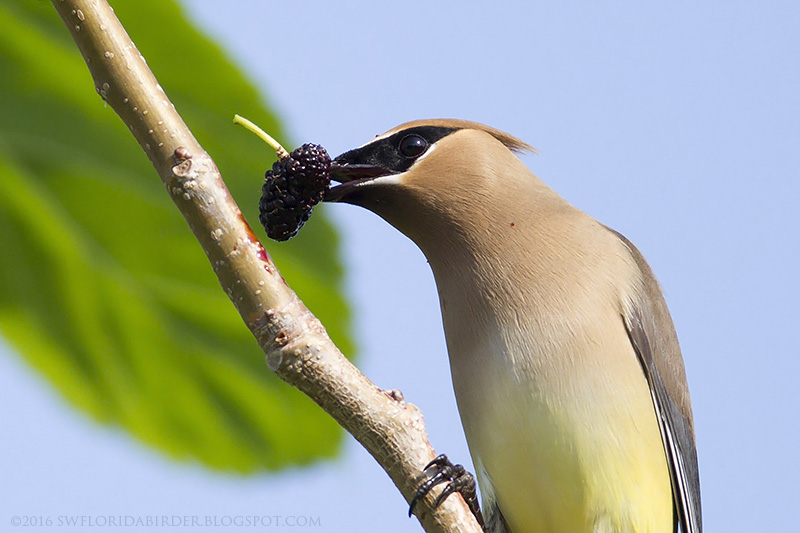
A large flock of Cedar Waxwing was also active at mid-morning near the Bay Pier. They were making very quick work of the Mulberries that were in various stages of ripeness. A few warblers species were observed along the southern end of Mullet Key with a lone Hooded Warbler making a very brief appearance.
The Fish Crow above (image 29) was photographed at Fort De Soto Park in April 2016.
The Black-and-white Warbler above (image 30) was photographed at Fort De Soto Park in April 2016.
The Summer Tanager above (image 31) was photographed at Fort De Soto Park in April 2016.
The Cedar Waxwing above (image 32) was photographed at Fort De Soto Park in April 2016.
The Cedar Waxwing above (image 33) was photographed at Fort De Soto Park in April 2016.
Always reluctant to leave a productive area, our next stop at Fort De Soto Park would be North Beach.
The Cedar Waxwing above (image 34) was photographed at Fort De Soto Park in April 2016.
The Red-eyed Vireo above (image 35) was photographed at Fort De Soto Park in April 2016.
Please be sure to be reminded about this weekly Southwest Florida Wildlife Blog with the email gadget located at the top of the page.
The Red-eyed Vireo above (image 36) was photographed at Fort De Soto Park in April 2016.
Please also see Fort De Soto Spring Migration: Part II
The Common Loon above (image 1) was photographed at Fort De Soto Park in April 2016.
Fort De Soto is a magnet for birds. In fact there have been 337 species sighted at the park and reported to eBird as of this writing. Ron Smith has noted that a Western Grebe was observed and photographed by Marvin Waas in late 1954 which was the first and last time the species was seen in Pinellas County. This sighting occurred about eight years before Fort De Soto Park opened to the public.
The sunrise above (image 2) was photographed at Fort De Soto Park in April 2016.
The Brown-headed Cowbird above (image 3) was photographed at Fort De Soto Park in April 2016.
The Short-billed Dowitcher above (image 4) was photographed at Fort De Soto Park in April 2016.
The Least Sandpiper above (image 5) was photographed at Fort De Soto Park in April 2016.
The Willet above (image 6) was photographed at Fort De Soto Park in April 2016.
The Willet above (image 7) was photographed at Fort De Soto Park in April 2016.
The Willet above (image 8) was photographed at Fort De Soto Park in April 2016.
The Piping Plover above (image 9) was photographed at Fort De Soto Park in April 2016.
The Dunlin above (image 10) was photographed at Fort De Soto Park in April 2016.
Tom Obrock and I made a mid April journey to Fort De Soto Park to enjoy the semi-annual migratory spectacle. We had discussed alternate venues to visit in the event Fort De Soto was quiet, but they were not necessary as there was good bird activity resulting in a full day's effort (including the four hour commute).
The Semipalmated Plover with Piping Plover above (image 11) was photographed at Fort De Soto Park in April 2016.
The Semipalmated Plover above (image 12) was photographed at Fort De Soto Park in April 2016.
The Black-bellied Plover above (image 13) was photographed at Fort De Soto Park in April 2016.
The Forster's Tern above (image 14) was photographed at Fort De Soto Park in April 2016.
The Forster's Tern above (image 15) was photographed at Fort De Soto Park in April 2016.
The Nanday Parakeet above (image 16) was photographed at Fort De Soto Park in April 2016.
The Nanday Parakeet above (image 17) was photographed at Fort De Soto Park in April 2016.
The Nanday Parakeet above (image 18) was photographed at Fort De Soto Park in April 2016.
The Nanday Parakeet above (image 19) was photographed at Fort De Soto Park in April 2016.
At the East Beach Turnaround there was some entertaining action as a pair of Willet seemed to be at odds with one another while a Piping Plover showed dominance over a Semipalmated Plover. While about a dozen Nanday Parakeet were observed at the entrance to the park, they would later congregate into a flock of 30 at East Beach. It was interesting to observe European Starling showing dominance over Nanday Parakeet here.
The Nanday Parakeet above (image 20) was photographed at Fort De Soto Park in April 2016.
The European Starling with Nanday Parakeet above (image 21) was photographed at Fort De Soto Park in April 2016.
The European Starling with Nanday Parakeet above (image 22) was photographed at Fort De Soto Park in April 2016.
The Nanday Parakeet above (image 23) was photographed at Fort De Soto Park in April 2016.
The Nanday Parakeet above (image 24) was photographed at Fort De Soto Park in April 2016.
The Nanday Parakeet above (image 25) was photographed at Fort De Soto Park in April 2016.
The Nanday Parakeet above (image 26) was photographed at Fort De Soto Park in April 2016.
The Nanday Parakeet above (image 27) was photographed at Fort De Soto Park in April 2016.
The Nanday Parakeet above (image 28) was photographed at Fort De Soto Park in April 2016.
A large flock of Cedar Waxwing was also active at mid-morning near the Bay Pier. They were making very quick work of the Mulberries that were in various stages of ripeness. A few warblers species were observed along the southern end of Mullet Key with a lone Hooded Warbler making a very brief appearance.
The Fish Crow above (image 29) was photographed at Fort De Soto Park in April 2016.
The Black-and-white Warbler above (image 30) was photographed at Fort De Soto Park in April 2016.
The Summer Tanager above (image 31) was photographed at Fort De Soto Park in April 2016.
The Cedar Waxwing above (image 32) was photographed at Fort De Soto Park in April 2016.
The Cedar Waxwing above (image 33) was photographed at Fort De Soto Park in April 2016.
Always reluctant to leave a productive area, our next stop at Fort De Soto Park would be North Beach.
The Cedar Waxwing above (image 34) was photographed at Fort De Soto Park in April 2016.
The Red-eyed Vireo above (image 35) was photographed at Fort De Soto Park in April 2016.
Please be sure to be reminded about this weekly Southwest Florida Wildlife Blog with the email gadget located at the top of the page.
The Red-eyed Vireo above (image 36) was photographed at Fort De Soto Park in April 2016.
Please also see Fort De Soto Spring Migration: Part II
Subscribe to:
Posts (Atom)