Showing posts with label kayaking. Show all posts

Friday, December 17, 2010

Ellusive Caracara At Harns Marsh Preserve

The immense excitement I had in the sighting of the Crested Caracara at Harns Marsh Preserve last week would remain the sole sighting of the species after two additional visits to the preserve this week.

The American Bittern above was photographed at Harns Marsh Preserve in December 2010.

One of the visits to Harns Marsh occurred on the morning when heavy fog enveloped much of Florida though offered my first personal sighting of American Bittern confirmed by Tom Obrock.

It was on this morning that two fellow Birdphotographer.net contributors were at the preserve with hopes for some good wildlife observation and photography.

The Snail Kite above was photographed at Harns Marsh Preserve in December 2010.

I had met Conrad Tan, visiting from California, at Estero Lagoon the day before who mentioned that one of the species he particularly had an interest in photographing was Snail Kite and was excited with the prospect of seeing it at Harns Marsh.

Troy Lim was at the preserve as well having made the trip from Sarasota.

The Blue-winged Teal above was photographed at Harns Marsh Preserve in December 2010.

The Collier County Audubon Society (CCAS) had a presence as a troop made a drive through Harns Marsh Preserve under the foggy and cold conditions with a half dozen vehicles making the normally prohibited trip along the perimeter of the preserve.

Pedestrian traffic is permitted to explore Harns Marsh Preserve throughout the year.

The Snail Kite above was photographed at Harns Marsh Preserve in December 2010.

A report from the CCAS has been made at their website which can be seen by clicking here.

The image including some of the CCAS participants immediately below was enhanced primarily with CS5's HDR toning function.

The CCAS members above were photographed at Harns Marsh Preserve in December 2010.

On the following day, the conditions at dawn were much improved with a striking cloud formation to the west which was discussed with Bob J. Blanchard whom had arrived at Harns Marsh right behind me.

Bob had mentioned his regret in not bringing a wide angle lens to capture the scene.

The Little Blue Heron above was photographed at Harns Marsh Preserve in December 2010.

The cloud that may have been ten miles wide seemingly vanished before our eyes.

Bob speculated that it may have been a fog bank, but it appeared to have too much altitude.

Conrad Tan above was photographed at Harns Marsh Preserve in December 2010.

Although I had met Bob at Harns Marsh four months earlier, it was at this time that I had the opportunity to learn more about him and hear of some of his wildlife experiences.

Bob told me of his use of manual exposure in his photography which he noted he had learned from Artie Morris.

The Black-crowned Night-Heron with Apple Snail casing visible above was photographed at Harns Marsh Preserve in December 2010.

He described it as extremely easy and effective once you get the hang of it.

A short while later, wildlife enthusiasts would approach us and chat briefly.

The Double-crested Cormorant above was photographed at Harns Marsh Preserve in December 2010.

It was noted by Reinhard Geisler that the Snow Bunting was reported in Flagler County which he had observed a couple days earlier.

Tom Obrock advised me that he made the sighting of the Snow Bunting this week although he was initially reluctant to make the drive.

The Wood Stork juvenile above was photographed at Harns Marsh Preserve in December 2010.

Reinhard was transporting his camera gear which included the Nikon D200 and D300 cameras in a baby stroller that he was very enthusiastic in talking about.

He was utilizing the souped up stroller due to a fall from an observation tower which resulted in a back injury.

Reinhard Geisler above was photographed at Harns Marsh Preserve in December 2010.

Bob and I observed a lot of primarily distant avian activity while perhaps the second most disappointing thing for me was to be focused on a Turkey Vulture at very close range to miss the shot of it yawning by a fraction of a second as I was distracted by a low flyover of an Osprey.

A pair of fishermen in a kayak at Harns told of the abundant birds they observed in the marsh.

Bob Blanchard above was photographed at Harns Marsh Preserve in December 2010.

Bob was intrigued getting a kayak for closer observation of the birds and I advised him to consider a "surf" kayak for its stability characteristic.

The greatest disappointment was my failure to again observe the Crested Caracara last seen at Harns Marsh Preserve on 8 December 2010.

The fishermen above were photographed at Harns Marsh Preserve in December 2010.

My initial wildlife trip of the week was a 4pm (96 minutes from sunset) visit to Estero Lagoon.

The lighting was stunning as an observation of a Reddish Egret with uncharacteristic white morph feathers was made.

The Snowy Egret juvenile above was photographed at Estero Lagoon in December 2010.

This particular bird flew into the area after initially observing an immature Reddish Egret.

When the two birds got close together, I was anticipating a confrontation.
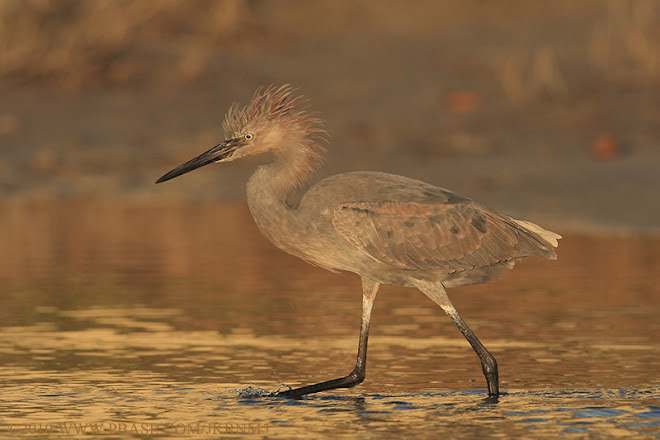
The Reddish Egret juvenile above was photographed at Estero Lagoon in December 2010.

What I was ultimately led to believe was that the immature bird was the offspring of the adult bird as the younger bird appeared to be begging for food from the adult several times.

As the younger bird often approached me too close to focus on it, it would raise its head feathers in a dramatic fashion with the presence of a Bald Eagle on one of the condo towers.

The Reddish Egret (semi-white morph) with juvenile above was photographed at Estero Lagoon in December 2010.

At this time, I again learned the critical importance of using a higher f-stop to get more of the subject in focus when possible.

The lack of confrontation between the Reddish Egrets would be observed similarly over at Harns Marsh as two Great Egrets approached each other, appearing very tolerant of each other with perhaps a mating instinct involved.

The Great Egret above was photographed at Harns Marsh Preserve in December 2010.

The feeding behavior of the Reddish Egrets at Estero Lagoon was of course extremely entertaining to observe.

Conrad Tan's hopes of getting photos of Roseate Spoonbill at the lagoon, a species of rare occurrence in California, was difficult with the few birds in the area roosting in the mangroves just across the lagoon in shadow.

The Semipalmated Plover above was photographed at Estero Lagoon in December 2010.

Conrad made the comment about how tame Florida birds are compared to those he haunts in California.

I'll continue efforts to again observe the Crested Caracara at Harns Marsh Preserve in the future.

The Great Blue Heron above was photographed at Estero Lagoon in December 2010.

Friday, September 24, 2010

Lakes Regional Park: Late Summer 2010

Lakes Regional Park is a venue with great potential for an exciting wildlife experience.

The Blue-gray Gnatcatcher above was photographed at Lakes Regional Park in September 2010.

I've made relatively few visits to this park due to its popularity with pedestrians and bicycle riders in great numbers that typically arrive an hour or so after sunrise.

Two visits were made to Lakes Park this week with enjoyable experiences on both occasions.

The Common Gallinule juvenile above was photographed at Lakes Regional Park in September 2010.

158 acres of freshwater at depths in excess of 20 feet (the benefit of quarry mining in the 1960's) and 279 acres that constitute the park overall allows areas for exploration where you could easily spend hours that pass too quickly.

To wrap up the 2010 summer season I chose to study what might be happening at Lakes Park after making an effort to observe Scarlet Ibis that I was fortunate to see at this place during the breeding season.

The Osprey above was photographed at Lakes Regional Park in September 2010.

In no way was the bird action anywhere near as prolific as during the months of April through July when countless wading birds can be seen as they congregate in the park's rookery which I regrettably found off limits while kayaking Lakes Park's waters in early summer.

The first visit to Lakes Park this week led to my observation of an Osprey that was initially perched on a light post upon my arrival to the park.

The Anhinga above was photographed at Lakes Regional Park in September 2010.

The bird ultimately led to some of my favorite images I've taken of the species.

Osprey can be observed in greatest numbers at virtually any time of year at Lovers Key State Park to the south.

The Anhinga above was photographed at Lakes Regional Park in September 2010.

One of my most memorable wildlife observations to date occurred this week at Lakes Park while I had the camera honed on a Tricolored Heron.

The heron had just begun to preen itself when a background out of focus view of an Anhinga offered an impaled fish brought ashore for an extremely surreal experience.

The Blue Jay above was photographed at Lakes Regional Park in September 2010.

The species of bird in greatest numbers with no more than a dozen seen in a day included Anhinga, Little Blue Heron juveniles, Great Blue Heron, Cattle Egret, Snowy Egret, and Boat-tailed Grackle.

Other sightings I found enjoyable included juvenile Common Moorhen, Green Heron, Blue Jay, Northern Mockingbird, Blue-gray Gnatcatcher, Red-bellied Woodpecker, Loggerhead Shrike, White Ibis, Double-crested Cormorant, Laughing Gull, and Eurasian-collared Dove.

The Loggerhead Shrike above was photographed at Lakes Regional Park in September 2010.

The hopes of seeing large numbers of migrating warblers was certainly premature.

Friday, June 25, 2010

Bunche Beach Preserve Dedication

In the age of segregation in the United States, greatness and legacy was born.

Ranger Hitchcock with Lee County Parks and Recreation above was photographed at San Carlos Bay: Bunch Beach Preserve in June 2010.

In southwest Florida, in 1949, a half acre parcel of land was purchased on San Carlos Bay by those with foresight in Lee County which would in the following year be dedicated to Dr. Ralph Johnson Bunche and was called Bunche Beach.

At its dedication, an estimated 3000 people certainly reveled at one of the first "black" beaches during the historical age of segregation with Bunche Beach today part of and bearing Dr. Bunche's name at San Carlos Bay: Bunch Beach Preserve.

The gentlelady above was photographed at San Carlos Bay: Bunch Beach Preserve in June 2010.

During this earlier period, Dr. Bunch had traveled a path that led him to receive the 1950 Nobel Peace Prize for his United Nations negotiations between Israelis and Arab States in the creation of the Palestine accord.

Dr. Bunche also received the Medal of Freedom from President Kennedy in 1963.

The gentlelady above was photographed at San Carlos Bay: Bunch Beach Preserve in June 2010.

The history of Dr. Bunche is very interesting and I encourage you to research his life.

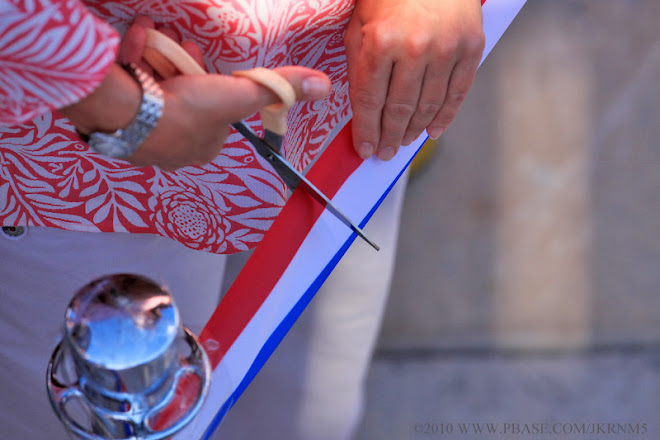
A remarkable facility constructed for the use of future Bunche Beach Preserve visitors was dedicated on 19 June 2010, while also honoring D.J. "Petro" Petruccelli who served as an executive of the Fort Myers Beach Chamber of Commerce for 22 years and was a 25 year member of the Lee County Parks and Recreation Services Advisory Committee.

Tom Obrock above was photographed at San Carlos Bay: Bunch Beach Preserve in June 2010.

If it weren't for fellow Florida wildlife enthusiast, Tom Obrock, who advised me of the dedication and ribbon cutting at the preserve, I would always regret missing it.

The building on the current 719-acre preserve site has greatly benefited from further land purchases and donations while utilizing solar power for its electrical needs and has composting restrooms with no running water available.

The gentleman above was photographed at San Carlos Bay: Bunch Beach Preserve in June 2010.

The name of the road to Bunche Beach is John Morris, but I thought I heard it referred to as Bunche Road during the ceremony.

This road now terminating at San Carlos Bay from the north was once the primary route across the bay with its wooden bridge destroyed by a hurricane in 1926.

Ranger Miller with Lee County Parks and Recreation above was photographed at San Carlos Bay: Bunch Beach Preserve in June 2010.

The officials re-dedicating the preserve and its new facilities were all passionate in their words and well received by the crowd at hand.

While additional parking spaces were created in the 2010 renovation of the preserve, many were lost seemingly as a compromise.

Senior Supervisor, Cindy Carter, with Lee County Parks and Recreation above was photographed at San Carlos Bay: Bunch Beach Preserve in June 2010.

Significant parking closer to the beach has been eliminated.

Bunche Beach Preserve is one of my favorite venues to visit at any time, but particularly at low tide when one can walk over a large expanse of the bay to observe the often prolific bird activity there.

The gentleman above was photographed at San Carlos Bay: Bunch Beach Preserve in June 2010.

At the time of the ceremony, I was fortunate to observe an Osprey with prey while a few other bird species also passed overhead.

Bunche Beach Preserve has a proclivity to attract the endangered Piping Plover which currently receives federal protection.

Lee County Florida District 4 Commissioner, Tammy Hall, above was photographed at San Carlos Bay: Bunch Beach Preserve in June 2010.

My first observation of the Piping Plover was in the infancy of my interest in birding while at Bunche Beach Preserve.

My interest was of course heightened when I observed this bird species with evidence of numerous captures of it due to the bands on its legs.

The blessing above was photographed at San Carlos Bay: Bunch Beach Preserve in June 2010.

My research of banding has led me to believe that there can be great importance in the pursuit of birding.

While the Piping Plover is rarely seen, wading birds, and shore birds such as Wilson's Plover and Black Skimmer are much more frequently observed at Bunche Beach Preserve and are equally welcome and seen nearly year round.

Lee County Florida District 3 Commissioner, Ray Judah, above was photographed at San Carlos Bay: Bunch Beach Preserve in June 2010.

Least Terns were again observed near the west channel of Bunche Beach Preserve this past week and were actively feeding.

I'm now in my second year of observation of the Least Tern at Bunche Beach Preserve and am wondering where these particular birds are nesting and feeding their young.

The gentlelady above was photographed at San Carlos Bay: Bunch Beach Preserve in June 2010.

Many of my very favored wildlife photographs have been taken at Bunche Beach Preserve and include an image of the Little Blue Heron that I was humbled by having published in the 2010 Jan/Feb issue of Audubon magazine as an editors' choice in the inaugural photo issue of the periodical.

Another photograph taken at this must see venue involves interesting feeding behavior of the Yellow-crowned Night-Heron.

The gentlelady above was photographed at San Carlos Bay: Bunch Beach Preserve in June 2010.

This particular image which I have chosen to use on my contact card was culled from hundreds of thousands of images taken at wildlife venues around Florida.

Google maps has a current snapshot of the site available which was interestingly captured at an apparently very high tide.

The gentlelady above was photographed at San Carlos Bay: Bunch Beach Preserve in June 2010.

Additional writing of my experiences and observations at Bunche Beach Preserve can be seen by clicking here.

A representation of what might be seen through photography at Bunche Beach Preserve can be seen by clicking here.

Roger Clark with Lee County Parks and Recreation offering a tour of the preserve's grounds above was photographed at San Carlos Bay: Bunch Beach Preserve in June 2010.

Visit this astounding venue ideally around sunrise or sunset at low tide when you can.

Be prepared to walk in the water in the bay, while swimming is now an available option at the recreation facility which also offers two kayak launches, two fishing piers, and 310 feet of boardwalk for wildlife viewing.

The ribbon cutting above was photographed at San Carlos Bay: Bunch Beach Preserve in June 2010.

There was a tremendous amount of activity and hard work by many in the hours preceding the dedication.

Bunche Beach Preserve is open from dawn to dusk year round.

Saturday, April 24, 2010

Audio Visual

In my hope to observe the Scarlet Ibis, I finally found it at Lakes Regional Park this past week.

The scene above was photographed from a kayak at Lakes Regional Park in April 2010.

I had brought my kayak with the expectation that I would find it roosting in one of the park's many very small islands within it.

Mere minutes after getting the watercraft on the ground upon my arrival, I caught a glimpse of a red spot out of the corner of my eye.

The scene above was photographed from a kayak at Lakes Regional Park in April 2010.

The Scarlet Ibis was in a group of White Ibis feeding in the shallow water at the park's south beach.

As I stealthily approached to get my first photograph of the creature, from about 50 feet, all the birds nonetheless took flight and I missed the shot.

The scene above was photographed from a kayak at Lakes Regional Park in April 2010.

Within minutes all the birds returned after circling the park, except for the Scarlet Ibis.

I launched the kayak to have an enjoyable morning attempting to find the Scarlet Ibis roosting, though was disappointed to find that the prime area for that possibility is off limits to public paddle boats.

The Green Heron above was photographed from a kayak at Lakes Regional Park in April 2010.

There are tremendous opportunities to capture images of a diversity of birds in flight at Lakes Park and I will return to take advantage of that.

Yesterday evening offered another first for me when I made another trip to Cape Coral to observe the Burrowing Owl.

The juvenile Bald Eagle above was photographed from a kayak at Lakes Regional Park in April 2010.

While I initially captured a few still images of the birds I was observing, the primary intent was to create a movie of the owl's mating behavior which the Canon 5DM2 is capable of doing.

After finding a burrow and birds that might accommodate my mission, I settled down and prepared the camera's settings.

The White Ibis above was photographed from a kayak at Lakes Regional Park in April 2010.

With patience, I was rewarded with documenting the event at the burrow which I had only observed the male at the last few occasions I drove through the area.

Regrettably on this first attempt, the male's wings were clipped out of the frame and the composition of the birds could have been much improved.

The White Ibis above was photographed from a kayak at Lakes Regional Park in April 2010.

The quality of the audio recording could also be much improved with an external mic as the wind was buffeting the camera gear pretty hard.

When I acquired the latest version of Photoshop Elements this past week, I chose the basic version, so back it will go to be exchanged for the version that can edit movies.

Saturday, March 20, 2010

Flip of A Coin

At the start of the day, I had no set destination in mind.

The musician above was photographed at Bunche Beach Preserve in March 2010.

When too late to take advantage of early morning light for ideal photography and too cold and breezy to consider use of the kayak, I decided a trip to Lovers Key State Park was in order.

The traffic was stopped and bumper to bumper over a mile from the Matanzas bridge so I made a U-turn to avoid the worst of the tourist effect.

The musician above was photographed at Bunche Beach Preserve in March 2010.

Parking at Bunche Beach Preserve shortly thereafter proved equal evidence of the peak of the season.

Walking west from the parking area along San Carlos Bay proved that putting in the kayak earlier would have been disastrous as the wind was unseasonably strong again.

The Snowy Egret above was photographed at Bunche Beach Preserve in March 2010.

The approaching high tide required walking very close to shore as I've only had to do on a couple prior occasions.

Until I hunkered down at the entrance of the west channel, I had only observed the Laughing Gull which showed peak evidence of its mating colors.

The Wood Stork above was photographed at Bunche Beach Preserve in March 2010.

There were only a few Snowy Egrets at the channel in the water hunting with over flights of the gull, Osprey and Wood Stork.

With an intent to photograph the Burrowing Owl in late afternoon light, I headed back to the car.

The beach enthusiast above was photographed at Bunche Beach Preserve in March 2010.

A call from my brother Jim requesting shots of the Red Sox in spring training was fresh in my mind as I approached beach enthusiasts with gloves in hand.

They were welcomed as I had the opportunity to practice framing and timing the throw of a ball.

The beach enthusiast above was photographed at Bunche Beach Preserve in March 2010.

With a little spare time before the sun was low on the horizon, I stopped at Lakes Park with a hope to see the Roseate Spoonbill.

I was captivated by a small stand of cypress trees where I decided to settle down at and study passerines which preserved my energy.

The beach enthusiasts above were photographed at Bunche Beach Preserve in March 2010.

From this vantage point I noted the presence of a few smaller species and over flights of flocks of wading birds.

My visit to Cape Coral for Burrowing Owl observation turned out to be a little early which allowed me to drive around to see what action might be happening at different nests that had previously appeared inactive.

The Burrowing Owl above was photographed near Cape Coral Library in March 2010.

It was my great fortune to see the mating of owls around the Cape Coral Library which was an unexpectedly early occurrence as the sun was very close to setting.

With the event occurring so relatively early in good light, I was able to return to another nest that I had observed a pair of owls at.

The Burrowing Owl above was photographed near Cape Coral Library in March 2010.

My return to this nest still had only the female guarding its territory.

Before leaving the nest earlier, the male owl had flown out of sight with its return for the mating event which occurred very briefly and before the last of the day's light to record the event with benefit of flash.

The Burrowing Owl above was photographed at Cape Coral Library in March 2010.

A perfect day it was overall.