Showing posts with label gail campbell. Show all posts

Friday, January 29, 2016

American Flamingo Visits Bunche Beach Preserve

A visiting birder and author from Ferguson, Missouri named Cornelius "Connie" Alwood was the first to report an American Flamingo to eBird that has favored Bunche Beach Preserve this past week in Fort Myers, Florida.


The American Flamingo above (image 1) was photographed at Bunche Beach Preserve in January 2016.

Among Connie's other eBird reports of interest include a mid July 2015 nocturnal observation at Columbia Bottom Conservation Area at the confluence of the Missouri and Mississippi Rivers where he noted a half dozen Mississippi Kites soaring out of sight, as well as a late November 2015 report from California Gulch, Arizona where he and a bird guide observed a Black-capped Gnatcatcher.


The mixed shorebirds above (image 2) were photographed at Bunche Beach Preserve in January 2016.


Fort Myers News-Press photographer Andrew West at far right and Gail Campbell to his immediate right above (image 3) were photographed at Bunche Beach Preserve in January 2016.

Possibly crossing paths with Connie at Bunche Beach Preserve on the morning of 21 January was local birding enthusiast and Bird Patrol volunteer, Gail Campbell who provided a notification to the SW Florida Bird Alert closed group Facebook webpage. Gail's report was much more timely allowing me to meet up with her and many others to see and photograph the flamingo in the mid-afternoon.

The American Flamingo above (image 4) was photographed at Bunche Beach Preserve in January 2016.


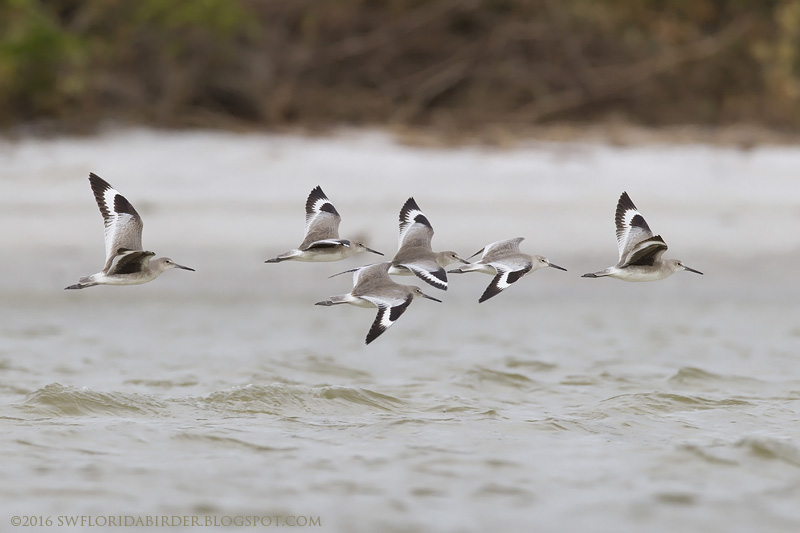
The Willet above (image 5) was photographed at Bunche Beach Preserve in January 2016.

At the beginning of the 20th century, flamingos were virtually eradicated in Florida due to plume hunting and harvesting of their eggs. Flamingos typically lay only one egg in a nesting season. In 2008, the Caribbean population of Greater Flamingo was split by the American and British Ornithologists' Unions creating the American Flamingo.


The American Flamingo above (image 6) was photographed at Bunche Beach Preserve in January 2016.


The American Flamingo above (image 7) was photographed at Bunche Beach Preserve in January 2016.

The American Flamingo is the only flamingo species found in the wild in North America. The three other New World flamingos; Chilean Flamingo, James's Flamingo and Andean Flamingo may be found in South America. The Greater Flamingo and Lesser Flamingo are now considered Old World species. Flamingos can be very long lived with one captive bird (Greater Flamingo) reaching the age of 83 before its death.


The American Flamingo above (image 8) was photographed at Bunche Beach Preserve in January 2016.


The American Flamingo above (image 9) was photographed at Bunche Beach Preserve in January 2016.

The past decade has seen a resurgence of American Flamingos in Florida, particularly at Stormwater Treatment Area 2 (STA2). There unfortunately is a huge disparity in the number of flamingos observed at STA2 from year to year with a high count of 147 in early 2014 and only eight counted in early 2015. However, there was a flamingo mating event observed by a tour group at STA2 in 2015. Flamingo field trips at STA2 are sponsored by Audubon Society of the Everglades.


The American Flamingo above (image 10) was photographed at Bunche Beach Preserve in January 2016.


The American Flamingo above (image 11) was photographed at Bunche Beach Preserve in January 2016.

Lee County has been a rare host to American Flamingos unlike the well known venues STA2, and Snake Bight located in Everglades National Park. 2015 was a boon for Lee County flamingo observations with a bird seen throughout July and another flamingo seen in early September.


The American Flamingo above (image 12) was photographed at Bunche Beach Preserve in January 2016.


The American Flamingo above (image 13) was photographed at Bunche Beach Preserve in January 2016.

The American Flamingos seen in Lee County in 2015 had a wide range from Ding Darling National Wildlife Refuge to Bunche Beach Preserve to Bowditch Point Park to Fort Myers Beach to Lovers Key State Park. A great documentation of the flamingo in the area in September was made by South Florida wildlife photographer Al Hoffacker.


The American Flamingo above (image 14) was photographed at Bunche Beach Preserve in January 2016.


The Brown Pelican above (image 15) was photographed at Bunche Beach Preserve in January 2016.

The flamingo observed in South Fort Myers in late January 2016 seems to favor the Sanibel Causeway tollbooth to Bowditch Point Park to Bunche Beach Preserve. Upon close observation the flamingo can be observed doing a highly entertaining Elvis-like shuffle when feeding.


The American Flamingo above (image 16) was photographed at Bunche Beach Preserve in January 2016.


The American Flamingo above (image 17) was photographed at Bunche Beach Preserve in January 2016.

A bonus bird seen at Bunche Beach Preserve this day was a white morph Reddish Egret with satellite tracking technology. Reddish Egrets are the rarest wading birds in the United States with a study underway to particularly identify the cause of the decline of the species in the Florida Keys.


The banded white morph Reddish Egret above (image 18) was photographed at Bunche Beach Preserve in January 2016.

Please be sure to be reminded about this weekly Southwest Florida Wildlife Blog with the email gadget located at the top of the page.


The scene above (image 19) was photographed at Bunche Beach Preserve in January 2016.

Friday, July 17, 2015

A Fish Heist At Carlos Pointe: Pt. II

A trip to the beach is always a relaxing and rewarding experience in southwest Florida no matter the time of year.


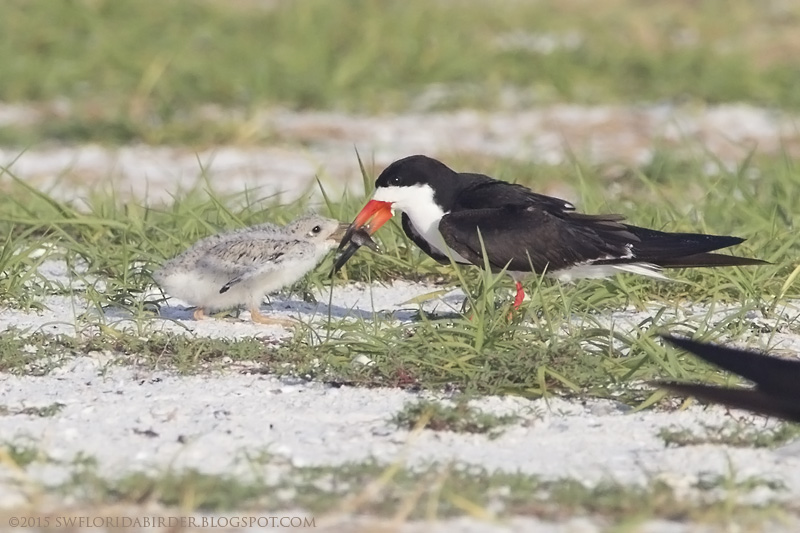
The Black Skimmer with chick and decoy above (image 1) was photographed at Carlos Pointe in July 2015.

A July observation of Black Skimmers and other wildlife that had taken a good hold of Carlos Pointe directly south of Estero Beach was a great attraction in itself. Perhaps not quite as thrilling as a roller coaster, an interchange between a skimmer and several Laughing Gulls was almost as dizzying.


The Least Tern above (image 2) was photographed at Carlos Pointe in July 2015.


The Snowy Plover above (image 3) was photographed at Carlos Pointe in July 2015.


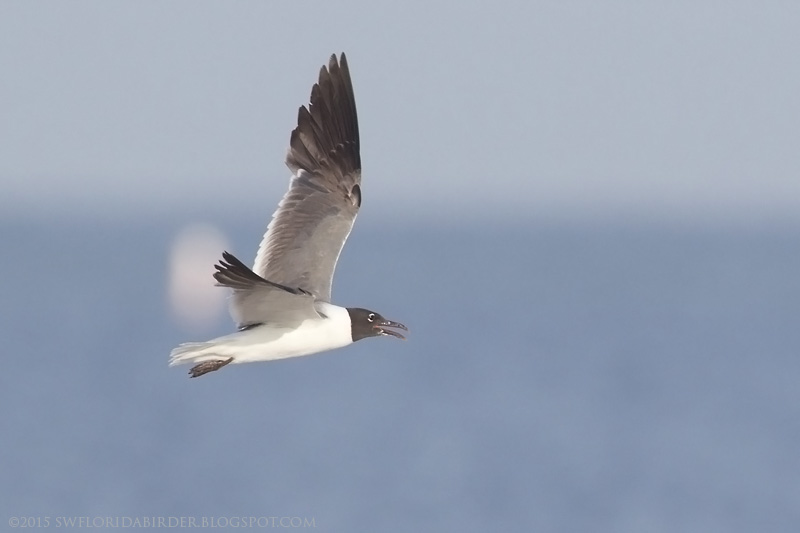
The Laughing Gull above (image 4) was photographed at Carlos Pointe in July 2015.


The immature Tricolored Heron above (image 5) was photographed at Carlos Pointe in July 2015.


The Black Skimmer with chick above (image 6) was photographed at Carlos Pointe in July 2015.


The Great Egret above (image 7) was photographed at Carlos Pointe in July 2015.

While I had considered a walk to the American Oystercatcher nest, I weighed the exhaustion that would ensue with an interest for reading a report about the birds first. It was with a Facebook report by Gail R. Campbell the day after I made my trip to Carlos Point that I read bad news.


The Black Skimmer with chick above (image 8) was photographed at Carlos Pointe in July 2015.


The Black Skimmer with chick above (image 9) was photographed at Carlos Pointe in July 2015.


The Laughing Gull above (image 10) was photographed at Carlos Pointe in July 2015.


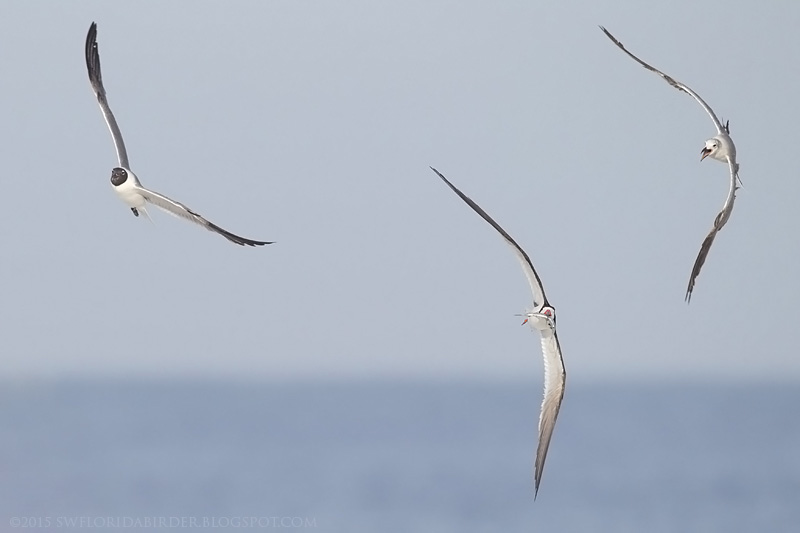
The Laughing Gull harassing Black Skimmer above (image 11) was photographed at Carlos Pointe in July 2015.


The Laughing Gull harassing Black Skimmer above (image 12) was photographed at Carlos Pointe in July 2015.


The Laughing Gull harassing Black Skimmer above (image 13) was photographed at Carlos Pointe in July 2015.

According to Gail, John D. Mosele of Fort Myers Beach had observed one of the American Oystercatcher chicks on 2 July, but it had not been seen thereafter. I have not seen any other reference to the second egg in the nest.


The Laughing Gull harassing Black Skimmer above (image 14) was photographed at Carlos Pointe in July 2015.


The Laughing Gull harassing Black Skimmer above (image 15) was photographed at Carlos Pointe in July 2015.


The Laughing Gull harassing Black Skimmer above (image 16) was photographed at Carlos Pointe in July 2015.


The Laughing Gull harassing Black Skimmer above (image 17) was photographed at Carlos Pointe in July 2015.


The Laughing Gull harassing Black Skimmer above (image 18) was photographed at Carlos Pointe in July 2015.


The Laughing Gull harassing Black Skimmer above (image 19) was photographed at Carlos Pointe in July 2015.

The oystercatcher eggs were hatching more quickly than I had anticipated since first observing them on 15 June. The loss of the oystercatcher chick was likely through predation from a Yellow-crowned Night-Heron or perhaps an extremely hungry Laughing Gull.


The Black Skimmer above (image 20) was photographed at Carlos Pointe in July 2015.


The Laughing Gull harassing Black Skimmer above (image 21) was photographed at Carlos Pointe in July 2015.


The Laughing Gull harassing Black Skimmer above (image 22) was photographed at Carlos Pointe in July 2015.


The Laughing Gull harassing Black Skimmer above (image 23) was photographed at Carlos Pointe in July 2015.


The Laughing Gull harassing Black Skimmer above (image 24) was photographed at Carlos Pointe in July 2015.


The Laughing Gull harassing Black Skimmer above (image 25) was photographed at Carlos Pointe in July 2015.

Jessica Yarnell has made superb reports of Black Skimmer chicks at Indian Rocks Beach, just south of Clearwater, with additional images she intended to present interrupted with good fortune by her blog's namesake.


The Laughing Gull harassing Black Skimmer above (image 26) was photographed at Carlos Pointe in July 2015.


The Laughing Gull harassing Black Skimmer above (image 27) was photographed at Carlos Pointe in July 2015.


The Laughing Gull harassing Black Skimmer above (image 28) was photographed at Carlos Pointe in July 2015.


The Laughing Gull harassing Black Skimmer above (image 29) was photographed at Carlos Pointe in July 2015.


The Least Tern above (image 30) was photographed at Carlos Pointe in July 2015.


The Black Skimmer chick above (image 31) was photographed at Carlos Pointe in July 2015.

Here at Carlos Pointe I was given an incredible show with the heist of a fish from a Black Skimmer by an extremely persistent Laughing Gull. The chase for the quarry which began with a solitary gull in pursuit of the skimmer, after two minutes had three gulls immediately on its tail.


The scene above (image 32) was photographed at Carlos Pointe in July 2015.


The Double-crested Cormorant above (image 33) was photographed at Carlos Pointe in July 2015.


The Snowy Plover above (image 34) was photographed at Carlos Pointe in July 2015.


The Beach Sunflower above (image 35) was photographed at Carlos Pointe in July 2015.

The walk back to the car offered a view of blooming flora sheltered at the foot of Big Carlos Pass bridge.


The sunface above (image 36) was photographed near Carlos Pointe in July 2015.


The scene above (image 37) was photographed near Carlos Pointe in July 2015.

Please also see A Fish Heist At Carlos Point: Pt. I