I have been taking photographs with a variety of cameras for decades including a Pentax K1000 (35mm), a Canon A-1 (35mm), a Toshiba point and shoot digital camera (I can't remember the model), a Nikon D80 (digital), a Canon 1D Mark III (digital), a Canon 5D Mark II (digital), and a Canon 1D Mark IV (digital).
The Gitzo tripods (with the tripod at left missing a leg) above were photographed in June 2013.
These cameras have all offered a degree of enjoyment while the transition to digital has been especially rewarding with the ability to ditch the expense of 35mm film. There was only one instance countless images ago where I did not spool the film correctly with the Pentax camera losing the documentation of whatever I was photographing. I don't remember the occasion so it was fortunately not important.
More recently a planned event of documenting wildlife was scuttled as I had forgotten to replace the camera's memory card. On another occasion I had forgotten to put the camera's battery back in it after a re-charge. Both of these devices have been routinely removed from the digital cameras I have owned while I've been sure not to leave home without them for over a year now. I would prefer to leave the memory card in the 1D Mark IV (my primary camera at the time of this writing) when transferring images to the computer, but I need to install an unknown program to allow that to happen.
This is irritating as I hadn't had this problem with previous digital cameras, and I prefer and recommend leaving weather resistant areas of the camera undisturbed as much as possible. I have read that some like to insert the memory card into their computer to transfer their images to conserve battery life. I'm not sure if this extends the expected life of the battery which seems unlikely. Without doubt my experience with digital camera batteries is that they have all performed unexpectedly well with as many as 1800 images taken between recharges (exceeding manufacturer specifications).
Well, enough of those thoughts off topic from the title of this article. What I've really wanted to discuss is the value and utility of tripods. I've had as many tripods in use as I've had cameras. I don't recall the brand and model of the first tripod acquired as it was so long ago, but I recall it met my expectations at the time. It was an easy task then as the gear it supported was lightweight and I wasn't near a beach routinely.
A workhorse tripod I wish I had gotten more utility from, and am keeping for posterity I guess is a Bogen 3021. It's missing at least one critical component lost years ago. I was in Tampa at the time when the lever that controls the center column, and screw that mounts the camera were lost. Poor construction was my thought of it at the time.
When I had a need for another tripod to manage the load of heavier gear, I chose the Gitzo 5541LS. This is a very high quality tripod that I would expect to last a lifetime. Its inundation in saltwater, however, caused an irreparable failure in November 2011. As I don't remember the tripod's purchase date, I will guess that it was less than two years old. I continued to use the tripod for four more months making good use of it with Duck Tape before replacing the tripod with another 5541LS.
I suppose I thought I would give the new tripod a little more care as I really like the 5541LS when it works properly. My second Gitzo 5541LS failed about 14 months later with the exact same symptom. The images presented by a cell phone note the failure point.
I have replaced the Gitzo brand with an Induro AT-413 at a fraction of its price. I've been in the field on a few occasions (including a concluded trip to the Florida Keys today) with the Induro and am very pleased. I will stick with this brand indefinitely while expecting to have a replacement necessary every 24 months based on my experience with the higher priced brand.
The Gitzo tripods with a duplication of failure above were photographed in June 2013.
My July 2013 issue of Popular Photography has an advertisement for a Gitzo "Ocean Traveler" tripod described as the only tripod in the world developed for photographers who work in the most extreme environments. I nonetheless highly recommend the Induro brand which you may replace ten plus times for the same cost of one Ocean Traveler. It's very unlikely I will be using the Gitzo brand again.
Showing posts with label canon 1dm3. Show all posts
Friday, June 21, 2013
Friday, November 25, 2011
25th Annual World Sandsculpting Championship
With the Florida dry season approaching at the end of the 2011 hurricane season, I was still surprised by a call for rain this week at perhaps the worst time.
The scene above was photographed at Fort Myers Beach in November 2011.
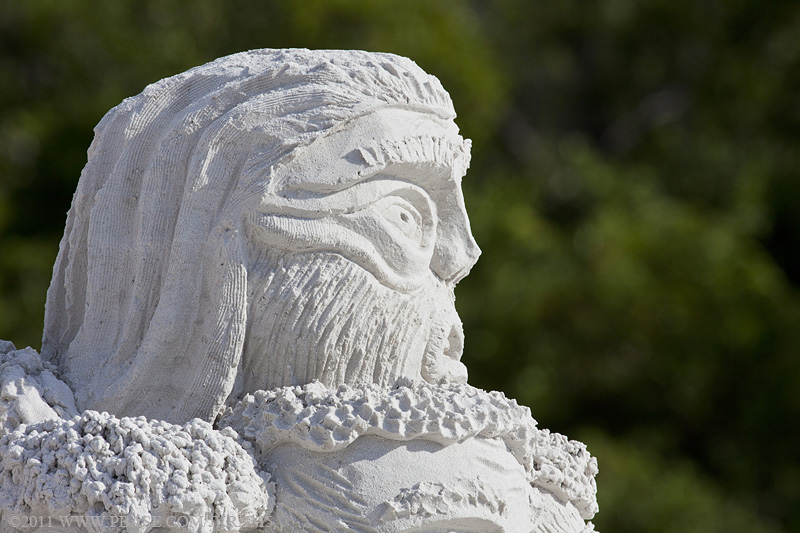
Following the 25th anniversary American Sandsculpting Championship at Fort Myers Beach a few weeks ago, the 25th anniversary World Sandsculpting Event was in progress behind the Holiday Inn allowing visitors including myself the opportunity to view some remarkable stuff.
I had anticipated making the trip to Fort Myers Beach for this event but was wary to make an early start while waiting to see how the weather developed.
The scene above was photographed at Fort Myers Beach in November 2011.
There were a larger number of sculptures available to view in good weather in the late morning and early afternoon with at least a couple of them appearing to me to have been created by artists participating in the American competition recognizing their style.
The sculptures at this event were much closer together than at the American Championship which made photography of them with the longer lens more of a challenge.
The scene above was photographed at Fort Myers Beach in November 2011.
I had my backup for my backup camera in hand to bring with me to allow 18mm views, but its battery charge wasn't even enough to turn the camera on.
As I made my way around the inner perimeter of the cordoned off event I would occasionally enjoy the opportunity to speak with fellow patrons that had an interest in photography.
The scene above was photographed at Fort Myers Beach in November 2011.
I was also happy to meet Bouke Atema from the Netherlands whom was a sculpting participant.
Bouke told me that he had a particular interest in wildlife photography.
The scene above was photographed at Fort Myers Beach in November 2011.
With that a mutual interest of mine I was able to advise him of some locations for viewing of species that he might enjoy seeing while in the area.
There was musical entertainment though of greater interest to me was a "QuickSand" event where two sculptors had ten minutes to create a subject unknown to them until the start of the competition.
The scene above was photographed at Fort Myers Beach in November 2011.
The pile of sand available to each sculptor looked about the size of five gallon bucket.
At the start of this particular event the subject was divulged to be a turkey.
The scene above was photographed at Fort Myers Beach in November 2011.
Near the end of the challenge, I was able to hear one of the artists tell the other that his creation looked like a chicken.
Later in the day I met a family chatting briefly as I gave my opinion to the user of the 7d that saving should begin immediately to acquire the Canon 1dm5 that I anticipate being released sometime in 2015.
The scene above was photographed at Fort Myers Beach in November 2011.
Canon will be hard pressed to significantly improve its flagship camera in the 1dm4 which has proven extremely popular with serious photographers.
I'm saving for the camera myself which I hope to make fun use of in retirement.
The scene above was photographed at Fort Myers Beach in November 2011.
With a comment heard made by a fellow visitor just arriving that there were rains to the north I made a beeline for the exit to avoid a possible downpour as the rain drops began to fall.
Recent research of sand sculpting has been very interesting and envision myself chasing these events around the globe if I am ever able with an attention paid to the local wildlife.
The scene above was photographed at Fort Myers Beach in November 2011.
A second quicksand event had begun during my visit to the championship, but I didn't pay as close attention to it as I was determined to capture a record of the sand sculptures created days before.
I was able to hear over the loudspeakers that one of the sand sculptors had to forfeit the match as his pile of sand collapsed almost immediately.
The scene above was photographed at Fort Myers Beach in November 2011.
On the way home I stopped at one of the beach parking access points to photograph the sunset on the Gulf.
While I take great care in minimizing looking at the sun through the viewfinder of the camera, I couldn't help on this particular day to be entranced by what appeared to be sun spots on the sun's surface.
The scene above was photographed at Fort Myers Beach in November 2011.
I at first thought the black smudges were dust on the lens or mirror but quickly determined that they were a rarely seen phenomenon on the sun's surface without special filters.
The black smudges were perhaps the size of many dozens of earths in the upper left corner of the sun.
The scene above was photographed at Fort Myers Beach in November 2011.
I'm disappointed that I was not able to capture what I saw in reality as the brightness of the sun could not be darkened enough with
the camera's controls.
It was enjoyable nonetheless to see numerous large flocks of birds miles from shore making their way both north and south as the sun dipped below the horizon.
The scene above was photographed at Fort Myers Beach in November 2011.
With thought that the rains had damaged the sand sculptures overnight, workmate Margie Congregane had called the local newspaper to inquire about the sculptures.
She was told that that there was no significant damage with them hopefully enjoyed by many thousands of visitors in the ensuing days.
The sunset above was photographed at Fort Myers Beach in November 2011.
The scene above was photographed at Fort Myers Beach in November 2011.Following the 25th anniversary American Sandsculpting Championship at Fort Myers Beach a few weeks ago, the 25th anniversary World Sandsculpting Event was in progress behind the Holiday Inn allowing visitors including myself the opportunity to view some remarkable stuff.
I had anticipated making the trip to Fort Myers Beach for this event but was wary to make an early start while waiting to see how the weather developed.
The scene above was photographed at Fort Myers Beach in November 2011.There were a larger number of sculptures available to view in good weather in the late morning and early afternoon with at least a couple of them appearing to me to have been created by artists participating in the American competition recognizing their style.
The sculptures at this event were much closer together than at the American Championship which made photography of them with the longer lens more of a challenge.
The scene above was photographed at Fort Myers Beach in November 2011.I had my backup for my backup camera in hand to bring with me to allow 18mm views, but its battery charge wasn't even enough to turn the camera on.
As I made my way around the inner perimeter of the cordoned off event I would occasionally enjoy the opportunity to speak with fellow patrons that had an interest in photography.
The scene above was photographed at Fort Myers Beach in November 2011.I was also happy to meet Bouke Atema from the Netherlands whom was a sculpting participant.
Bouke told me that he had a particular interest in wildlife photography.
The scene above was photographed at Fort Myers Beach in November 2011.With that a mutual interest of mine I was able to advise him of some locations for viewing of species that he might enjoy seeing while in the area.
There was musical entertainment though of greater interest to me was a "QuickSand" event where two sculptors had ten minutes to create a subject unknown to them until the start of the competition.
The scene above was photographed at Fort Myers Beach in November 2011.The pile of sand available to each sculptor looked about the size of five gallon bucket.
At the start of this particular event the subject was divulged to be a turkey.
The scene above was photographed at Fort Myers Beach in November 2011.Near the end of the challenge, I was able to hear one of the artists tell the other that his creation looked like a chicken.
Later in the day I met a family chatting briefly as I gave my opinion to the user of the 7d that saving should begin immediately to acquire the Canon 1dm5 that I anticipate being released sometime in 2015.
The scene above was photographed at Fort Myers Beach in November 2011.Canon will be hard pressed to significantly improve its flagship camera in the 1dm4 which has proven extremely popular with serious photographers.
I'm saving for the camera myself which I hope to make fun use of in retirement.
The scene above was photographed at Fort Myers Beach in November 2011.With a comment heard made by a fellow visitor just arriving that there were rains to the north I made a beeline for the exit to avoid a possible downpour as the rain drops began to fall.
Recent research of sand sculpting has been very interesting and envision myself chasing these events around the globe if I am ever able with an attention paid to the local wildlife.
The scene above was photographed at Fort Myers Beach in November 2011.A second quicksand event had begun during my visit to the championship, but I didn't pay as close attention to it as I was determined to capture a record of the sand sculptures created days before.
I was able to hear over the loudspeakers that one of the sand sculptors had to forfeit the match as his pile of sand collapsed almost immediately.
The scene above was photographed at Fort Myers Beach in November 2011. On the way home I stopped at one of the beach parking access points to photograph the sunset on the Gulf.
While I take great care in minimizing looking at the sun through the viewfinder of the camera, I couldn't help on this particular day to be entranced by what appeared to be sun spots on the sun's surface.
The scene above was photographed at Fort Myers Beach in November 2011.I at first thought the black smudges were dust on the lens or mirror but quickly determined that they were a rarely seen phenomenon on the sun's surface without special filters.
The black smudges were perhaps the size of many dozens of earths in the upper left corner of the sun.
The scene above was photographed at Fort Myers Beach in November 2011.I'm disappointed that I was not able to capture what I saw in reality as the brightness of the sun could not be darkened enough with
the camera's controls.
It was enjoyable nonetheless to see numerous large flocks of birds miles from shore making their way both north and south as the sun dipped below the horizon.
The scene above was photographed at Fort Myers Beach in November 2011.With thought that the rains had damaged the sand sculptures overnight, workmate Margie Congregane had called the local newspaper to inquire about the sculptures.
She was told that that there was no significant damage with them hopefully enjoyed by many thousands of visitors in the ensuing days.
The sunset above was photographed at Fort Myers Beach in November 2011.
Friday, July 9, 2010
Aunt Nettie
The weather was inclement on my days off from work which made for a challenge to get some fresh wildlife photography included in this post.
The Little Blue Heron above was photographed at Bunche Beach Preserve in July 2010.
It wasn't until hours ago that it all came together for a message you will hopefully appreciate.
The sky finally cleared on Friday and offered some of the best light I remember from experiences I've had the last couple of years during the rainy season in southwest Florida.
The fellow visitors above were photographed at Bunche Beach Preserve in July 2010.
Weather conditions were ideal with little chance of rain with a low tide a couple of hours before sunset at Matanzas Pass.
Therefore I chose to visit Bunche Beach to see what kind of wildlife action was happening there.
The Willet above was photographed at Bunche Beach Preserve in July 2010.
Just before I left for the venue, I sent an email to Tom Obrock reminding him of the low tide at the preserve.
I was pleased to see that he had made the effort to travel there to observe the wildlife as well.
The Little Blue Heron above was photographed at Bunche Beach Preserve in July 2010.
He told me of future plans he has to visit Idaho where he will undoubtedly report in his blog some exciting observations.
After parking the car in the late afternoon, I headed toward the west channel with relatively light winds at the time and more birds seen that direction.
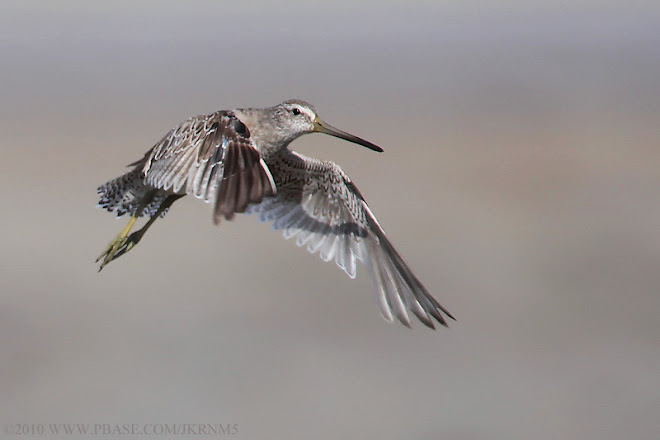
The Short-billed Dowitcher above was photographed at Bunche Beach Preserve in July 2010.
The tide at the beach was about as low as it gets in the summer months and offered an interesting scene where numerous sand bars are beginning to form into the bay perpendicular from the beach.
They will allow great opportunity for birds to rest, feed, and be observable in the future.
The Western Sandpiper above was photographed at Bunche Beach Preserve in July 2010.
If the wind was strong from the west, I think I would have made my way to the east channel as I've had success with photographing wildlife under those conditions in the past.
Under such conditions I think I would have also been concerned about the possibility of methane in the air due to the British Petroleum gusher feeding oil to the surface of the Gulf of Mexico.
The Short-billed Dowitcher above was photographed at Bunche Beach Preserve in July 2010.
It seems unfathomable to me the potential adverse impact to this venue from the BP disaster.
With the west channel much shallower than that to the east, it attracts much more fishermen.
The White Ibis above was photographed at Bunche Beach Preserve in July 2010.
Today was no exception as there were a lot of patrons to the preserve that were throwing cast nets for bait certainly with plans to fish elsewhere as they didn't have poles with them.
Their activity caused most of the birds I was observing to exit the area on a few occasions as the men made their way back and forth along the channel.
The fisherman above was photographed at Bunche Beach Preserve in July 2010.
As usual, when I plant myself down for viewing of the birds at Bunche Beach in the west channel, it was a little unnerving as small fish, crabs, and plant debris made contact with me in the water that is very murky.
I had the opportunity to experience a tide change and the resulting stillness of the water that seemingly lasts only seconds.
The Roseate Spoonbill above was photographed at Bunche Beach Preserve in July 2010.
An unusually cloudless sky to the west at the time of sunset had me completely focused on the birds in great light more so than the opportunity to capture the setting sun.
I walked much further west than expected after both Tom and another visitor to the preserve had told me of the black-crowned herons observed beyond where I was.
The Sanderling above was photographed at Bunche Beach Preserve in July 2010.
The view of the preserve and San Carlos Bay from a scenic point of view was stunning under such great weather conditions.
With the loss of my Aunt Nettie this past month, I've decided to name my long lens in remembrance of her.
The Semipalmated Plover above was photographed at Bunche Beach Preserve in July 2010.
Fellow Pbaser, Susan Rovera, made a comment at my Bunche Beach Preserve gallery recently expressing the thought, "You get the most from your (70-)300mm zoom."
Just before my latest trip to the preserve this past week, I made settings on the 5DM2 as recommended by Artie Morris for the 1DM3 as best was possible with what can be done with the former camera.
Tom Obrock above was photographed at Bunche Beach Preserve in July 2010.
The most radical change made was setting the "picture style" to Neutral.
Most recently I was using "landscape" thinking that it might provide some more sharpness and color in the wildlife images I take.
The Black-crowned Night-Heron above was photographed at Bunche Beach Preserve in July 2010.
I'll have to report later if I see a significant improvement in image quality.
One of the better results in changes the camera's settings apparently has improved the loss of quality while brightening dark shadows.
The Black-crowned Night-Heron juvenile above was photographed at Bunche Beach Preserve in July 2010.
Closer to the wildlife is definitely better if you can manage it with great care.
The Little Blue Heron above was photographed at Bunche Beach Preserve in July 2010.It wasn't until hours ago that it all came together for a message you will hopefully appreciate.
The sky finally cleared on Friday and offered some of the best light I remember from experiences I've had the last couple of years during the rainy season in southwest Florida.
The fellow visitors above were photographed at Bunche Beach Preserve in July 2010.Weather conditions were ideal with little chance of rain with a low tide a couple of hours before sunset at Matanzas Pass.
Therefore I chose to visit Bunche Beach to see what kind of wildlife action was happening there.
The Willet above was photographed at Bunche Beach Preserve in July 2010.Just before I left for the venue, I sent an email to Tom Obrock reminding him of the low tide at the preserve.
I was pleased to see that he had made the effort to travel there to observe the wildlife as well.
The Little Blue Heron above was photographed at Bunche Beach Preserve in July 2010.He told me of future plans he has to visit Idaho where he will undoubtedly report in his blog some exciting observations.
After parking the car in the late afternoon, I headed toward the west channel with relatively light winds at the time and more birds seen that direction.
The Short-billed Dowitcher above was photographed at Bunche Beach Preserve in July 2010.The tide at the beach was about as low as it gets in the summer months and offered an interesting scene where numerous sand bars are beginning to form into the bay perpendicular from the beach.
They will allow great opportunity for birds to rest, feed, and be observable in the future.
The Western Sandpiper above was photographed at Bunche Beach Preserve in July 2010.If the wind was strong from the west, I think I would have made my way to the east channel as I've had success with photographing wildlife under those conditions in the past.
Under such conditions I think I would have also been concerned about the possibility of methane in the air due to the British Petroleum gusher feeding oil to the surface of the Gulf of Mexico.
The Short-billed Dowitcher above was photographed at Bunche Beach Preserve in July 2010.It seems unfathomable to me the potential adverse impact to this venue from the BP disaster.
With the west channel much shallower than that to the east, it attracts much more fishermen.
The White Ibis above was photographed at Bunche Beach Preserve in July 2010.Today was no exception as there were a lot of patrons to the preserve that were throwing cast nets for bait certainly with plans to fish elsewhere as they didn't have poles with them.
Their activity caused most of the birds I was observing to exit the area on a few occasions as the men made their way back and forth along the channel.
The fisherman above was photographed at Bunche Beach Preserve in July 2010.As usual, when I plant myself down for viewing of the birds at Bunche Beach in the west channel, it was a little unnerving as small fish, crabs, and plant debris made contact with me in the water that is very murky.
I had the opportunity to experience a tide change and the resulting stillness of the water that seemingly lasts only seconds.
The Roseate Spoonbill above was photographed at Bunche Beach Preserve in July 2010.An unusually cloudless sky to the west at the time of sunset had me completely focused on the birds in great light more so than the opportunity to capture the setting sun.
I walked much further west than expected after both Tom and another visitor to the preserve had told me of the black-crowned herons observed beyond where I was.
The Sanderling above was photographed at Bunche Beach Preserve in July 2010.The view of the preserve and San Carlos Bay from a scenic point of view was stunning under such great weather conditions.
With the loss of my Aunt Nettie this past month, I've decided to name my long lens in remembrance of her.
The Semipalmated Plover above was photographed at Bunche Beach Preserve in July 2010.Fellow Pbaser, Susan Rovera, made a comment at my Bunche Beach Preserve gallery recently expressing the thought, "You get the most from your (70-)300mm zoom."
Just before my latest trip to the preserve this past week, I made settings on the 5DM2 as recommended by Artie Morris for the 1DM3 as best was possible with what can be done with the former camera.
Tom Obrock above was photographed at Bunche Beach Preserve in July 2010.The most radical change made was setting the "picture style" to Neutral.
Most recently I was using "landscape" thinking that it might provide some more sharpness and color in the wildlife images I take.
The Black-crowned Night-Heron above was photographed at Bunche Beach Preserve in July 2010.I'll have to report later if I see a significant improvement in image quality.
One of the better results in changes the camera's settings apparently has improved the loss of quality while brightening dark shadows.
The Black-crowned Night-Heron juvenile above was photographed at Bunche Beach Preserve in July 2010.Closer to the wildlife is definitely better if you can manage it with great care.
Friday, January 1, 2010
2009 Year In Review I
JANUARY
The Little Blue Heron above was photographed at San Carlos Bay: Bunche Beach Preserve in January 2009.
The beginning of the year was an exceptionally exciting time as I was getting the feel for some newly acquired photography gear that would give me great pleasure and grief. I made a trip to San Carlos Bay: Bunche Beach Preserve (SCBBBP) early in the month and one to Six Mile Cypress Slough Preserve towards the end.
FEBRUARY
The Red-shouldered Hawk above was photographed at Picayune State Forest in February 2009.
A number of Great Florida Birding Trail sites were visited in this month including those in the area of the Florida Everglades while nearly getting lost in Picayune State Forest. I also made a trip to "Ding" Darling National Wildlife Refuge where I observed the Common Merganser for the first time. I made a trip to the east coast where I visited Wakodahatchee Wetlands and Green Cay Wetlands and Nature Center (both venues highly recommended at this time of year). Shore and wading birds were observed in beautiful breeding condition at SCBBBP.
MARCH
The Northern Mockingbird with Bald Eagle and juvenile above was photographed at Lovers Key State Park in March 2009.
I made six trips to Lovers Key State Park to observe the successful nesting of a pair of Bald Eagle fledglings. One of the most exciting sights I've made in all my birding was simply watching an Osprey aggressively defending its territory against an adult eagle. The aerobatics were stunning and never to be forgotten. My trips to National Audubon Corkscrew Swamp Sanctuary in the middle and towards the end of the month offered some extraordinary views from the boardwalk of the wading birds and alligators in very close proximity to each other in the dwindling waters of the "swamp." It was at this time I realized how essentially critical it is to be using flash with one's photography there. To end the month, I made a "day" trip to Key West visiting three clusters of the South Region of the Great Florida Birding Trail and six venues within them. I captured an image of a Palm Warbler at Crane Point Museum and Nature Center in Marathon that I would later enter in Audubon's inaugural photo contest.
APRIL
The Great Egret juvenile above was photographed at San Carlos Bay: Bunche Beach Preserve in April 2009.
I visited Lovers Key State Park, Lakes Park, SCBBBP, Bowditch Point, and Little Estero Island Critical Wildlife Area, at least once. Without doubt, the highlights were the visits to "Bird Island" at SCBBBP including one with fellow wildlife enthusiast and photographer, Alena King, whom had earlier told me of the prolific breeding activity at Bunche Beach Preserve. It was at this time that there was a shutter mechanism failure with my Canon 1dm3 camera coincidentally three months to the day after my first shots with it.
MAY
The Black Skimmer above was photographed at Tigertail Beach in May 2009.
A follow up trip was made to "Bird Island" with Alena at the beginning of the month. The experience for me was extraordinary in the observation of hundreds of nests and the diversity of bird species using them. I used the Nikon D80 solely on these trips to the island with ease of carrying it and the accompanying 70-300mm lens on the Kayak. Also in the early part of the month I visited 16 venues within five clusters of the West Region of the Great Florida Birding Trail (slightly North of the Tampa Bay area and South). An image of a pair of Laughing Gull taken at Sand Key Park in Clearwater would be a second of four images submitted to Audubon. Three trip to Lovers Key State Park were made with hopes to observe the Least Tern breeding on the beach. Their numbers were dramatically lower than those seen in 2007. My first trip to Tigertail Beach was also made for the first time early in the month.
JUNE
The Reddish Egret above was photographed at Lovers Key State Park in June 2009.
Early in the month, I made my second trip to Tigertail Beach that was cut short by a thunderstorm that began to unleash a maelstrom a mere hundred yards from the car. A final trip to Lovers Key State Park was made, not to happen again for six months. The nesting Least Tern activity at Lovers Key was regrettably minimal. Three additional trips were also made to Bunche Beach Preserve. While I've yet to visit Tigertail Beach in the winter months, I greatly favor Bunche Beach by far for its wildlife opportunities in comparing these two similar venues as I've experienced thus far.
The Little Blue Heron above was photographed at San Carlos Bay: Bunche Beach Preserve in January 2009.The beginning of the year was an exceptionally exciting time as I was getting the feel for some newly acquired photography gear that would give me great pleasure and grief. I made a trip to San Carlos Bay: Bunche Beach Preserve (SCBBBP) early in the month and one to Six Mile Cypress Slough Preserve towards the end.
FEBRUARY
The Red-shouldered Hawk above was photographed at Picayune State Forest in February 2009.A number of Great Florida Birding Trail sites were visited in this month including those in the area of the Florida Everglades while nearly getting lost in Picayune State Forest. I also made a trip to "Ding" Darling National Wildlife Refuge where I observed the Common Merganser for the first time. I made a trip to the east coast where I visited Wakodahatchee Wetlands and Green Cay Wetlands and Nature Center (both venues highly recommended at this time of year). Shore and wading birds were observed in beautiful breeding condition at SCBBBP.
MARCH
The Northern Mockingbird with Bald Eagle and juvenile above was photographed at Lovers Key State Park in March 2009.I made six trips to Lovers Key State Park to observe the successful nesting of a pair of Bald Eagle fledglings. One of the most exciting sights I've made in all my birding was simply watching an Osprey aggressively defending its territory against an adult eagle. The aerobatics were stunning and never to be forgotten. My trips to National Audubon Corkscrew Swamp Sanctuary in the middle and towards the end of the month offered some extraordinary views from the boardwalk of the wading birds and alligators in very close proximity to each other in the dwindling waters of the "swamp." It was at this time I realized how essentially critical it is to be using flash with one's photography there. To end the month, I made a "day" trip to Key West visiting three clusters of the South Region of the Great Florida Birding Trail and six venues within them. I captured an image of a Palm Warbler at Crane Point Museum and Nature Center in Marathon that I would later enter in Audubon's inaugural photo contest.
APRIL
The Great Egret juvenile above was photographed at San Carlos Bay: Bunche Beach Preserve in April 2009.I visited Lovers Key State Park, Lakes Park, SCBBBP, Bowditch Point, and Little Estero Island Critical Wildlife Area, at least once. Without doubt, the highlights were the visits to "Bird Island" at SCBBBP including one with fellow wildlife enthusiast and photographer, Alena King, whom had earlier told me of the prolific breeding activity at Bunche Beach Preserve. It was at this time that there was a shutter mechanism failure with my Canon 1dm3 camera coincidentally three months to the day after my first shots with it.
MAY
The Black Skimmer above was photographed at Tigertail Beach in May 2009.A follow up trip was made to "Bird Island" with Alena at the beginning of the month. The experience for me was extraordinary in the observation of hundreds of nests and the diversity of bird species using them. I used the Nikon D80 solely on these trips to the island with ease of carrying it and the accompanying 70-300mm lens on the Kayak. Also in the early part of the month I visited 16 venues within five clusters of the West Region of the Great Florida Birding Trail (slightly North of the Tampa Bay area and South). An image of a pair of Laughing Gull taken at Sand Key Park in Clearwater would be a second of four images submitted to Audubon. Three trip to Lovers Key State Park were made with hopes to observe the Least Tern breeding on the beach. Their numbers were dramatically lower than those seen in 2007. My first trip to Tigertail Beach was also made for the first time early in the month.
JUNE
The Reddish Egret above was photographed at Lovers Key State Park in June 2009.Early in the month, I made my second trip to Tigertail Beach that was cut short by a thunderstorm that began to unleash a maelstrom a mere hundred yards from the car. A final trip to Lovers Key State Park was made, not to happen again for six months. The nesting Least Tern activity at Lovers Key was regrettably minimal. Three additional trips were also made to Bunche Beach Preserve. While I've yet to visit Tigertail Beach in the winter months, I greatly favor Bunche Beach by far for its wildlife opportunities in comparing these two similar venues as I've experienced thus far.
Saturday, August 8, 2009
Random Thoughts
There have been enough breaks in inclement weather to allow for an occasional observation of bird behavior here in southwest Florida this summer without too much fear of getting the photography equipment wet. There has been a mid season downward revision to the hurricane forecast which is no guarantee that there won't be a chaotic scene at some point by November.
The White Ibis above was photographed at San Carlos Bay: Bunche Beach Preserve in August 2009.
If a hurricane does ultimately make its way across the southern peninsula of the state, I will be curious to see what kind of fallout of unusual species for the area may occur. The ensuing beach erosion would be among the tragic results of a significant storm. We get our fair share of this devastation in the winter months in this area.
I was extremely challenged by photographing birds in flight at the beach Thursday in the late afternoon and early evening. Somewhat so due to the sun behind some clouds and the specific bird subject, the Black Skimmer, that only landed on one occasion at close range very briefly to swallow its catch. The study of the species had me crawling around with my tripod.
The Black Skimmer above was photographed at San Carlos Bay: Bunche Beach Preserve in August 2009.
This species is a relatively fast flyer that makes abrupt changes in direction. It also had no problem at all flying directly toward me on a number of occasions. I had the impression that the birds were attempting to drive me from their feeding grounds or I may have simply been in their way.
In any event, it's a beautiful species which it appears I got a couple shots of in focus. The majority of the 300 plus images were not.
The Black Skimmer above was photographed at San Carlos Bay: Bunche Beach Preserve in August 2009.
It is such an unnerving experience to have the marine creatures that the birds favor for their sustenance crawl on you when your immersed in the water with them. When I undressed in the shower that evening, I was not surprised that I brought home a hitch hiker, a small crab, that I don't think survived after a trip down the drain.
With the exception of a major malfunction with the Canon 1D M3, the Canon 5D M2 and all the related accessories acquired this past year have exceeded my expectations. They give the user at least the opportunity to take an interesting shot.
The Brown Pelican above was photographed at San Carlos Bay: Bunche Beach Preserve in August 2009.
I've made an initial investigation of the playlist music player which looks like an interesting gadget that will allow a visitor here or at another site to listen to music chosen by the host. I will be adding that feature in the near future.
I was very surprised to read in Arthur Morris's blog recently that he will not be visiting Ding Darling National Wildlife Refuge for the first time in 10 years due to what he believes to be a significant decline in wildlife photography opportunities.
The Least Tern above was photographed at San Carlos Bay: Bunche Beach Preserve in August 2009.
I mentioned this to Park Services Specialist, Brie Ochoa, at Lovers Key State Park, and her thought was that the poor water quality at Lake Okeechobee is potentially working its way through the Caloosahatchee River into the Gulf of Mexico and the estuaries at DDNWR.
My personal thought on this is that just like at any venue, it may be hit and miss on what you'll see for a variety of reasons.
The Reddish Egret above was photographed at San Carlos Bay: Bunche Beach Preserve in July 2009.
Virtually any venue in Florida might be considered a tourist attraction, especially in the winter months. As the snowbirds arrive, the wildlife simply responds to the disruption that is sometimes abusive. Such has been the case in my wildlife observations when I see an occasional beach enthusiast unfortunately have complete disregard for the birds at rest or feeding. The disregard for wildlife happens in all seasons by locals and visitors alike.
The water temperature has gotten noticeably cooler.
The White Ibis above was photographed at San Carlos Bay: Bunche Beach Preserve in August 2009.If a hurricane does ultimately make its way across the southern peninsula of the state, I will be curious to see what kind of fallout of unusual species for the area may occur. The ensuing beach erosion would be among the tragic results of a significant storm. We get our fair share of this devastation in the winter months in this area.
I was extremely challenged by photographing birds in flight at the beach Thursday in the late afternoon and early evening. Somewhat so due to the sun behind some clouds and the specific bird subject, the Black Skimmer, that only landed on one occasion at close range very briefly to swallow its catch. The study of the species had me crawling around with my tripod.
The Black Skimmer above was photographed at San Carlos Bay: Bunche Beach Preserve in August 2009.This species is a relatively fast flyer that makes abrupt changes in direction. It also had no problem at all flying directly toward me on a number of occasions. I had the impression that the birds were attempting to drive me from their feeding grounds or I may have simply been in their way.
In any event, it's a beautiful species which it appears I got a couple shots of in focus. The majority of the 300 plus images were not.
The Black Skimmer above was photographed at San Carlos Bay: Bunche Beach Preserve in August 2009.It is such an unnerving experience to have the marine creatures that the birds favor for their sustenance crawl on you when your immersed in the water with them. When I undressed in the shower that evening, I was not surprised that I brought home a hitch hiker, a small crab, that I don't think survived after a trip down the drain.
With the exception of a major malfunction with the Canon 1D M3, the Canon 5D M2 and all the related accessories acquired this past year have exceeded my expectations. They give the user at least the opportunity to take an interesting shot.
The Brown Pelican above was photographed at San Carlos Bay: Bunche Beach Preserve in August 2009.I've made an initial investigation of the playlist music player which looks like an interesting gadget that will allow a visitor here or at another site to listen to music chosen by the host. I will be adding that feature in the near future.
I was very surprised to read in Arthur Morris's blog recently that he will not be visiting Ding Darling National Wildlife Refuge for the first time in 10 years due to what he believes to be a significant decline in wildlife photography opportunities.
The Least Tern above was photographed at San Carlos Bay: Bunche Beach Preserve in August 2009.I mentioned this to Park Services Specialist, Brie Ochoa, at Lovers Key State Park, and her thought was that the poor water quality at Lake Okeechobee is potentially working its way through the Caloosahatchee River into the Gulf of Mexico and the estuaries at DDNWR.
My personal thought on this is that just like at any venue, it may be hit and miss on what you'll see for a variety of reasons.
The Reddish Egret above was photographed at San Carlos Bay: Bunche Beach Preserve in July 2009.Virtually any venue in Florida might be considered a tourist attraction, especially in the winter months. As the snowbirds arrive, the wildlife simply responds to the disruption that is sometimes abusive. Such has been the case in my wildlife observations when I see an occasional beach enthusiast unfortunately have complete disregard for the birds at rest or feeding. The disregard for wildlife happens in all seasons by locals and visitors alike.
The water temperature has gotten noticeably cooler.
Subscribe to:
Posts (Atom)