There are certainly many photo contests available for you to express your skill, patience, and interest in wildlife and more.
The contest highlighted in this article is for the rapidly closing request for your best efforts at Smithsonian Magazine. This is their 11th annual effort. I do not plan on entering this contest, though will be entering the Audubon Magazine contest again next year.
The rules and prize details for the Smithsonian contest are in italics below. Please see the helpful Audubon rules here.
Enter your image(s) at the Smithsonian Magazine contest here.
Photo Contest Prize Details
Fifty finalists will be selected, ten for each of the five categories. Smithsonian will notify the 50 finalists by February 28, 2014. Finalists' entries will be published on the magazine's Web site on March 4, 2014. At that time, readers can vote online for one readers' choice winner. The Smithsonian will award eight prizes, as follows:
Grand Prize: $2,500
Category Winners:
The winners of each of the five categories will receive $500
Readers' Choice:
The winner of the online Readers’ Choice award will receive $500
Mobile:
The best photo in any of the five categories that was taken with a mobile device will receive $500.
One cash prize per person; winners may receive additional noncash prizes. Winners must sign a release and license, declaration of eligibility, and will be responsible for paying any taxes they may owe on a prize.
Read more: http://www.smithsonianmag.com/photocontest/11th-annual/Photo-Contest-Prize-Details.html#ixzz2iVrZ8lnU
Follow us: @SmithsonianMag on Twitter
Photo Contest Rules
Term:
Smithsonian.com’s 2013 Photo Contest begins January 2, 2013 and ends November 29, 2013, at 2:00 PM Eastern Standard Time (EST). By submitting an entry, each contestant agrees to the rules of the contest and states that they are 18 years old or older.
Who may enter:
Photographers who are 18 years old or older-except for individuals affiliated with the Smithsonian Institution, including employees, emeriti, Regents, trustees, interns, volunteers, fellows, research associates and their immediate families (children, siblings and spouses) and others living in their households-are eligible. The Smithsonian will determine winners’ eligibility in its sole discretion.
What to enter:
Five contest categories are drawn from subjects of special interest to Smithsonian.com:
The American Experience—Events, objects or activities connecting the American people to their history or their cultural heritage; photographs that tell us what it means to be an American and provide a sense of what it is like to live in this country.
The Natural World—Animals, plants and landscapes; geological or climatological features; and scientific processes and endeavors.
People—Individuals from all walks of life.
Altered Images—Photographs manipulated for artistic purposes by applying digital and/or traditional special effects (i.e. colorizing, toning, collage, photo composites, HDR, etc.).
Travel—Locales, peoples or activities in the United States and abroad that convey a sense of place.
A sixth category is for images taken with a mobile device (phone or tablet). The Smithsonian will award a prize to the best photograph submitted in any of the five categories that was taken with a mobile device. You must affirmatively check the provided box to submit your annual contest entry to the mobile competition.
Photographs must have been shot by the entrant since January 1, 2011.
Cropped photos are eligible in all categories. We do not accept digitally or otherwise enhanced or altered photos, except for those entered in the Altered Images category. Minor adjustments, including spotting, dodging and burning, sharpening, contrast and slight color adjustment or the digital equivalents, are acceptable for all five categories. If the judges determine that a photographer has altered his or her photo, they reserve the right to move the photo to Altered Images or to disqualify it.
For a photo in which a person is recognizable, you must secure a model release from the subject or, in the case of a minor, the subject’s parent or guardian and provide it to the Smithsonian upon request. A sample release is available at http://media.smithsonianmag.com/documents/PC2013_web_modelrelease.doc.
Photographs that have won any other contests are not eligible. We define winning as having won a grand prize or 1st, 2nd, or 3rd place overall. Photos that violate or infringe upon another person's rights, including but not limited to copyright, are not eligible.
Cropped photos are eligible in all categories. We do not accept digitally or otherwise enhanced or altered photos, except for those entered in the Altered Images category. Minor adjustments, including spotting, dodging and burning, sharpening, contrast and slight color adjustment or the digital equivalents, are acceptable for all five categories. If the judges determine that a photographer has altered his or her photo, they reserve the right to move the photo to Altered Images or to disqualify it.
How to enter:
Please submit photographs and requested information on-line through our web site at smithsonian.com/photocontest. We do not accept photographs submitted through the mail. Submit no more than seven (7) photographs per category. We do not accept more than one contestant per e-mail address.
High-quality scans of non-digital photographs are acceptable. Digital photographs should be taken at the highest resolution possible. Use the on-line entry form on our website. Complete a separate form for each photo submitted. Photographs must be in a .jpeg, .jpg or .gif format. Files submitted may not be larger than 5Mb. The 60 finalists will be asked to submit a high-resolution file or an original negative, print or slide. Original negatives, prints, or slides will be returned to finalists.
The Smithsonian Institution reserves the right to disqualify incomplete entries and/or contestants who are unable to submit, upon request, a high-resolution photograph of at least 300 dpi at 3,000 pixels on the longest side or an original photo negative, print or slide.
The Smithsonian may collect a photograph’s metadata upon entry.
By entering the contest, entrants grant the Smithsonian Institution, and those authorized by the Smithsonian, a royalty-free, worldwide, perpetual, non-exclusive license to display, distribute, reproduce and create derivative works of the entries, in whole or in part, in any media now existing or subsequently developed, for any educational, promotional, publicity, exhibition, archival, scholarly and all other standard Smithsonian purposes. Any photograph reproduced will include a photographer credit as feasible. The Smithsonian Institution will not be required to pay any additional consideration or seek any additional approval in connection with such uses.
Entry deadline:
All entries must be received through the Smithsonian magazine web site by 2pm Eastern Time on November 29, 2013.
Judging:
Judging of the annual contest will be conducted by the editors of Smithsonian and Smithsonian.com. Winning photographs will be announced on Smithsonian.com in spring 2014.
The Smithsonian will notify the winner via the contact information provided at the time of entry; the Smithsonian may disqualify anyone who fails to respond to the notification within five business days.
We will select 10 finalists per category plus the mobile category. Five category winners will be selected, one for each category. The grand prize winner will be chosen from 60 finalists.
The 60 finalists will be notified of their status by February 28, 2014 and will appear on our web site on March 3, 2014. At that time, the public can vote on our web site for one readers’ choice winner from the sixty finalists. The reader’s choice winner will be revealed online in spring 2014.
The contest is void where prohibited or restricted by law. The Smithsonian reserves the right to cancel the contest or modify these rules at its discretion. In the event of a dispute regarding the winners, the Smithsonian reserves the right to award or not award the prizes in its sole discretion. The Smithsonian reserves the right to disqualify any entrant whose entry or conduct appears in any way to: inhibit the enjoyment of others; tamper with the competition; violate these rules; infringe on the rights of third parties; or act in an unsportsmanlike or disruptive manner. Decisions of the Smithsonian are final.
Please do not contact us about the status of entries or judging.
Prizes: The Smithsonian will award eight prizes, as follows:
Grand Prize: $2,500
Category Winners:
The winners of each of the five categories will receive $500.
Readers' Choice:
The winner of the online Readers’ Choice award will receive $500.
Mobile:
The best photo in any of the five categories that was taken with a mobile device will receive $500.
One cash prize per person; winners may receive additional noncash prizes. Winners must sign a release and license, declaration of eligibility, and will be responsible for paying any taxes they may owe on a prize.
Read more: http://www.smithsonianmag.com/photocontest/11th-annual/Photo-Contest-Rules.html#ixzz2iVr59cGP
Follow us: @SmithsonianMag on Twitter
Showing posts with label audubon photo contest. Show all posts
Tuesday, October 22, 2013
Friday, September 10, 2010
Audubon Finish By A Nose
The 2nd Annual 2010 Audubon Magazine "Birds in Focus" photo contest came to a close this week with it to be featured in its Jan/Feb 2011 issue.
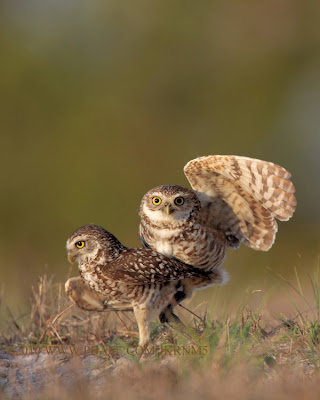
The Burrowing Owl image submitted to Audubon above was photographed near Cape Coral Library in 2010.
While the contest has allowed up to ten images to be submitted this year, I was only able to get six entered for consideration by the deadline.
Unlike last year, Audubon allowed a single image to be submitted this year without paying an entry fee.
The Burrowing Owl image submitted to Audubon above was photographed near Cape Coral Library in 2010.
This year's contest allowed me to have a better understanding of the importance of ensuring easy identification of image files by describing and dating them.
I had attempted to salvage a sluggish computer seemingly overburdened with images (hard drive at 97 percent capacity) by transferring the files to external hard drives while not considering an easy way to identify what the photo files represented.
The Burrowing Owl image submitted to Audubon above was photographed near Cape Coral Library in 2010.
I recall Bob Duckwall advising me that he was reading a book on the subject of how to easily identify stored images quite some time ago.
My primary purpose in entering the Audubon contest the last couple of years has been to offer enlightenment and amusement of the natural wildlife beauty that can readily be seen for the most part in southwest Florida.
The Burrowing Owl image submitted to Audubon above was photographed near Cape Coral Library in 2010.
With the discovery of Burrowing Owl in February 2010, which at the time was a goal merely to document the species as seen in Florida, the experience led to the lion's share of my time devoted to wildlife observation in the early part of the year.
The first encounter made 26 February 2010 led to observation of a mating event that evening mere minutes after sunset.
The Burrowing Owl image submitted to Audubon above was photographed near Cape Coral Library in 2010.
With it noted in David Sibley's Guide to Bird Life and Behavior that mating activity of Burrowing Owls is not well documented, 22 additional trips to Cape Coral, Florida, were made as late as 27 June 2010 this season to help improve the record.
Photography of a mating Burring Owl event requires the inordinate time that might be expected to be spent observing any bird species in the creation of an interesting wildlife image.
The Burrowing Owl image submitted to Audubon above was photographed near Cape Coral Library in 2010.
Such was the case with as many as several hours of observation time devoted to each of seven burrows studied with no guarantee that the owls occupying them would be observed to mate, an event that lasts from five to seven seconds, typically.
Unseasonal late winter/ early spring heavy rains this year were attributed to the delay in the observation of Burrowing Owl fledglings through the flooding of the burrows, but there were many juvenile owls observed on my last visit to Cape Coral as of this writing.
The Burrowing Owl image submitted to Audubon above was photographed near Cape Coral Library in 2010.While the contest has allowed up to ten images to be submitted this year, I was only able to get six entered for consideration by the deadline.
Unlike last year, Audubon allowed a single image to be submitted this year without paying an entry fee.
The Burrowing Owl image submitted to Audubon above was photographed near Cape Coral Library in 2010.This year's contest allowed me to have a better understanding of the importance of ensuring easy identification of image files by describing and dating them.
I had attempted to salvage a sluggish computer seemingly overburdened with images (hard drive at 97 percent capacity) by transferring the files to external hard drives while not considering an easy way to identify what the photo files represented.
The Burrowing Owl image submitted to Audubon above was photographed near Cape Coral Library in 2010.I recall Bob Duckwall advising me that he was reading a book on the subject of how to easily identify stored images quite some time ago.
My primary purpose in entering the Audubon contest the last couple of years has been to offer enlightenment and amusement of the natural wildlife beauty that can readily be seen for the most part in southwest Florida.
The Burrowing Owl image submitted to Audubon above was photographed near Cape Coral Library in 2010.With the discovery of Burrowing Owl in February 2010, which at the time was a goal merely to document the species as seen in Florida, the experience led to the lion's share of my time devoted to wildlife observation in the early part of the year.
The first encounter made 26 February 2010 led to observation of a mating event that evening mere minutes after sunset.
The Burrowing Owl image submitted to Audubon above was photographed near Cape Coral Library in 2010.With it noted in David Sibley's Guide to Bird Life and Behavior that mating activity of Burrowing Owls is not well documented, 22 additional trips to Cape Coral, Florida, were made as late as 27 June 2010 this season to help improve the record.
Photography of a mating Burring Owl event requires the inordinate time that might be expected to be spent observing any bird species in the creation of an interesting wildlife image.
The Burrowing Owl image submitted to Audubon above was photographed near Cape Coral Library in 2010.Such was the case with as many as several hours of observation time devoted to each of seven burrows studied with no guarantee that the owls occupying them would be observed to mate, an event that lasts from five to seven seconds, typically.
Unseasonal late winter/ early spring heavy rains this year were attributed to the delay in the observation of Burrowing Owl fledglings through the flooding of the burrows, but there were many juvenile owls observed on my last visit to Cape Coral as of this writing.
Friday, June 25, 2010
Bunche Beach Preserve Dedication
In the age of segregation in the United States, greatness and legacy was born.
Ranger Hitchcock with Lee County Parks and Recreation above was photographed at San Carlos Bay: Bunch Beach Preserve in June 2010.
In southwest Florida, in 1949, a half acre parcel of land was purchased on San Carlos Bay by those with foresight in Lee County which would in the following year be dedicated to Dr. Ralph Johnson Bunche and was called Bunche Beach.
At its dedication, an estimated 3000 people certainly reveled at one of the first "black" beaches during the historical age of segregation with Bunche Beach today part of and bearing Dr. Bunche's name at San Carlos Bay: Bunch Beach Preserve.
The gentlelady above was photographed at San Carlos Bay: Bunch Beach Preserve in June 2010.
During this earlier period, Dr. Bunch had traveled a path that led him to receive the 1950 Nobel Peace Prize for his United Nations negotiations between Israelis and Arab States in the creation of the Palestine accord.
Dr. Bunche also received the Medal of Freedom from President Kennedy in 1963.
The gentlelady above was photographed at San Carlos Bay: Bunch Beach Preserve in June 2010.
The history of Dr. Bunche is very interesting and I encourage you to research his life.
A remarkable facility constructed for the use of future Bunche Beach Preserve visitors was dedicated on 19 June 2010, while also honoring D.J. "Petro" Petruccelli who served as an executive of the Fort Myers Beach Chamber of Commerce for 22 years and was a 25 year member of the Lee County Parks and Recreation Services Advisory Committee.
Tom Obrock above was photographed at San Carlos Bay: Bunch Beach Preserve in June 2010.
If it weren't for fellow Florida wildlife enthusiast, Tom Obrock, who advised me of the dedication and ribbon cutting at the preserve, I would always regret missing it.
The building on the current 719-acre preserve site has greatly benefited from further land purchases and donations while utilizing solar power for its electrical needs and has composting restrooms with no running water available.
The gentleman above was photographed at San Carlos Bay: Bunch Beach Preserve in June 2010.
The name of the road to Bunche Beach is John Morris, but I thought I heard it referred to as Bunche Road during the ceremony.
This road now terminating at San Carlos Bay from the north was once the primary route across the bay with its wooden bridge destroyed by a hurricane in 1926.
Ranger Miller with Lee County Parks and Recreation above was photographed at San Carlos Bay: Bunch Beach Preserve in June 2010.
The officials re-dedicating the preserve and its new facilities were all passionate in their words and well received by the crowd at hand.
While additional parking spaces were created in the 2010 renovation of the preserve, many were lost seemingly as a compromise.
Senior Supervisor, Cindy Carter, with Lee County Parks and Recreation above was photographed at San Carlos Bay: Bunch Beach Preserve in June 2010.
Significant parking closer to the beach has been eliminated.
Bunche Beach Preserve is one of my favorite venues to visit at any time, but particularly at low tide when one can walk over a large expanse of the bay to observe the often prolific bird activity there.
The gentleman above was photographed at San Carlos Bay: Bunch Beach Preserve in June 2010.
At the time of the ceremony, I was fortunate to observe an Osprey with prey while a few other bird species also passed overhead.
Bunche Beach Preserve has a proclivity to attract the endangered Piping Plover which currently receives federal protection.
Lee County Florida District 4 Commissioner, Tammy Hall, above was photographed at San Carlos Bay: Bunch Beach Preserve in June 2010.
My first observation of the Piping Plover was in the infancy of my interest in birding while at Bunche Beach Preserve.
My interest was of course heightened when I observed this bird species with evidence of numerous captures of it due to the bands on its legs.
The blessing above was photographed at San Carlos Bay: Bunch Beach Preserve in June 2010.
My research of banding has led me to believe that there can be great importance in the pursuit of birding.
While the Piping Plover is rarely seen, wading birds, and shore birds such as Wilson's Plover and Black Skimmer are much more frequently observed at Bunche Beach Preserve and are equally welcome and seen nearly year round.
Lee County Florida District 3 Commissioner, Ray Judah, above was photographed at San Carlos Bay: Bunch Beach Preserve in June 2010.
Least Terns were again observed near the west channel of Bunche Beach Preserve this past week and were actively feeding.
I'm now in my second year of observation of the Least Tern at Bunche Beach Preserve and am wondering where these particular birds are nesting and feeding their young.
The gentlelady above was photographed at San Carlos Bay: Bunch Beach Preserve in June 2010.
Many of my very favored wildlife photographs have been taken at Bunche Beach Preserve and include an image of the Little Blue Heron that I was humbled by having published in the 2010 Jan/Feb issue of Audubon magazine as an editors' choice in the inaugural photo issue of the periodical.
Another photograph taken at this must see venue involves interesting feeding behavior of the Yellow-crowned Night-Heron.
The gentlelady above was photographed at San Carlos Bay: Bunch Beach Preserve in June 2010.
This particular image which I have chosen to use on my contact card was culled from hundreds of thousands of images taken at wildlife venues around Florida.
Google maps has a current snapshot of the site available which was interestingly captured at an apparently very high tide.
The gentlelady above was photographed at San Carlos Bay: Bunch Beach Preserve in June 2010.
Additional writing of my experiences and observations at Bunche Beach Preserve can be seen by clicking here.
A representation of what might be seen through photography at Bunche Beach Preserve can be seen by clicking here.
Roger Clark with Lee County Parks and Recreation offering a tour of the preserve's grounds above was photographed at San Carlos Bay: Bunch Beach Preserve in June 2010.
Visit this astounding venue ideally around sunrise or sunset at low tide when you can.
Be prepared to walk in the water in the bay, while swimming is now an available option at the recreation facility which also offers two kayak launches, two fishing piers, and 310 feet of boardwalk for wildlife viewing.
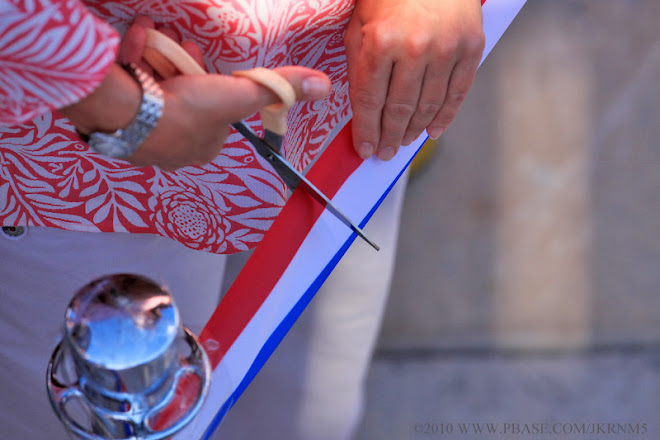
The ribbon cutting above was photographed at San Carlos Bay: Bunch Beach Preserve in June 2010.
There was a tremendous amount of activity and hard work by many in the hours preceding the dedication.
Bunche Beach Preserve is open from dawn to dusk year round.
Ranger Hitchcock with Lee County Parks and Recreation above was photographed at San Carlos Bay: Bunch Beach Preserve in June 2010.In southwest Florida, in 1949, a half acre parcel of land was purchased on San Carlos Bay by those with foresight in Lee County which would in the following year be dedicated to Dr. Ralph Johnson Bunche and was called Bunche Beach.
At its dedication, an estimated 3000 people certainly reveled at one of the first "black" beaches during the historical age of segregation with Bunche Beach today part of and bearing Dr. Bunche's name at San Carlos Bay: Bunch Beach Preserve.
The gentlelady above was photographed at San Carlos Bay: Bunch Beach Preserve in June 2010.During this earlier period, Dr. Bunch had traveled a path that led him to receive the 1950 Nobel Peace Prize for his United Nations negotiations between Israelis and Arab States in the creation of the Palestine accord.
Dr. Bunche also received the Medal of Freedom from President Kennedy in 1963.
The gentlelady above was photographed at San Carlos Bay: Bunch Beach Preserve in June 2010.The history of Dr. Bunche is very interesting and I encourage you to research his life.
A remarkable facility constructed for the use of future Bunche Beach Preserve visitors was dedicated on 19 June 2010, while also honoring D.J. "Petro" Petruccelli who served as an executive of the Fort Myers Beach Chamber of Commerce for 22 years and was a 25 year member of the Lee County Parks and Recreation Services Advisory Committee.
Tom Obrock above was photographed at San Carlos Bay: Bunch Beach Preserve in June 2010.If it weren't for fellow Florida wildlife enthusiast, Tom Obrock, who advised me of the dedication and ribbon cutting at the preserve, I would always regret missing it.
The building on the current 719-acre preserve site has greatly benefited from further land purchases and donations while utilizing solar power for its electrical needs and has composting restrooms with no running water available.
The gentleman above was photographed at San Carlos Bay: Bunch Beach Preserve in June 2010.The name of the road to Bunche Beach is John Morris, but I thought I heard it referred to as Bunche Road during the ceremony.
This road now terminating at San Carlos Bay from the north was once the primary route across the bay with its wooden bridge destroyed by a hurricane in 1926.
Ranger Miller with Lee County Parks and Recreation above was photographed at San Carlos Bay: Bunch Beach Preserve in June 2010.The officials re-dedicating the preserve and its new facilities were all passionate in their words and well received by the crowd at hand.
While additional parking spaces were created in the 2010 renovation of the preserve, many were lost seemingly as a compromise.
Senior Supervisor, Cindy Carter, with Lee County Parks and Recreation above was photographed at San Carlos Bay: Bunch Beach Preserve in June 2010.Significant parking closer to the beach has been eliminated.
Bunche Beach Preserve is one of my favorite venues to visit at any time, but particularly at low tide when one can walk over a large expanse of the bay to observe the often prolific bird activity there.
The gentleman above was photographed at San Carlos Bay: Bunch Beach Preserve in June 2010.At the time of the ceremony, I was fortunate to observe an Osprey with prey while a few other bird species also passed overhead.
Bunche Beach Preserve has a proclivity to attract the endangered Piping Plover which currently receives federal protection.
Lee County Florida District 4 Commissioner, Tammy Hall, above was photographed at San Carlos Bay: Bunch Beach Preserve in June 2010.My first observation of the Piping Plover was in the infancy of my interest in birding while at Bunche Beach Preserve.
My interest was of course heightened when I observed this bird species with evidence of numerous captures of it due to the bands on its legs.
The blessing above was photographed at San Carlos Bay: Bunch Beach Preserve in June 2010.My research of banding has led me to believe that there can be great importance in the pursuit of birding.
While the Piping Plover is rarely seen, wading birds, and shore birds such as Wilson's Plover and Black Skimmer are much more frequently observed at Bunche Beach Preserve and are equally welcome and seen nearly year round.
Lee County Florida District 3 Commissioner, Ray Judah, above was photographed at San Carlos Bay: Bunch Beach Preserve in June 2010.Least Terns were again observed near the west channel of Bunche Beach Preserve this past week and were actively feeding.
I'm now in my second year of observation of the Least Tern at Bunche Beach Preserve and am wondering where these particular birds are nesting and feeding their young.
The gentlelady above was photographed at San Carlos Bay: Bunch Beach Preserve in June 2010.Many of my very favored wildlife photographs have been taken at Bunche Beach Preserve and include an image of the Little Blue Heron that I was humbled by having published in the 2010 Jan/Feb issue of Audubon magazine as an editors' choice in the inaugural photo issue of the periodical.
Another photograph taken at this must see venue involves interesting feeding behavior of the Yellow-crowned Night-Heron.
The gentlelady above was photographed at San Carlos Bay: Bunch Beach Preserve in June 2010.This particular image which I have chosen to use on my contact card was culled from hundreds of thousands of images taken at wildlife venues around Florida.
Google maps has a current snapshot of the site available which was interestingly captured at an apparently very high tide.
The gentlelady above was photographed at San Carlos Bay: Bunch Beach Preserve in June 2010.Additional writing of my experiences and observations at Bunche Beach Preserve can be seen by clicking here.
A representation of what might be seen through photography at Bunche Beach Preserve can be seen by clicking here.
Roger Clark with Lee County Parks and Recreation offering a tour of the preserve's grounds above was photographed at San Carlos Bay: Bunch Beach Preserve in June 2010.Visit this astounding venue ideally around sunrise or sunset at low tide when you can.
Be prepared to walk in the water in the bay, while swimming is now an available option at the recreation facility which also offers two kayak launches, two fishing piers, and 310 feet of boardwalk for wildlife viewing.
The ribbon cutting above was photographed at San Carlos Bay: Bunch Beach Preserve in June 2010.There was a tremendous amount of activity and hard work by many in the hours preceding the dedication.
Bunche Beach Preserve is open from dawn to dusk year round.
Saturday, January 9, 2010
2009 Year In Review II
JULY
The air boat above was photographed at San Carlos Bay: Bunche Beach Preserve in July 2009.
All four opportunities to get into the field led me to San Carlos Bay: Bunche Beach Preserve. The adult male wading birds in particular were at the tail end of showing their breeding colors. All visits to the beach were made in mid afternoon to as late as sunset. I recall at least one occasion when the sand gnats were particularly bad. It was at these times that I had good opportunities to practice attempting to get a better photograph of BIFs (birds in flight). The Reddish Egret put on a great feeding show under less than ideal lighting conditions on the last visit of the month. At a low tide, I was very surprised to see an airboat make its way over the flats and into the West channel. Needless to say, it spooked virtually every bird from my immediate area.
AUGUST
The Snail Kite above was photographed at Harnes Marsh Preserve in August 2009.
I again made numerous trips to Bunche Beach Preserve, three afternoon visits and two in the morning. All were productive for observation of prolific bird activity and photography. Harnes Marsh Preserve was visited for the first time late in the month. I made my first observations of the Snail Kite and Limpkin on this visit to Harnes Marsh. My visit to Bunche Beach on the 23rd offered a territorial battle between two Black-bellied Plovers that lasted a little over three minutes as detailed in the 20 shots I took of them.
SEPTEMBER
The Tricolored Heron above was photographed at Harnes Marsh Preserve in September 2009.
Four more trips to Harnes Marsh Preserve were made including one where I would walk around the preserve in its entirety. The experiences were greatly enjoyable even considering the warmer conditions. I observed the Sandhill Crane for the first time at the Northern edge of the preserve on the 18th.
OCTOBER
The Semipalmated Plover juvenile above was photographed at Little Estero Lagoon in October 2009.
With accommodating weather on a pair of days off from work, I was able to visit Little Estero Lagoon (Critical Wildlife Area) and then Sanibel Lighthouse and Bunche Beach Preserve later in the month. It was my hope to see raptor migration that was not to be this year. I coincidentally met up with a troop of wildlife enthusiasts at Bunche Beach that were participating in Ding Darling Days 2009. My visit to Bunche Beach was directly after I had gone from the lighthouse to DDNWR Wildlife Drive only to find them closed as they are to the general public every Friday. I knew that, but had forgotten.
NOVEMBER
The Tricolored Heron above was photographed at Merritt Island National Wildlife Refuge in November 2009.
It was at this time that I was reminded of one of four photo entries made to Audubon magazine earlier in the summer for their inaugural photo contest which I had forgotten about. I was contacted by Steve Freligh, affiliated with Nature's Best Photography, who notified me that I was considered as a finalist in the amateur category. I made a quick trip across a vast expanse of Florida early in the month while experiencing the East and Panhandle regions of the Great Florida Birding Trail. I passed through 12 "clusters" and 31 venues on the trip. A tremendous highlight was visiting the Merritt Island National Wildlife Refuge. Later in the month I made my sixth trip to Harnes Marsh Preserve where I would again document another species of bird I hadn't photographed before. I also observed here on this occasion what appeared to be a territorial battle between two Great Blue Herons where a drowning seemed assured.
DECEMBER
The Marbled Godwit above was photographed at San Carlos Bay: Bunche Beach Preserve in December 2009.
A trip to Lovers Key State Park was made after much too long a period of time. The erosion at the beach was extremely obvious and I was told that it may be a couple more years before replenishment. The wind was from the South with an opportunity to observe some great action at New Pass as usual. Three afternoon visits to Bunche Beach were made with one other in the morning. I also made a visit to Little Estero Lagoon. At the latter two venues, I had the experience of being in the water at close range to Bottlenose Dolphins. These experiences were a little unnerving as a result of not keeping an eye on them at all times. I was contacted by Audubon to advise me of publication of an image with honorable mention of a Little Blue Heron taken at Bunche Beach Preserve in November 2008.
The air boat above was photographed at San Carlos Bay: Bunche Beach Preserve in July 2009.All four opportunities to get into the field led me to San Carlos Bay: Bunche Beach Preserve. The adult male wading birds in particular were at the tail end of showing their breeding colors. All visits to the beach were made in mid afternoon to as late as sunset. I recall at least one occasion when the sand gnats were particularly bad. It was at these times that I had good opportunities to practice attempting to get a better photograph of BIFs (birds in flight). The Reddish Egret put on a great feeding show under less than ideal lighting conditions on the last visit of the month. At a low tide, I was very surprised to see an airboat make its way over the flats and into the West channel. Needless to say, it spooked virtually every bird from my immediate area.
AUGUST
The Snail Kite above was photographed at Harnes Marsh Preserve in August 2009.I again made numerous trips to Bunche Beach Preserve, three afternoon visits and two in the morning. All were productive for observation of prolific bird activity and photography. Harnes Marsh Preserve was visited for the first time late in the month. I made my first observations of the Snail Kite and Limpkin on this visit to Harnes Marsh. My visit to Bunche Beach on the 23rd offered a territorial battle between two Black-bellied Plovers that lasted a little over three minutes as detailed in the 20 shots I took of them.
SEPTEMBER
The Tricolored Heron above was photographed at Harnes Marsh Preserve in September 2009.Four more trips to Harnes Marsh Preserve were made including one where I would walk around the preserve in its entirety. The experiences were greatly enjoyable even considering the warmer conditions. I observed the Sandhill Crane for the first time at the Northern edge of the preserve on the 18th.
OCTOBER
The Semipalmated Plover juvenile above was photographed at Little Estero Lagoon in October 2009.With accommodating weather on a pair of days off from work, I was able to visit Little Estero Lagoon (Critical Wildlife Area) and then Sanibel Lighthouse and Bunche Beach Preserve later in the month. It was my hope to see raptor migration that was not to be this year. I coincidentally met up with a troop of wildlife enthusiasts at Bunche Beach that were participating in Ding Darling Days 2009. My visit to Bunche Beach was directly after I had gone from the lighthouse to DDNWR Wildlife Drive only to find them closed as they are to the general public every Friday. I knew that, but had forgotten.
NOVEMBER
The Tricolored Heron above was photographed at Merritt Island National Wildlife Refuge in November 2009.It was at this time that I was reminded of one of four photo entries made to Audubon magazine earlier in the summer for their inaugural photo contest which I had forgotten about. I was contacted by Steve Freligh, affiliated with Nature's Best Photography, who notified me that I was considered as a finalist in the amateur category. I made a quick trip across a vast expanse of Florida early in the month while experiencing the East and Panhandle regions of the Great Florida Birding Trail. I passed through 12 "clusters" and 31 venues on the trip. A tremendous highlight was visiting the Merritt Island National Wildlife Refuge. Later in the month I made my sixth trip to Harnes Marsh Preserve where I would again document another species of bird I hadn't photographed before. I also observed here on this occasion what appeared to be a territorial battle between two Great Blue Herons where a drowning seemed assured.
DECEMBER
The Marbled Godwit above was photographed at San Carlos Bay: Bunche Beach Preserve in December 2009.A trip to Lovers Key State Park was made after much too long a period of time. The erosion at the beach was extremely obvious and I was told that it may be a couple more years before replenishment. The wind was from the South with an opportunity to observe some great action at New Pass as usual. Three afternoon visits to Bunche Beach were made with one other in the morning. I also made a visit to Little Estero Lagoon. At the latter two venues, I had the experience of being in the water at close range to Bottlenose Dolphins. These experiences were a little unnerving as a result of not keeping an eye on them at all times. I was contacted by Audubon to advise me of publication of an image with honorable mention of a Little Blue Heron taken at Bunche Beach Preserve in November 2008.
Friday, January 1, 2010
2009 Year In Review I
JANUARY
The Little Blue Heron above was photographed at San Carlos Bay: Bunche Beach Preserve in January 2009.
The beginning of the year was an exceptionally exciting time as I was getting the feel for some newly acquired photography gear that would give me great pleasure and grief. I made a trip to San Carlos Bay: Bunche Beach Preserve (SCBBBP) early in the month and one to Six Mile Cypress Slough Preserve towards the end.
FEBRUARY
The Red-shouldered Hawk above was photographed at Picayune State Forest in February 2009.
A number of Great Florida Birding Trail sites were visited in this month including those in the area of the Florida Everglades while nearly getting lost in Picayune State Forest. I also made a trip to "Ding" Darling National Wildlife Refuge where I observed the Common Merganser for the first time. I made a trip to the east coast where I visited Wakodahatchee Wetlands and Green Cay Wetlands and Nature Center (both venues highly recommended at this time of year). Shore and wading birds were observed in beautiful breeding condition at SCBBBP.
MARCH
The Northern Mockingbird with Bald Eagle and juvenile above was photographed at Lovers Key State Park in March 2009.
I made six trips to Lovers Key State Park to observe the successful nesting of a pair of Bald Eagle fledglings. One of the most exciting sights I've made in all my birding was simply watching an Osprey aggressively defending its territory against an adult eagle. The aerobatics were stunning and never to be forgotten. My trips to National Audubon Corkscrew Swamp Sanctuary in the middle and towards the end of the month offered some extraordinary views from the boardwalk of the wading birds and alligators in very close proximity to each other in the dwindling waters of the "swamp." It was at this time I realized how essentially critical it is to be using flash with one's photography there. To end the month, I made a "day" trip to Key West visiting three clusters of the South Region of the Great Florida Birding Trail and six venues within them. I captured an image of a Palm Warbler at Crane Point Museum and Nature Center in Marathon that I would later enter in Audubon's inaugural photo contest.
APRIL
The Great Egret juvenile above was photographed at San Carlos Bay: Bunche Beach Preserve in April 2009.
I visited Lovers Key State Park, Lakes Park, SCBBBP, Bowditch Point, and Little Estero Island Critical Wildlife Area, at least once. Without doubt, the highlights were the visits to "Bird Island" at SCBBBP including one with fellow wildlife enthusiast and photographer, Alena King, whom had earlier told me of the prolific breeding activity at Bunche Beach Preserve. It was at this time that there was a shutter mechanism failure with my Canon 1dm3 camera coincidentally three months to the day after my first shots with it.
MAY
The Black Skimmer above was photographed at Tigertail Beach in May 2009.
A follow up trip was made to "Bird Island" with Alena at the beginning of the month. The experience for me was extraordinary in the observation of hundreds of nests and the diversity of bird species using them. I used the Nikon D80 solely on these trips to the island with ease of carrying it and the accompanying 70-300mm lens on the Kayak. Also in the early part of the month I visited 16 venues within five clusters of the West Region of the Great Florida Birding Trail (slightly North of the Tampa Bay area and South). An image of a pair of Laughing Gull taken at Sand Key Park in Clearwater would be a second of four images submitted to Audubon. Three trip to Lovers Key State Park were made with hopes to observe the Least Tern breeding on the beach. Their numbers were dramatically lower than those seen in 2007. My first trip to Tigertail Beach was also made for the first time early in the month.
JUNE
The Reddish Egret above was photographed at Lovers Key State Park in June 2009.
Early in the month, I made my second trip to Tigertail Beach that was cut short by a thunderstorm that began to unleash a maelstrom a mere hundred yards from the car. A final trip to Lovers Key State Park was made, not to happen again for six months. The nesting Least Tern activity at Lovers Key was regrettably minimal. Three additional trips were also made to Bunche Beach Preserve. While I've yet to visit Tigertail Beach in the winter months, I greatly favor Bunche Beach by far for its wildlife opportunities in comparing these two similar venues as I've experienced thus far.
The Little Blue Heron above was photographed at San Carlos Bay: Bunche Beach Preserve in January 2009.The beginning of the year was an exceptionally exciting time as I was getting the feel for some newly acquired photography gear that would give me great pleasure and grief. I made a trip to San Carlos Bay: Bunche Beach Preserve (SCBBBP) early in the month and one to Six Mile Cypress Slough Preserve towards the end.
FEBRUARY
The Red-shouldered Hawk above was photographed at Picayune State Forest in February 2009.A number of Great Florida Birding Trail sites were visited in this month including those in the area of the Florida Everglades while nearly getting lost in Picayune State Forest. I also made a trip to "Ding" Darling National Wildlife Refuge where I observed the Common Merganser for the first time. I made a trip to the east coast where I visited Wakodahatchee Wetlands and Green Cay Wetlands and Nature Center (both venues highly recommended at this time of year). Shore and wading birds were observed in beautiful breeding condition at SCBBBP.
MARCH
The Northern Mockingbird with Bald Eagle and juvenile above was photographed at Lovers Key State Park in March 2009.I made six trips to Lovers Key State Park to observe the successful nesting of a pair of Bald Eagle fledglings. One of the most exciting sights I've made in all my birding was simply watching an Osprey aggressively defending its territory against an adult eagle. The aerobatics were stunning and never to be forgotten. My trips to National Audubon Corkscrew Swamp Sanctuary in the middle and towards the end of the month offered some extraordinary views from the boardwalk of the wading birds and alligators in very close proximity to each other in the dwindling waters of the "swamp." It was at this time I realized how essentially critical it is to be using flash with one's photography there. To end the month, I made a "day" trip to Key West visiting three clusters of the South Region of the Great Florida Birding Trail and six venues within them. I captured an image of a Palm Warbler at Crane Point Museum and Nature Center in Marathon that I would later enter in Audubon's inaugural photo contest.
APRIL
The Great Egret juvenile above was photographed at San Carlos Bay: Bunche Beach Preserve in April 2009.I visited Lovers Key State Park, Lakes Park, SCBBBP, Bowditch Point, and Little Estero Island Critical Wildlife Area, at least once. Without doubt, the highlights were the visits to "Bird Island" at SCBBBP including one with fellow wildlife enthusiast and photographer, Alena King, whom had earlier told me of the prolific breeding activity at Bunche Beach Preserve. It was at this time that there was a shutter mechanism failure with my Canon 1dm3 camera coincidentally three months to the day after my first shots with it.
MAY
The Black Skimmer above was photographed at Tigertail Beach in May 2009.A follow up trip was made to "Bird Island" with Alena at the beginning of the month. The experience for me was extraordinary in the observation of hundreds of nests and the diversity of bird species using them. I used the Nikon D80 solely on these trips to the island with ease of carrying it and the accompanying 70-300mm lens on the Kayak. Also in the early part of the month I visited 16 venues within five clusters of the West Region of the Great Florida Birding Trail (slightly North of the Tampa Bay area and South). An image of a pair of Laughing Gull taken at Sand Key Park in Clearwater would be a second of four images submitted to Audubon. Three trip to Lovers Key State Park were made with hopes to observe the Least Tern breeding on the beach. Their numbers were dramatically lower than those seen in 2007. My first trip to Tigertail Beach was also made for the first time early in the month.
JUNE
The Reddish Egret above was photographed at Lovers Key State Park in June 2009.Early in the month, I made my second trip to Tigertail Beach that was cut short by a thunderstorm that began to unleash a maelstrom a mere hundred yards from the car. A final trip to Lovers Key State Park was made, not to happen again for six months. The nesting Least Tern activity at Lovers Key was regrettably minimal. Three additional trips were also made to Bunche Beach Preserve. While I've yet to visit Tigertail Beach in the winter months, I greatly favor Bunche Beach by far for its wildlife opportunities in comparing these two similar venues as I've experienced thus far.
Subscribe to:
Posts (Atom)