The sanctuary for birds over time has continued to evolve and entertain.
The Northern Cardinal with Blue Jay above (image 1) was photographed at Casa Almeida in February 2017.
It was fairly quickly learned that the feeders used to attract wildlife didn't entice just the birds. In mid-winter as the squirrels appeared to become more numerous, they became destructive and a disturbance to the winged creatures.
The Carolina Wren above (image 2) was photographed at Casa Almeida in February 2017.
The Gray Squirrel above (image 3) was photographed at Casa Almeida in February 2017.
The Common Grackle above (image 4) was photographed at Casa Almeida in April 2017.
Eastern Bluebirds briefly investigated a pair of bird houses that had been hung for them but the squirrels were even more so interested in what was inside. The chewing on the holes of the homes by the squirrels made the boxes of no interest to the birds.
The Song Sparrow above (image 5) was photographed at Casa Almeida in April 2017.
The Northern Flicker above (image 6) was photographed at Casa Almeida in April 2017.
The Northern Flicker above (image 7) was photographed at Casa Almeida in April 2017.
The squirrels were often observed through a window which on one occasion allowed the photography of a Carolina Wren seen in the Killingworth sanctuary over only a few day's time. A few of the birds appeared angry due to being harassed by the squirrels though it is merely their particular nature. The Brown Creeper was observed only in the Winter.
The House Finch above (image 8) was photographed at Casa Almeida in April 2017.
The Downy Woodpecker above (image 9) was photographed at Casa Almeida in April 2017.
The Eastern Bluebird above (image 10) was photographed at Casa Almeida in April 2017.
In addition to the squirrels destroying all the plastic feeders despite my best effort to keep the feeders available using parts from one and another with duct tape, they were eating the buds of the rhododendrons thought to be ravaged only by White-tailed deer. The Chipmunks appear attracted to digging in disturbed ground while doing even more damage to the plants and other vegetation.
The Chipmunk above (image 11) was photographed at Casa Almeida in April 2017.
The Turkey Vulture above (image 12) was photographed at Casa Almeida in April 2017.
The Red-shouldered Hawk with prey above (image 13) was photographed at Casa Almeida in April 2017.
The extremely effective design and effectiveness of traps made for the capturing and relocation of small mammals by the Havahart company cannot be understated. Numbers mentioned in this blog might not be believed.
The copulating Red-bellied Woodpecker above (image 14) was photographed at Casa Almeida in April 2017.
The American Robin above (image 15) was photographed at Casa Almeida in April 2017.
The Northern Cardinal above (image 16) was photographed at Casa Almeida in April 2017.
It has been extraordinary to capture a pair of Chipmunks in the same Havahart trap on two different occasions. Photos will be available to view in the last of this series of blog articles with emphasis on backyard birding.
The Red-shouldered Hawk above (image 17) was photographed at Casa Almeida in April 2017.
The European Starling above (image 18) was photographed at Casa Almeida in April 2017.
The Wild Turkey above (image 19) was photographed at Casa Almeida in April 2017.
Travel was made to the Jersey Shore in April offering an encounter with the White-throated Sparrow which was a life bird for me. All of the other bird species seen in Jersey have been at the feeders in Killingworth. A Red-shouldered Hawk nest had been re-constructed in the 2017 season with a fledgling off the nest a mere two days ago from this publication making emphasis of success with prey obviously found just a little bit further away.
The Pine Warbler above (image 20) was photographed at Casa Almeida in April 2017.
The Red-shouldered Hawk above (image 21) was photographed at Casa Almeida in April 2017.
The Brown-headed Cowbird above (image 22) was photographed at Casa Almeida in April 2017.
A Gypsy moth outbreak in Connecticut in the 2017 Spring season might be considered a plague after a couple of years of drier conditions favorable for the decades long invasion. The National Audubon Society has taken the ridiculous position of advocating for the extremely destructive pest which will be mentioned again in the last post of this series.
The Turkey Vulture above (image 23) was photographed at Casa Almeida in April 2017.
The Chipping Sparrow above (image 24) was photographed at Casa Almeida in April 2017.
The White-throated Sparrow above (image 25) was photographed at Casa Kuzminski in April 2017.
Please be sure to be reminded about this Wildlife Blog with the email gadget located at the top of the page.
The Red-shouldered Hawk above (image 26) was photographed at Casa Almeida in April 2017.
The Pileated Woodpecker above (image 27) was photographed at Casa Almeida in April 2017.
Please also see A Bird Sanctuary In Killingworth, CT Pt. I
Please also see A Bird Sanctuary In Killingworth, CT Pt. III
Please also see A Bird Sanctuary In Killingworth, CT Pt. IV
Showing posts with label pileated woodpecker. Show all posts
Friday, June 30, 2017
Friday, June 17, 2016
Sanibel Gardens Preserve
On 12 June 2016, wildlife blogger France Paulsen observed a Fork-tailed Flycatcher at Sanibel Gardens Preserve just north of the Ding Darling National Wildlife Refuge Bailey Tract on Sanibel Island.
The Anhinga above (image 1) was photographed at Sanibel Gardens Preserve in June 2016.
Fork-tailed Flycatcher is a rare Code 3 vagrant in the ABA area. The species' breeding range is in Central and South America. The Fork-tailed Flycatcher at Sanibel Gardens Preserve proved to be a one day wonder which is generally the case for sightings of this species in the United States.
The Mottled Duck above (image 2) was photographed at Sanibel Gardens Preserve in June 2016.
The Northern Cardinal above (image 3) was photographed at Sanibel Gardens Preserve in June 2016.
The Pileated Woodpecker above (image 4) was photographed at Sanibel Gardens Preserve in June 2016.
The Pileated Woodpecker above (image 5) was photographed at Sanibel Gardens Preserve in June 2016.
The Pileated Woodpecker above (image 6) was photographed at Sanibel Gardens Preserve in June 2016.
The Pileated Woodpecker above (image 7) was photographed at Sanibel Gardens Preserve in June 2016.
The Great Egret above (image 8) was photographed at Sanibel Gardens Preserve in June 2016.
The juvenile Fish Crow above (image 9) was photographed at Sanibel Gardens Preserve in June 2016.
The Fish Crow with juvenile above (image 10) was photographed at Sanibel Gardens Preserve in June 2016.
The Fish Crow with juvenile above (image 11) was photographed at Sanibel Gardens Preserve in June 2016.
The White Ibis above (image 12) was photographed at Sanibel Gardens Preserve in June 2016.
The juvenile Little Blue Heron with Snowy Egret above (image 13) was photographed at Sanibel Gardens Preserve in June 2016.
While it has been my intention to explore the 265 acre Sanibel Gardens Preserve extensively, my first visit on 13 June was primarily with hopes of finding the flycatcher. I made my observations primarily at the cell phone tower where France had reported the vagrant the previous day. I stayed until thunder could be heard.
The Tricolored Heron above (image 14) was photographed at Sanibel Gardens Preserve in June 2016.
The Magnificent Frigatebird above (image 15) was photographed at Sanibel Gardens Preserve in June 2016.
Please be sure to be reminded about this weekly Southwest Florida Wildlife Blog with the email gadget located at the top of the page.
The Swallow-tailed Kite above (image 16) was photographed at Sanibel Gardens Preserve in June 2016.
The Anhinga above (image 1) was photographed at Sanibel Gardens Preserve in June 2016.
Fork-tailed Flycatcher is a rare Code 3 vagrant in the ABA area. The species' breeding range is in Central and South America. The Fork-tailed Flycatcher at Sanibel Gardens Preserve proved to be a one day wonder which is generally the case for sightings of this species in the United States.
The Mottled Duck above (image 2) was photographed at Sanibel Gardens Preserve in June 2016.
The Northern Cardinal above (image 3) was photographed at Sanibel Gardens Preserve in June 2016.
The Pileated Woodpecker above (image 4) was photographed at Sanibel Gardens Preserve in June 2016.
The Pileated Woodpecker above (image 5) was photographed at Sanibel Gardens Preserve in June 2016.
The Pileated Woodpecker above (image 6) was photographed at Sanibel Gardens Preserve in June 2016.
The Pileated Woodpecker above (image 7) was photographed at Sanibel Gardens Preserve in June 2016.
The Great Egret above (image 8) was photographed at Sanibel Gardens Preserve in June 2016.
The juvenile Fish Crow above (image 9) was photographed at Sanibel Gardens Preserve in June 2016.
The Fish Crow with juvenile above (image 10) was photographed at Sanibel Gardens Preserve in June 2016.
The Fish Crow with juvenile above (image 11) was photographed at Sanibel Gardens Preserve in June 2016.
The White Ibis above (image 12) was photographed at Sanibel Gardens Preserve in June 2016.
The juvenile Little Blue Heron with Snowy Egret above (image 13) was photographed at Sanibel Gardens Preserve in June 2016.
While it has been my intention to explore the 265 acre Sanibel Gardens Preserve extensively, my first visit on 13 June was primarily with hopes of finding the flycatcher. I made my observations primarily at the cell phone tower where France had reported the vagrant the previous day. I stayed until thunder could be heard.
The Tricolored Heron above (image 14) was photographed at Sanibel Gardens Preserve in June 2016.
The Magnificent Frigatebird above (image 15) was photographed at Sanibel Gardens Preserve in June 2016.
Please be sure to be reminded about this weekly Southwest Florida Wildlife Blog with the email gadget located at the top of the page.
The Swallow-tailed Kite above (image 16) was photographed at Sanibel Gardens Preserve in June 2016.
Friday, October 16, 2015
Ozzie And Harriet: A Closure Part III
On the morning of the 30th, all seemed routine from my perspective while I am certain that others whom had closely been observing the lives of famous eagles Ozzie and Harriet were on pins and needles.
Day 7: 30 September 2015
The waning moon above (image 1) was photographed at the Pritchett Eagle Cam Site in September 2015.
With great sadness it was learned later in the day that Ozzie had passed away at the Clinic for the Rehabilitation of Wildlife (CROW) located in Sanibel Island, Florida. CROW has since created a Ozzie Memorial Fund to benefit the treatment of wildlife with complex injuries.
The Fish Crow above (image 2) was photographed at the Pritchett Eagle Cam Site in September 2015.
The Boat-tailed Grackle above (image 3) was photographed at the Pritchett Eagle Cam Site in September 2015.
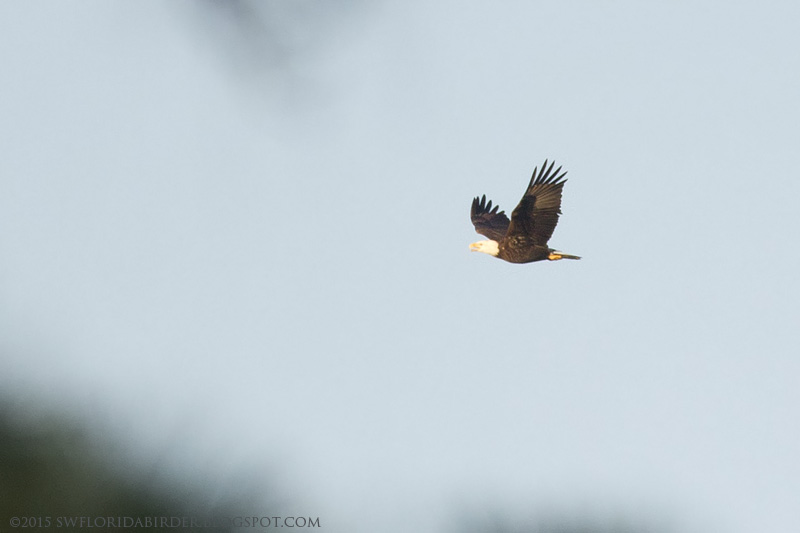
The Bald Eagle (Harriet) above (image 4) was photographed at the Pritchett Eagle Cam Site in September 2015.
The Blue Jay above (image 5) was photographed at the Pritchett Eagle Cam Site in September 2015.
The Mourning Dove above (image 6) was photographed at the Pritchett Eagle Cam Site in September 2015.
On the morning of the 30th I saw Dee Kelly who was again observing the SWFEC eagle nest. I would not know of her involvement in the attempt to save Ozzie until the following morning. This article continues with observations at the nest on the morning after the passing of Ozzie the eagle and beyond.
The dark morph Short-tailed Hawk above (image 7) was photographed at the Pritchett Eagle Cam Site in September 2015.
The dark morph Short-tailed Hawk above (image 8) was photographed at the Pritchett Eagle Cam Site in September 2015.
The dark morph Short-tailed Hawk above (image 9) was photographed at the Pritchett Eagle Cam Site in September 2015.
The dark morph Short-tailed Hawk above (image 10) was photographed at the Pritchett Eagle Cam Site in September 2015.
The White Ibis above (image 11) was photographed at the Pritchett Eagle Cam Site in September 2015.
It is unfortunate that under the best of medical care, intentions, and positive expectations, that the worst outcome can occur. While those at CROW were certainly mourning Ozzie's the day after his passing, it is with reflection so fitting that a fellow raptor (Short-tailed Hawk) would repeatedly circle over the SWFEC site on the 30th. I was fortunate to observe Harriet twice this day.
The Black Vulture above (image 12) was photographed at the Pritchett Eagle Cam Site in September 2015.
The Bald Eagle (Harriet) above (image 13) was photographed at the Pritchett Eagle Cam Site in September 2015.
Day 8: 1 October 2015
The scene above (image 14) was photographed at the Pritchett Eagle Cam Site in October 2015.
A collection of sympathy flowers and photos would begin to be placed at the southeast perimeter of the SWFEC site on the property of The Church of the Nazarene where Pastor Van graciously allows parking to accommodate observation of the wildlife.
The horse above (image 15) was photographed at the Pritchett Eagle Cam Site in October 2015.
The Bald Eagle (Slim) above (image 16) was photographed at the Pritchett Eagle Cam Site in October 2015.
The Bald Eagle (Slim) above (image 17) was photographed at the Pritchett Eagle Cam Site in October 2015.
The Pileated Woodpecker above (image 18) was photographed at the Pritchett Eagle Cam Site in October 2015.
The European Starling above (image 19) was photographed at the Pritchett Eagle Cam Site in October 2015.
Harriet and Slim flew to the south from the nest tree before sunrise on the 1st. Slim's perseverance to have Harriet accept him appeared to be gaining traction. In the nick of time, the Pritchett SWFEC cams had been installed by the first official day of the eagle nesting season (1 October), but would not be functioning as planned for at least few more days.
The Boat-tailed Grackle above (image 20) was photographed at the Pritchett Eagle Cam Site in October 2015.
The Northern Mockingbird above (image 21) was photographed at the Pritchett Eagle Cam Site in October 2015.
The Pileated Woodpecker above (image 22) was photographed at the Pritchett Eagle Cam Site in October 2015.
A local news crew with NBC2 was on hand to create a report on the loss of Ozzie. Representatives from the Florida Fish and Wildlife Commission were on hand to answer any questions they may have had.
The news videographer above (image 23) was photographed at the Pritchett Eagle Cam Site in October 2015.
The Cooper's Hawk above (image 24) was photographed at the Pritchett Eagle Cam Site in October 2015.
Day 9: 2 October 2015
The Bald Eagle (Harriet and Slim) above (image 25) was photographed at the Pritchett Eagle Cam Site in October 2015.
In the continued absence of M15 (last seen on 23 September), Slim was at the nest with Harriet when I arrived at the nest site. Very shortly after sunrise, both Harriet and Slim took flight to the north to apparently perch on the power poles that offer a view of the nest.
The Green Heron above (image 26) was photographed at the Pritchett Eagle Cam Site in October 2015.
The Pileated Woodpecker (male at left) above (image 27) was photographed at the Pritchett Eagle Cam Site in October 2015.
The Fish Crow above (image 28) was photographed at the Pritchett Eagle Cam Site in October 2015.
In the absence of the eagles at the nest, other bird species were active and drawing my attention as usual. A Northern Flicker was apparently minding its business until it caught the attention of Pileated Woodpecker that eventually drove it away.
The Northern Flicker with Pileated Woodpecker above (image 29) was photographed at the Pritchett Eagle Cam Site in October 2015.
The Northern Flicker with Pileated Woodpecker above (image 30) was photographed at the Pritchett Eagle Cam Site in October 2015.
The Northern Flicker with Pileated Woodpecker above (image 31) was photographed at the Pritchett Eagle Cam Site in October 2015.
The Northern Flicker, worthy of a special trip for observations of it, can more readily be seen at Babcock/ Webb Wildlife Management Area to the north.
The Red-shouldered Hawk above (image 32) was photographed at the Pritchett Eagle Cam Site in October 2015.
The Bald Eagle (Slim and Harriet) above (image 33) was photographed at the Pritchett Eagle Cam Site in October 2015.
The Bald Eagle (Harriet and Slim) above (image 34) was photographed at the Pritchett Eagle Cam Site in October 2015.
At the end of observations on the 2nd there was an overflight of a hawk at a very high altitude. Not knowing for sure what type it was, I sent the image of the bird to Vince McGrath who identified it as Red-tailed Hawk.
The Bald Eagle (Harriet) above (image 35) was photographed at the Pritchett Eagle Cam Site in October 2015.
The Bald Eagle (Harriet) above (image 36) was photographed at the Pritchett Eagle Cam Site in October 2015.
A couple of hours after sunrise, Harriet and Slim came back into view. They made a not too distant flyby of the nest and then appeared to tolerate each other as they flew further and higher toward the west. In image review, it appears clearly that Slim is following Harriet.
The Red-tailed Hawk above (image 37) was photographed at the Pritchett Eagle Cam Site in October 2015.
Day 10: 3 October 2015
The Bald Eagle (Harriet) above (image 38) was photographed at the Pritchett Eagle Cam Site in October 2015.
Harriet and Slim were again in the nest tree when I arrived on the morning of the 3rd. Harriet took flight to the south before sunrise with Slim immediately on her tail. Both of them ultimately landed on the Cell tower. Harriet gave Slim her "famous kick," as I've heard Donna McMurrer describe it.
The European Starling above (image 39) was photographed at the Pritchett Eagle Cam Site in October 2015.
The Pileated Woodpecker above (image 40) was photographed at the Pritchett Eagle Cam Site in October 2015.
The Bald Eagle (Slim) above (image 41) was photographed at the Pritchett Eagle Cam Site in October 2015.
The Bald Eagle (Harriet) above (image 42) was photographed at the Pritchett Eagle Cam Site in October 2015.
The Bald Eagle (Harriet and Slim) above (image 43) was photographed at the Pritchett Eagle Cam Site in October 2015.
Perhaps not knowing it was contact of affection, Slim took off from the Cell tower and landed in the nest tree. About 15 minutes later it started to rain, with Harriet returning to the nest tree forcing Slim to take flight.
The Bald Eagle (Slim) above (image 44) was photographed at the Pritchett Eagle Cam Site in October 2015.
The Bald Eagle (Slim) above (image 45) was photographed at the Pritchett Eagle Cam Site in October 2015.
The Bald Eagle (Slim) above (image 46) was photographed at the Pritchett Eagle Cam Site in October 2015.
The Bald Eagle (Slim) above (image 47) was photographed at the Pritchett Eagle Cam Site in October 2015.
The Bald Eagle (Slim) above (image 48) was photographed at the Pritchett Eagle Cam Site in October 2015.
Slim landed on an adjacent tree for the first time in my observations before he returned to the nest tree about ten minutes later. He first landed in the nest and rearranged sticks before perching on the "porch." Other named parts of the nest tree can be learned about at the Pritchett SWFEC website.
The Bald Eagle (Slim) above (image 49) was photographed at the Pritchett Eagle Cam Site in October 2015.
The Bald Eagle (Slim) above (image 50) was photographed at the Pritchett Eagle Cam Site in October 2015.
About an hour later Harriet took off from the nest tree toward the west while Slim again immediately followed her. It was a few hours after sunrise when Harriet and Slim were observed toward the west riding the thermals. They appeared to be getting much better acquainted.
The Bald Eagle (Harriet) above (image 51) was photographed at the Pritchett Eagle Cam Site in October 2015.
Please also see Ozzie And Harriet: A Closure Pt. I
Please also see Ozzie And Harriet: A Closure Pt. II
Day 7: 30 September 2015
The waning moon above (image 1) was photographed at the Pritchett Eagle Cam Site in September 2015.
With great sadness it was learned later in the day that Ozzie had passed away at the Clinic for the Rehabilitation of Wildlife (CROW) located in Sanibel Island, Florida. CROW has since created a Ozzie Memorial Fund to benefit the treatment of wildlife with complex injuries.
The Fish Crow above (image 2) was photographed at the Pritchett Eagle Cam Site in September 2015.
The Boat-tailed Grackle above (image 3) was photographed at the Pritchett Eagle Cam Site in September 2015.
The Bald Eagle (Harriet) above (image 4) was photographed at the Pritchett Eagle Cam Site in September 2015.
The Blue Jay above (image 5) was photographed at the Pritchett Eagle Cam Site in September 2015.
The Mourning Dove above (image 6) was photographed at the Pritchett Eagle Cam Site in September 2015.
On the morning of the 30th I saw Dee Kelly who was again observing the SWFEC eagle nest. I would not know of her involvement in the attempt to save Ozzie until the following morning. This article continues with observations at the nest on the morning after the passing of Ozzie the eagle and beyond.
The dark morph Short-tailed Hawk above (image 7) was photographed at the Pritchett Eagle Cam Site in September 2015.
The dark morph Short-tailed Hawk above (image 8) was photographed at the Pritchett Eagle Cam Site in September 2015.
The dark morph Short-tailed Hawk above (image 9) was photographed at the Pritchett Eagle Cam Site in September 2015.
The dark morph Short-tailed Hawk above (image 10) was photographed at the Pritchett Eagle Cam Site in September 2015.
The White Ibis above (image 11) was photographed at the Pritchett Eagle Cam Site in September 2015.
It is unfortunate that under the best of medical care, intentions, and positive expectations, that the worst outcome can occur. While those at CROW were certainly mourning Ozzie's the day after his passing, it is with reflection so fitting that a fellow raptor (Short-tailed Hawk) would repeatedly circle over the SWFEC site on the 30th. I was fortunate to observe Harriet twice this day.
The Black Vulture above (image 12) was photographed at the Pritchett Eagle Cam Site in September 2015.
The Bald Eagle (Harriet) above (image 13) was photographed at the Pritchett Eagle Cam Site in September 2015.
Day 8: 1 October 2015
The scene above (image 14) was photographed at the Pritchett Eagle Cam Site in October 2015.
A collection of sympathy flowers and photos would begin to be placed at the southeast perimeter of the SWFEC site on the property of The Church of the Nazarene where Pastor Van graciously allows parking to accommodate observation of the wildlife.
The horse above (image 15) was photographed at the Pritchett Eagle Cam Site in October 2015.
The Bald Eagle (Slim) above (image 16) was photographed at the Pritchett Eagle Cam Site in October 2015.
The Bald Eagle (Slim) above (image 17) was photographed at the Pritchett Eagle Cam Site in October 2015.
The Pileated Woodpecker above (image 18) was photographed at the Pritchett Eagle Cam Site in October 2015.
The European Starling above (image 19) was photographed at the Pritchett Eagle Cam Site in October 2015.
Harriet and Slim flew to the south from the nest tree before sunrise on the 1st. Slim's perseverance to have Harriet accept him appeared to be gaining traction. In the nick of time, the Pritchett SWFEC cams had been installed by the first official day of the eagle nesting season (1 October), but would not be functioning as planned for at least few more days.
The Boat-tailed Grackle above (image 20) was photographed at the Pritchett Eagle Cam Site in October 2015.
The Northern Mockingbird above (image 21) was photographed at the Pritchett Eagle Cam Site in October 2015.
The Pileated Woodpecker above (image 22) was photographed at the Pritchett Eagle Cam Site in October 2015.
A local news crew with NBC2 was on hand to create a report on the loss of Ozzie. Representatives from the Florida Fish and Wildlife Commission were on hand to answer any questions they may have had.
The news videographer above (image 23) was photographed at the Pritchett Eagle Cam Site in October 2015.
The Cooper's Hawk above (image 24) was photographed at the Pritchett Eagle Cam Site in October 2015.
Day 9: 2 October 2015
The Bald Eagle (Harriet and Slim) above (image 25) was photographed at the Pritchett Eagle Cam Site in October 2015.
In the continued absence of M15 (last seen on 23 September), Slim was at the nest with Harriet when I arrived at the nest site. Very shortly after sunrise, both Harriet and Slim took flight to the north to apparently perch on the power poles that offer a view of the nest.
The Green Heron above (image 26) was photographed at the Pritchett Eagle Cam Site in October 2015.
The Pileated Woodpecker (male at left) above (image 27) was photographed at the Pritchett Eagle Cam Site in October 2015.
The Fish Crow above (image 28) was photographed at the Pritchett Eagle Cam Site in October 2015.
In the absence of the eagles at the nest, other bird species were active and drawing my attention as usual. A Northern Flicker was apparently minding its business until it caught the attention of Pileated Woodpecker that eventually drove it away.
The Northern Flicker with Pileated Woodpecker above (image 29) was photographed at the Pritchett Eagle Cam Site in October 2015.
The Northern Flicker with Pileated Woodpecker above (image 30) was photographed at the Pritchett Eagle Cam Site in October 2015.
The Northern Flicker with Pileated Woodpecker above (image 31) was photographed at the Pritchett Eagle Cam Site in October 2015.
The Northern Flicker, worthy of a special trip for observations of it, can more readily be seen at Babcock/ Webb Wildlife Management Area to the north.
The Red-shouldered Hawk above (image 32) was photographed at the Pritchett Eagle Cam Site in October 2015.
The Bald Eagle (Slim and Harriet) above (image 33) was photographed at the Pritchett Eagle Cam Site in October 2015.
The Bald Eagle (Harriet and Slim) above (image 34) was photographed at the Pritchett Eagle Cam Site in October 2015.
At the end of observations on the 2nd there was an overflight of a hawk at a very high altitude. Not knowing for sure what type it was, I sent the image of the bird to Vince McGrath who identified it as Red-tailed Hawk.
The Bald Eagle (Harriet) above (image 35) was photographed at the Pritchett Eagle Cam Site in October 2015.
The Bald Eagle (Harriet) above (image 36) was photographed at the Pritchett Eagle Cam Site in October 2015.
A couple of hours after sunrise, Harriet and Slim came back into view. They made a not too distant flyby of the nest and then appeared to tolerate each other as they flew further and higher toward the west. In image review, it appears clearly that Slim is following Harriet.
The Red-tailed Hawk above (image 37) was photographed at the Pritchett Eagle Cam Site in October 2015.
Day 10: 3 October 2015
The Bald Eagle (Harriet) above (image 38) was photographed at the Pritchett Eagle Cam Site in October 2015.
Harriet and Slim were again in the nest tree when I arrived on the morning of the 3rd. Harriet took flight to the south before sunrise with Slim immediately on her tail. Both of them ultimately landed on the Cell tower. Harriet gave Slim her "famous kick," as I've heard Donna McMurrer describe it.
The European Starling above (image 39) was photographed at the Pritchett Eagle Cam Site in October 2015.
The Pileated Woodpecker above (image 40) was photographed at the Pritchett Eagle Cam Site in October 2015.
The Bald Eagle (Slim) above (image 41) was photographed at the Pritchett Eagle Cam Site in October 2015.
The Bald Eagle (Harriet) above (image 42) was photographed at the Pritchett Eagle Cam Site in October 2015.
The Bald Eagle (Harriet and Slim) above (image 43) was photographed at the Pritchett Eagle Cam Site in October 2015.
Perhaps not knowing it was contact of affection, Slim took off from the Cell tower and landed in the nest tree. About 15 minutes later it started to rain, with Harriet returning to the nest tree forcing Slim to take flight.
The Bald Eagle (Slim) above (image 44) was photographed at the Pritchett Eagle Cam Site in October 2015.
The Bald Eagle (Slim) above (image 45) was photographed at the Pritchett Eagle Cam Site in October 2015.
The Bald Eagle (Slim) above (image 46) was photographed at the Pritchett Eagle Cam Site in October 2015.
The Bald Eagle (Slim) above (image 47) was photographed at the Pritchett Eagle Cam Site in October 2015.
The Bald Eagle (Slim) above (image 48) was photographed at the Pritchett Eagle Cam Site in October 2015.
Slim landed on an adjacent tree for the first time in my observations before he returned to the nest tree about ten minutes later. He first landed in the nest and rearranged sticks before perching on the "porch." Other named parts of the nest tree can be learned about at the Pritchett SWFEC website.
The Bald Eagle (Slim) above (image 49) was photographed at the Pritchett Eagle Cam Site in October 2015.
The Bald Eagle (Slim) above (image 50) was photographed at the Pritchett Eagle Cam Site in October 2015.
About an hour later Harriet took off from the nest tree toward the west while Slim again immediately followed her. It was a few hours after sunrise when Harriet and Slim were observed toward the west riding the thermals. They appeared to be getting much better acquainted.
The Bald Eagle (Harriet) above (image 51) was photographed at the Pritchett Eagle Cam Site in October 2015.
Please also see Ozzie And Harriet: A Closure Pt. I
Please also see Ozzie And Harriet: A Closure Pt. II
Subscribe to:
Posts (Atom)