Well worth the drive from the southwest Florida Gulf beaches is another wildlife venue called Dinner Island Ranch Wildlife Management Area that can occupy your entire day.
The Swallow-tailed Kite above (image 1) was photographed at Dinner Island Ranch WMA in May 2015.
The observations made at Dinner Island Ranch WMA on 16 May were better than expected, with photo documentation unfortunately not anywhere near representative of that which was seen and heard.
The Swallow-tailed Kite above (image 2) was photographed at Dinner Island Ranch WMA in May 2015.
The Swallow-tailed Kite above (image 3) was photographed at Dinner Island Ranch WMA in May 2015.
The Swallow-tailed Kite above (image 4) was photographed at Dinner Island Ranch WMA in May 2015.
The Swallow-tailed Kite above (image 5) was photographed at Dinner Island Ranch WMA in May 2015.
The first birds seen after entering the huge wildlife venue were Eastern Meadowlark. They could additionally be heard throughout the WMA. While the Northern Bobwhite was heard in seemingly equal numbers, the elusive species was not seen.
The Swallow-tailed Kite above (image 6) was photographed at Dinner Island Ranch WMA in May 2015.
The Swallow-tailed Kite above (image 7) was photographed at Dinner Island Ranch WMA in May 2015.
The Swallow-tailed Kite above (image 8) was photographed at Dinner Island Ranch WMA in May 2015.
The Swallow-tailed Kite above (image 9) was photographed at Dinner Island Ranch WMA in May 2015.
A pair of Swallow-tailed Kite were observed early and were followed west until they could no longer be seen. A lone Limpkin was observed very close to the roadway, but was not tolerant for a photo op even at a great range.
The Limpkin above (image 10) was photographed at Dinner Island Ranch WMA in May 2015.
The cattle above (image 11) was photographed at Dinner Island Ranch WMA in May 2015.
The Eastern Meadowlark above (image 12) was photographed at Dinner Island Ranch WMA in May 2015.
The Eastern Meadowlark above (image 13) was photographed at Dinner Island Ranch WMA in May 2015.
Perhaps the most enjoyable moment was when a Red-shouldered Hawk was observed to carry away what appeared a three foot Black Racer snake. This was an occasion when I was reminded of Frank Constantin telling me of his success by using the car as a blind for photography.
The Eastern Meadowlark above (image 14) was photographed at Dinner Island Ranch WMA in May 2015.
The Red-shouldered Hawk above (image 15) was photographed at Dinner Island Ranch WMA in May 2015.
The Common Ground Dove above (image 16) was photographed at Dinner Island Ranch WMA in May 2015.
The Cattle Egret above (image 17) was photographed at Dinner Island Ranch WMA in May 2015.
This trip to Dinner Island Ranch WMA was extremely enjoyable with the venue recommended to you for your potential interest. The cattle were in much larger numbers on this trip to the "working ranch," and had to be prodded out of the way from the middle of the road on occasion.
The cattle above (image 17) was photographed at Dinner Island Ranch WMA in May 2015.
The White-tailed Deer above (image 18) was photographed at Dinner Island Ranch WMA in May 2015.
The White-tailed Deer above (image 19) was photographed at Dinner Island Ranch WMA in May 2015.
The White-tailed Deer above (image 20) was photographed at Dinner Island Ranch WMA in May 2015.
Hunting at this venue is permitted, so you are encouraged to be aware of approved hunt dates.
The Turkey Vulture above (image 21) was photographed at Dinner Island Ranch WMA in May 2015.
Please see my initial report about this venue for additional thoughts and observations.
Showing posts with label hunting. Show all posts
Friday, May 22, 2015
Saturday, March 19, 2011
Too Many Birds At Ding Darling NWR
The title of this post is made in jest while it's somewhat accurate with regard to my perceptions for bird photography at J. N. Ding Darling National Wildlife Refuge of late.
The Great Egret with White Ibis above was photographed at J. N. Ding Darling National Wildlife Refuge in March 2011.
Of course, an early morning visit to the refuge at a low tide is the ideal time to be here for wildlife observation.
At that time, the rising sun will be for the most part behind you as you make your way along Wildlife Drive.
The Roseate Spoonbill above was photographed at J. N. Ding Darling National Wildlife Refuge in March 2011.
To clarify earlier comments made related to the importance of the tidal conditions, it is best to arrive at Ding Darling four to five hours after a low tide at Matanzas Pass timing a visit as close to sunrise as possible.
The time of an ideal low tide will vary depending on the time of year of your visit.
The Ring-billed Gull above was photographed at J. N. Ding Darling National Wildlife Refuge in March 2011.
Biting sand gnats can be a nuisance at the Refuge as I've observed in virtually all of my visits, so you may want to have an insect repellent with DEET available.
Please note that if viewing the exif data for any of the photographs taken this week that I failed to change the time ahead an hour in my camera.
The White Pelican above was photographed at J. N. Ding Darling National Wildlife Refuge in March 2011.
I've observed the tide to change this many hours after the low at Water Control Structure 2 with predictability.
My last three visits to the Refuge have been particularly overwhelming in the wildlife seen.
The Roseate Spoonbill above was photographed at J. N. Ding Darling National Wildlife Refuge in March 2011.
This smacks in the face of commentary I've been told or read that there has been a reduction in wildlife observations made in recent years across the state of Florida.
I've given some thought to this perception and what the explanation for it may be.
The White Pelican above was photographed at J. N. Ding Darling National Wildlife Refuge in March 2011.
I have been diligently observing wildlife in southwest Florida for about four years with 12 favorite venues that I visit as regularly as possible.
These southwest Florida venues include Ding Darling, Bunche Beach, Estero Lagoon, Lovers Key, Harns Marsh, Lakes Park, Corkscrew Swamp, Six Mile Cypress, Venice Rookery, Eagle Lakes, Tigertail, and Babcock Webb in no particular order.
The Double-crested Cormorant above was photographed at J. N. Ding Darling National Wildlife Refuge in March 2011.
So what might be the cause for such a negative perception of a wildlife decline?
I can think of a few things that may have different degrees of relevance.
The Great Egret above was photographed at J. N. Ding Darling National Wildlife Refuge in March 2011.
Foremost is perhaps the unprecedented back to back hurricane seasons of 2004 and 2005 when hurricanes Charley, Frances, Ivan, and Jeanne in '04 and Dennis, Katrina, Rita, and Wilma in '05 undoubtedly devastated countless nesting colonies.
Hurricane Charley is particularly noted as having changed the ecology and topography of Ding Darling NWR.
The Double-crested Cormorant above was photographed at J. N. Ding Darling National Wildlife Refuge in March 2011.
Hurricane activity in Florida has fortunately been subdued in more recent years giving wildlife the opportunity to recover with more favorable conditions.
Abnormally cold weather the last two winters has possibly impacted birds favorably in Florida with the '09-'10 fish kill when wading birds gorged themselves earlier than they typically do when water levels are at there lowest before the start of the rainy season.
The Great Egret above was photographed at J. N. Ding Darling National Wildlife Refuge in March 2011.
A comment overheard by a volunteer at Ding Darling noted however that rainfall, whether plentiful or not, has not been a cause of the failure of Wood Stork nesting colonies at Corkscrew Swamp Sanctuary the last couple of years to the extent that cold weather has been.
Wood Stork have been seen in the Fort Myers area with frequency this winter (though not this past week), particularly at Ding Darling NWR and Harns Marsh Preserve.
The Pied-billed Grebe above was photographed at J. N. Ding Darling National Wildlife Refuge in March 2011.
In addition to the above speculated uncontrollable forces, I've made observations that have negative impacts from moment to moment.
Most recently was an observation of a few young kids at Estero Lagoon that were running into a flock of resting birds near the surf.
The playful activity above was photographed at Estero Lagoon in February 2011.
This event reminded me of kids doing the same on the flats at Lovers Key State Park at New Pass with much greater numbers of birds impacted a few years ago.
The lack of parental supervision is disappointingly seen with positive efforts made at Ding Darling noted recently as a bus load of kids passing by were heard educated about the wildlife they could see.
The Pied-billed Grebe above was photographed at J. N. Ding Darling National Wildlife Refuge in March 2011.
The education about wildlife has been made in the form of questions like, "What do you see?"
On occasion I've also observed pets that are allowed to run unrestrained by their owners with the dogs as expected attempting to play with wildlife which reacts as you might expect.
The White Ibis above was photographed at J. N. Ding Darling National Wildlife Refuge in March 2011.
I'm not sure the impact of exotic pet release or hunting, but these factors may have notable impact for observations of wildlife as well.
Florida has allowed the hunting of snakes in the Everglades this past year.
The Belted Kingfisher above was photographed at J. N. Ding Darling National Wildlife Refuge in March 2011.
I've encountered an abundance of wildlife during my visits to the venues mentioned in this post with very rare exception.
Ding Darling NWR was my sole focus this week devoting much time along Wildlife Drive at my favored observation point at WCS2 with numerous observations made that were no less than extraordinary.
The Little Blue Heron juvenile above was photographed at J. N. Ding Darling National Wildlife Refuge in March 2011.
As was normal in the moon's cycle, the favored low tides had been getting higher and later in the morning each day.
I believe this was the cause of fewer birds seen overall on each successive visit to the refuge while the most recent visit I found to be the most memorable.
The Pied-billed Grebe above was photographed at J. N. Ding Darling National Wildlife Refuge in March 2011.
A Swallow-tailed Kite was seen for the first time this season as it gracefully circled above.
Toward the west near mid-morning I thought I observed smoke rising into the sky, but it was thousands of Tree Swallows upon closer inspection.
The Swallow-tailed Kite above was photographed at J. N. Ding Darling National Wildlife Refuge in March 2011.
There were many opportunities to observe feeding behavior, overflights of birds, and the mere daily routine of the interesting avian creatures.
I was able to photograph for the first time the double crest of a cormorant which is not an easy thing to do even considering how abundant this species is in the area.
The Tree Swallow with egret above was photographed at J. N. Ding Darling National Wildlife Refuge in March 2011.
An adult Snowy Egret was not tolerant of a juvenile that was within its territory.
A distinctive waterfowl observed flying with a pair of Mottled Duck would be identified as the rarely seen Northern Shoveler at the Refuge.
The Northern Shoveler above was photographed at J. N. Ding Darling National Wildlife Refuge in March 2011.
And perhaps the most exhilarating experience was an overflight of about a hundred Willet that strafed me at less than ten feet from behind.
The allure of Indigo Trail has been incredibly enticing, though yet to be explored.
The Willet above was photographed at J. N. Ding Darling National Wildlife Refuge in March 2011.
Too many birds at the refuge has been my concern for a photograph of the wildlife without a distraction in an image taken of a particular subject ideally engaging in behavioral action.
I'm not a fan of manipulating photographs beyond traditional means though desperately need to learn how to add canvas to an image which I hope to do in the near future.
The Double-crested Cormorant above was photographed at J. N. Ding Darling National Wildlife Refuge in March 2011.
For returning visitors to my blog, I hope you find the new look appealing.
I'm grateful to Tim Rucci for his help with my Pbase style sheet while attempting to emulate it in this blog.
The Pied-billed Grebe above was photographed at J. N. Ding Darling National Wildlife Refuge in March 2011.
I cannot emphasize enough the importance of timing visits to venues nearby the Gulf of Mexico for the most part at a low or near low tide.
If you fail to do this, you may end up being disappointed.
The Brown Pelican above was photographed at J. N. Ding Darling National Wildlife Refuge in March 2011.
The Great Egret with White Ibis above was photographed at J. N. Ding Darling National Wildlife Refuge in March 2011.Of course, an early morning visit to the refuge at a low tide is the ideal time to be here for wildlife observation.
At that time, the rising sun will be for the most part behind you as you make your way along Wildlife Drive.
The Roseate Spoonbill above was photographed at J. N. Ding Darling National Wildlife Refuge in March 2011.To clarify earlier comments made related to the importance of the tidal conditions, it is best to arrive at Ding Darling four to five hours after a low tide at Matanzas Pass timing a visit as close to sunrise as possible.
The time of an ideal low tide will vary depending on the time of year of your visit.
The Ring-billed Gull above was photographed at J. N. Ding Darling National Wildlife Refuge in March 2011.Biting sand gnats can be a nuisance at the Refuge as I've observed in virtually all of my visits, so you may want to have an insect repellent with DEET available.
Please note that if viewing the exif data for any of the photographs taken this week that I failed to change the time ahead an hour in my camera.
The White Pelican above was photographed at J. N. Ding Darling National Wildlife Refuge in March 2011.I've observed the tide to change this many hours after the low at Water Control Structure 2 with predictability.
My last three visits to the Refuge have been particularly overwhelming in the wildlife seen.
The Roseate Spoonbill above was photographed at J. N. Ding Darling National Wildlife Refuge in March 2011.This smacks in the face of commentary I've been told or read that there has been a reduction in wildlife observations made in recent years across the state of Florida.
I've given some thought to this perception and what the explanation for it may be.
The White Pelican above was photographed at J. N. Ding Darling National Wildlife Refuge in March 2011.I have been diligently observing wildlife in southwest Florida for about four years with 12 favorite venues that I visit as regularly as possible.
These southwest Florida venues include Ding Darling, Bunche Beach, Estero Lagoon, Lovers Key, Harns Marsh, Lakes Park, Corkscrew Swamp, Six Mile Cypress, Venice Rookery, Eagle Lakes, Tigertail, and Babcock Webb in no particular order.
The Double-crested Cormorant above was photographed at J. N. Ding Darling National Wildlife Refuge in March 2011.So what might be the cause for such a negative perception of a wildlife decline?
I can think of a few things that may have different degrees of relevance.
The Great Egret above was photographed at J. N. Ding Darling National Wildlife Refuge in March 2011.Foremost is perhaps the unprecedented back to back hurricane seasons of 2004 and 2005 when hurricanes Charley, Frances, Ivan, and Jeanne in '04 and Dennis, Katrina, Rita, and Wilma in '05 undoubtedly devastated countless nesting colonies.
Hurricane Charley is particularly noted as having changed the ecology and topography of Ding Darling NWR.
The Double-crested Cormorant above was photographed at J. N. Ding Darling National Wildlife Refuge in March 2011.Hurricane activity in Florida has fortunately been subdued in more recent years giving wildlife the opportunity to recover with more favorable conditions.
Abnormally cold weather the last two winters has possibly impacted birds favorably in Florida with the '09-'10 fish kill when wading birds gorged themselves earlier than they typically do when water levels are at there lowest before the start of the rainy season.
The Great Egret above was photographed at J. N. Ding Darling National Wildlife Refuge in March 2011.A comment overheard by a volunteer at Ding Darling noted however that rainfall, whether plentiful or not, has not been a cause of the failure of Wood Stork nesting colonies at Corkscrew Swamp Sanctuary the last couple of years to the extent that cold weather has been.
Wood Stork have been seen in the Fort Myers area with frequency this winter (though not this past week), particularly at Ding Darling NWR and Harns Marsh Preserve.
The Pied-billed Grebe above was photographed at J. N. Ding Darling National Wildlife Refuge in March 2011.In addition to the above speculated uncontrollable forces, I've made observations that have negative impacts from moment to moment.
Most recently was an observation of a few young kids at Estero Lagoon that were running into a flock of resting birds near the surf.
The playful activity above was photographed at Estero Lagoon in February 2011.This event reminded me of kids doing the same on the flats at Lovers Key State Park at New Pass with much greater numbers of birds impacted a few years ago.
The lack of parental supervision is disappointingly seen with positive efforts made at Ding Darling noted recently as a bus load of kids passing by were heard educated about the wildlife they could see.
The Pied-billed Grebe above was photographed at J. N. Ding Darling National Wildlife Refuge in March 2011.The education about wildlife has been made in the form of questions like, "What do you see?"
On occasion I've also observed pets that are allowed to run unrestrained by their owners with the dogs as expected attempting to play with wildlife which reacts as you might expect.
The White Ibis above was photographed at J. N. Ding Darling National Wildlife Refuge in March 2011.I'm not sure the impact of exotic pet release or hunting, but these factors may have notable impact for observations of wildlife as well.
Florida has allowed the hunting of snakes in the Everglades this past year.
The Belted Kingfisher above was photographed at J. N. Ding Darling National Wildlife Refuge in March 2011. I've encountered an abundance of wildlife during my visits to the venues mentioned in this post with very rare exception.
Ding Darling NWR was my sole focus this week devoting much time along Wildlife Drive at my favored observation point at WCS2 with numerous observations made that were no less than extraordinary.
The Little Blue Heron juvenile above was photographed at J. N. Ding Darling National Wildlife Refuge in March 2011.As was normal in the moon's cycle, the favored low tides had been getting higher and later in the morning each day.
I believe this was the cause of fewer birds seen overall on each successive visit to the refuge while the most recent visit I found to be the most memorable.
The Pied-billed Grebe above was photographed at J. N. Ding Darling National Wildlife Refuge in March 2011.A Swallow-tailed Kite was seen for the first time this season as it gracefully circled above.
Toward the west near mid-morning I thought I observed smoke rising into the sky, but it was thousands of Tree Swallows upon closer inspection.
The Swallow-tailed Kite above was photographed at J. N. Ding Darling National Wildlife Refuge in March 2011.There were many opportunities to observe feeding behavior, overflights of birds, and the mere daily routine of the interesting avian creatures.
I was able to photograph for the first time the double crest of a cormorant which is not an easy thing to do even considering how abundant this species is in the area.
The Tree Swallow with egret above was photographed at J. N. Ding Darling National Wildlife Refuge in March 2011.An adult Snowy Egret was not tolerant of a juvenile that was within its territory.
A distinctive waterfowl observed flying with a pair of Mottled Duck would be identified as the rarely seen Northern Shoveler at the Refuge.
The Northern Shoveler above was photographed at J. N. Ding Darling National Wildlife Refuge in March 2011.And perhaps the most exhilarating experience was an overflight of about a hundred Willet that strafed me at less than ten feet from behind.
The allure of Indigo Trail has been incredibly enticing, though yet to be explored.
The Willet above was photographed at J. N. Ding Darling National Wildlife Refuge in March 2011.Too many birds at the refuge has been my concern for a photograph of the wildlife without a distraction in an image taken of a particular subject ideally engaging in behavioral action.
I'm not a fan of manipulating photographs beyond traditional means though desperately need to learn how to add canvas to an image which I hope to do in the near future.
The Double-crested Cormorant above was photographed at J. N. Ding Darling National Wildlife Refuge in March 2011.For returning visitors to my blog, I hope you find the new look appealing.
I'm grateful to Tim Rucci for his help with my Pbase style sheet while attempting to emulate it in this blog.
The Pied-billed Grebe above was photographed at J. N. Ding Darling National Wildlife Refuge in March 2011.I cannot emphasize enough the importance of timing visits to venues nearby the Gulf of Mexico for the most part at a low or near low tide.
If you fail to do this, you may end up being disappointed.
The Brown Pelican above was photographed at J. N. Ding Darling National Wildlife Refuge in March 2011.
Friday, February 25, 2011
Feature: STA5
A visit to Stormwater Treatment Area 5, south of Clewiston, Florida, was finally made this past week after an interest in doing so for the past couple of years.
The Eastern Phoebe above was photographed at STA5 in February 2011.
As of this writing, access to STA5 for wildlife viewing remains limited to a typically once or twice a month scheduled tour made possible in part by the Hendry-Glades Audubon Society.
The annual Great Backyard Bird Count and Big “O” Birding Festival offer consecutive three and four day opportunities to visit STA5 in the months of February and March.
The Palm Warbler above was photographed at STA5 in February 2011.
STA5 is a man made wetland impoundment facility with its water cells a mile wide on the shortest side and two miles on the longest designed to primarily filter agricultural phosphorus from the groundwater before it flows into the Everglades ecosystem.
Eighteen miles of levees are driven on with great care allowing exploration within and around this 5120 acre wildlife mecca.
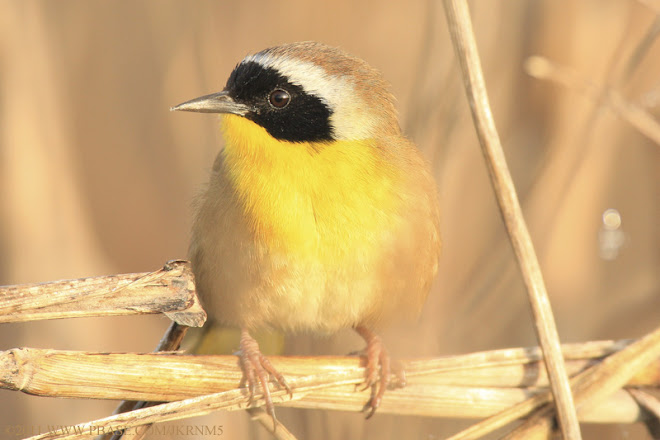
The Common Yellowthroat above was photographed at STA5 in February 2011.
The South Florida Water Management District has authority of STA5 and surrounding STAs with the SFWMD, under strict conditions, periodically permitting the hunting of alligators at the STAs as well as that of small game at STA5.
It is the hunting activity at STA5 which is perhaps responsible for the apparent skittish behavior of the wildlife that is not typical of Florida's birds and alligators as I've observed at other inland and coastal wildlife venues across the state.
The wildlife enthusiasts above were photographed at STA5 in February 2011.
Among my interests this week were the thousands of waterfowl seen at STA5 while in all a total of at least 75 species were reportedly seen by at least 83 observers in the immediate area.
Canadian wildlife photographer Frank Constantin had made a trip to STA5 a month earlier and forewarned me of the distance of the wildlife which he compared to that at Harns Marsh Preserve in Lehigh Acres.
The Blue-winged Teal above was photographed at STA5 in February 2011.
I thus acquired a 2X converter/extender for my camera's lens for the STA5 trip with the expectation that the wildlife would be much more distant than typically seen at other wildlife venues.
Frank's visit to STA5 was less than a few hours as he reported, while I chose to make a second trip along the levees allowing me in excess of nine hours of observation time inclusive of areas around the STA.
The Cattle Egret above was photographed at STA5 in February 2011.
Although my initial intent was to take full advantage of additional opportunity in visiting STA5 this month, I first opted to determine the effectiveness of using the 2X accessory before devoting more time to the documentation of my observations.
Even with the benefit of the 2X converter, it would prove necessary to crop virtually all of the images included in this report.
The Cattle Egret above was photographed at STA5 in February 2011.
STA5 is especially appreciated with a Spotting Scope that is often seen used by birding aficionados.
Spotting Scopes that I've been permitted to look through when offered the opportunity have always allowed for a remarkable view of a distant subject that cannot be appreciated anywhere near as equally as seen through the lens of a camera.
The Cattle Egret above was photographed at STA5 in February 2011.
A little research on these remarkable optical devices seems to show the manufacturer of Kowa products to be the leader in its field, with the TSN-883 spotting scope perhaps the best available as reviewed by Optics4birding.
It's my understanding that digiscopy offers much greater challenges in the photography of wildlife verses dare I say "traditional" digital photography.
The White Pelican above was photographed at STA5 in February 2011.
It was my anticipation to see some new species of bird at STA5 that I had yet to encounter at my preferred wildlife venues closer to the Gulf of Mexico frequently visited in Southwest Florida.
With great fortune, I was able to add Fulvous Whistling-Duck, Northern Harrier, Western Kingbird, and Scissor-tailed Flycatcher to my list of bird species photographed for the first time with abnormalities of previously seen species documented.
The Ring-necked Duck above was photographed at STA5 in February 2011.
I'm especially grateful to Margaret England who led me to the latter two species that were seen near the proposed entrance to STA5.
Margaret currently serves as President of the Hendry-Glades Audubon Chapter and is remarkably timely and helpful with all inquiries made of her via email.
The Great Blue Heron above was photographed at STA5 in February 2011.
In addition to the waterfowl seen, I was captivated by a large flock of Cattle Egret where among them was an individual of the species that sported a rare aberrant plumage that I had never seen before.
With my attention focused at one point on an overflight of one of the abundant Northern Harriers (unsure of its identification at the time) that can be seen at STA5, a Great Blue Heron would make a catch of a very large catfish that initially appeared much too large for the bird to handle.
The Northern Harrier above was photographed at STA5 in February 2011.
Much thanks are extended to local birding expert Vincent Lucas as well whom assisted me in the positive identification of the raptor NOHA further described through the alpha banding code with it a female of the species.
Vince additionally offered insight of the Ring-necked Duck sporting a leucism in its primaries observed only on its right side.
The sugar harvest above was photographed at STA5 in February 2011.
The fires seen on the horizon I learned to coincide with the sugar harvest which rained ashes on STA5 throughout the day.
It was interesting to see the birds in the water seemingly oblivious to the alligators that were observed in great numbers.
The Savannah Sparrow above was photographed at STA5 in February 2011.
A Red-tailed Hawk was sighted for the first time since my interest in wildlife observation began, though I failed to photograph the stunningly beautiful raptor which took flight from a power line.
I consider the Canada Goose observed by others at STA5 the most interesting as it will require a revision of the species' range in David Sibley's Guide to Birds.
The Scissor-tailed Flycatcher above was photographed at STA5 in February 2011.
The goose is only noted to reach barely below the Georgia/ Florida border during Winter months in Sibley's guide while STA5 regularly produces surprises.
STA5 is a must see venue when the chance arises.
The Anhinga above was photographed at STA5 in February 2011.
The Eastern Phoebe above was photographed at STA5 in February 2011.As of this writing, access to STA5 for wildlife viewing remains limited to a typically once or twice a month scheduled tour made possible in part by the Hendry-Glades Audubon Society.
The annual Great Backyard Bird Count and Big “O” Birding Festival offer consecutive three and four day opportunities to visit STA5 in the months of February and March.
The Palm Warbler above was photographed at STA5 in February 2011.STA5 is a man made wetland impoundment facility with its water cells a mile wide on the shortest side and two miles on the longest designed to primarily filter agricultural phosphorus from the groundwater before it flows into the Everglades ecosystem.
Eighteen miles of levees are driven on with great care allowing exploration within and around this 5120 acre wildlife mecca.
The Common Yellowthroat above was photographed at STA5 in February 2011. The South Florida Water Management District has authority of STA5 and surrounding STAs with the SFWMD, under strict conditions, periodically permitting the hunting of alligators at the STAs as well as that of small game at STA5.
It is the hunting activity at STA5 which is perhaps responsible for the apparent skittish behavior of the wildlife that is not typical of Florida's birds and alligators as I've observed at other inland and coastal wildlife venues across the state.
The wildlife enthusiasts above were photographed at STA5 in February 2011.Among my interests this week were the thousands of waterfowl seen at STA5 while in all a total of at least 75 species were reportedly seen by at least 83 observers in the immediate area.
Canadian wildlife photographer Frank Constantin had made a trip to STA5 a month earlier and forewarned me of the distance of the wildlife which he compared to that at Harns Marsh Preserve in Lehigh Acres.
The Blue-winged Teal above was photographed at STA5 in February 2011.I thus acquired a 2X converter/extender for my camera's lens for the STA5 trip with the expectation that the wildlife would be much more distant than typically seen at other wildlife venues.
Frank's visit to STA5 was less than a few hours as he reported, while I chose to make a second trip along the levees allowing me in excess of nine hours of observation time inclusive of areas around the STA.
The Cattle Egret above was photographed at STA5 in February 2011.Although my initial intent was to take full advantage of additional opportunity in visiting STA5 this month, I first opted to determine the effectiveness of using the 2X accessory before devoting more time to the documentation of my observations.
Even with the benefit of the 2X converter, it would prove necessary to crop virtually all of the images included in this report.
The Cattle Egret above was photographed at STA5 in February 2011.STA5 is especially appreciated with a Spotting Scope that is often seen used by birding aficionados.
Spotting Scopes that I've been permitted to look through when offered the opportunity have always allowed for a remarkable view of a distant subject that cannot be appreciated anywhere near as equally as seen through the lens of a camera.
The Cattle Egret above was photographed at STA5 in February 2011.A little research on these remarkable optical devices seems to show the manufacturer of Kowa products to be the leader in its field, with the TSN-883 spotting scope perhaps the best available as reviewed by Optics4birding.
It's my understanding that digiscopy offers much greater challenges in the photography of wildlife verses dare I say "traditional" digital photography.
The White Pelican above was photographed at STA5 in February 2011.It was my anticipation to see some new species of bird at STA5 that I had yet to encounter at my preferred wildlife venues closer to the Gulf of Mexico frequently visited in Southwest Florida.
With great fortune, I was able to add Fulvous Whistling-Duck, Northern Harrier, Western Kingbird, and Scissor-tailed Flycatcher to my list of bird species photographed for the first time with abnormalities of previously seen species documented.
The Ring-necked Duck above was photographed at STA5 in February 2011.I'm especially grateful to Margaret England who led me to the latter two species that were seen near the proposed entrance to STA5.
Margaret currently serves as President of the Hendry-Glades Audubon Chapter and is remarkably timely and helpful with all inquiries made of her via email.
The Great Blue Heron above was photographed at STA5 in February 2011.In addition to the waterfowl seen, I was captivated by a large flock of Cattle Egret where among them was an individual of the species that sported a rare aberrant plumage that I had never seen before.
With my attention focused at one point on an overflight of one of the abundant Northern Harriers (unsure of its identification at the time) that can be seen at STA5, a Great Blue Heron would make a catch of a very large catfish that initially appeared much too large for the bird to handle.
The Northern Harrier above was photographed at STA5 in February 2011. Much thanks are extended to local birding expert Vincent Lucas as well whom assisted me in the positive identification of the raptor NOHA further described through the alpha banding code with it a female of the species.
Vince additionally offered insight of the Ring-necked Duck sporting a leucism in its primaries observed only on its right side.
The sugar harvest above was photographed at STA5 in February 2011.The fires seen on the horizon I learned to coincide with the sugar harvest which rained ashes on STA5 throughout the day.
It was interesting to see the birds in the water seemingly oblivious to the alligators that were observed in great numbers.
The Savannah Sparrow above was photographed at STA5 in February 2011.A Red-tailed Hawk was sighted for the first time since my interest in wildlife observation began, though I failed to photograph the stunningly beautiful raptor which took flight from a power line.
I consider the Canada Goose observed by others at STA5 the most interesting as it will require a revision of the species' range in David Sibley's Guide to Birds.
The Scissor-tailed Flycatcher above was photographed at STA5 in February 2011.The goose is only noted to reach barely below the Georgia/ Florida border during Winter months in Sibley's guide while STA5 regularly produces surprises.
STA5 is a must see venue when the chance arises.
The Anhinga above was photographed at STA5 in February 2011.
Subscribe to:
Posts (Atom)