Warbler activity is not confined to the food bearing vegetation in the southern region of Fort De Soto Park.
The Scarlet Tanager above (image 1) was photographed at Fort De Soto Park in April 2016.
After a near full morning of birding the bottom half of Mullet Key, Tom Obrock and I made our way toward North Beach. The evidence of the removal of Australian Pines at the park was apparent with remnants of the trees in several different areas.
The Orchard Oriole above (image 2) was photographed at Fort De Soto Park in April 2016.
The Orchard Oriole above (image 3) was photographed at Fort De Soto Park in April 2016.
The Orchard Oriole above (image 4) was photographed at Fort De Soto Park in April 2016.
The Mottled Duck above (image 5) was photographed at Fort De Soto Park in April 2016.
The Tennessee Warbler above (image 6) was photographed at Fort De Soto Park in April 2016.
The Tennessee Warbler with prey above (image 7) was photographed at Fort De Soto Park in April 2016.
The Nanday Parakeet above (image 8) was photographed at Fort De Soto Park in April 2016.
The northernmost lagoon at Fort De Soto Park offered a Reddish Egret, a Tricolored Heron and more shorebirds. With the latter at a great distance, we made our way to the oaks for a closer inspection of what may be at hand.
The Nanday Parakeet above (image 9) was photographed at Fort De Soto Park in April 2016.
The Cedar Waxwing above (image 10) was photographed at Fort De Soto Park in April 2016.
The Cedar Waxwing above (image 11) was photographed at Fort De Soto Park in April 2016.
The Indigo Bunting above (image 12) was photographed at Fort De Soto Park in April 2016.
The Gray Catbird above (image 13) was photographed at Fort De Soto Park in April 2016.
The Reddish Egret above (image 14) was photographed at Fort De Soto Park in April 2016.
The Palm Warbler above (image 15) was photographed at Fort De Soto Park in April 2016.
With their near invisibility in the canopy of the trees, an American Redstart and a Blackpoll Warbler gave me fits for a decent photo opportunity. The seemingly omnipresent Black-and-white Warbler was almost a distraction as it was constantly on the move in search of its next morsel.
The American Redstart above (image 16) was photographed at Fort De Soto Park in April 2016.
The Blackpoll Warbler above (image 17) was photographed at Fort De Soto Park in April 2016.
The Blackpoll Warbler above (image 18) was photographed at Fort De Soto Park in April 2016.
The Black-and-white Warbler above (image 19) was photographed at Fort De Soto Park in April 2016.
The Black-and-white Warbler above (image 20) was photographed at Fort De Soto Park in April 2016.
The Blackpoll Warbler above (image 21) was photographed at Fort De Soto Park in April 2016.
The Royal Tern above (image 22) was photographed at Fort De Soto Park in April 2016.
Our next stop was the Gulf Pier where a battle ensued between a handful of Laughing Gulls over a fish head. The aerobatics was extremely impressive as is usual with this species. The south side of the pier offered a variety of shorebirds including a pair of copulating Sandwich Terns.
The Laughing Gull with prey above (image 23) was photographed at Fort De Soto Park in April 2016.
The Laughing Gull with prey above (image 24) was photographed at Fort De Soto Park in April 2016.
The Laughing Gull with prey above (image 25) was photographed at Fort De Soto Park in April 2016.
The Laughing Gull with prey above (image 26) was photographed at Fort De Soto Park in April 2016.
The Sandwich Tern above (image 27) was photographed at Fort De Soto Park in April 2016.
The Sandwich Tern above (image 28) was photographed at Fort De Soto Park in April 2016.
The Sandwich Tern above (image 29) was photographed at Fort De Soto Park in April 2016.
Well into the afternoon Tom and I made our way back to the Mulberry trees where a Wood Thrush, a life bird for me, provided good views. The thrush never allowed itself to be photographed in full sunlight which was unfortunate. The decision to make the way towards home was equally so.
The Sanderling above (image 30) was photographed at Fort De Soto Park in April 2016.
The Wood Thrush above (image 31) was photographed at Fort De Soto Park in April 2016.
The Wood Thrush above (image 32) was photographed at Fort De Soto Park in April 2016.
The Summer Tanager above (image 33) was photographed at Fort De Soto Park in April 2016.
Please be sure to be reminded about this weekly Southwest Florida Wildlife Blog with the email gadget located at the top of the page.
The Black-and-white Warbler above (image 34) was photographed at Fort De Soto Park in April 2016.
Please also see Fort De Soto Spring Migration: Part I
Showing posts with label nanday parakeet. Show all posts
Friday, May 6, 2016
Friday, April 29, 2016
Fort De Soto Park Spring Migration: Pt I
A trek to Fort De Soto Park in Pinellas County is especially rewarding during migration season.
The Common Loon above (image 1) was photographed at Fort De Soto Park in April 2016.
Fort De Soto is a magnet for birds. In fact there have been 337 species sighted at the park and reported to eBird as of this writing. Ron Smith has noted that a Western Grebe was observed and photographed by Marvin Waas in late 1954 which was the first and last time the species was seen in Pinellas County. This sighting occurred about eight years before Fort De Soto Park opened to the public.
The sunrise above (image 2) was photographed at Fort De Soto Park in April 2016.
The Brown-headed Cowbird above (image 3) was photographed at Fort De Soto Park in April 2016.
The Short-billed Dowitcher above (image 4) was photographed at Fort De Soto Park in April 2016.
The Least Sandpiper above (image 5) was photographed at Fort De Soto Park in April 2016.
The Willet above (image 6) was photographed at Fort De Soto Park in April 2016.
The Willet above (image 7) was photographed at Fort De Soto Park in April 2016.
The Willet above (image 8) was photographed at Fort De Soto Park in April 2016.
The Piping Plover above (image 9) was photographed at Fort De Soto Park in April 2016.
The Dunlin above (image 10) was photographed at Fort De Soto Park in April 2016.
Tom Obrock and I made a mid April journey to Fort De Soto Park to enjoy the semi-annual migratory spectacle. We had discussed alternate venues to visit in the event Fort De Soto was quiet, but they were not necessary as there was good bird activity resulting in a full day's effort (including the four hour commute).
The Semipalmated Plover with Piping Plover above (image 11) was photographed at Fort De Soto Park in April 2016.
The Semipalmated Plover above (image 12) was photographed at Fort De Soto Park in April 2016.
The Black-bellied Plover above (image 13) was photographed at Fort De Soto Park in April 2016.
The Forster's Tern above (image 14) was photographed at Fort De Soto Park in April 2016.
The Forster's Tern above (image 15) was photographed at Fort De Soto Park in April 2016.
The Nanday Parakeet above (image 16) was photographed at Fort De Soto Park in April 2016.
The Nanday Parakeet above (image 17) was photographed at Fort De Soto Park in April 2016.
The Nanday Parakeet above (image 18) was photographed at Fort De Soto Park in April 2016.
The Nanday Parakeet above (image 19) was photographed at Fort De Soto Park in April 2016.
At the East Beach Turnaround there was some entertaining action as a pair of Willet seemed to be at odds with one another while a Piping Plover showed dominance over a Semipalmated Plover. While about a dozen Nanday Parakeet were observed at the entrance to the park, they would later congregate into a flock of 30 at East Beach. It was interesting to observe European Starling showing dominance over Nanday Parakeet here.
The Nanday Parakeet above (image 20) was photographed at Fort De Soto Park in April 2016.
The European Starling with Nanday Parakeet above (image 21) was photographed at Fort De Soto Park in April 2016.
The European Starling with Nanday Parakeet above (image 22) was photographed at Fort De Soto Park in April 2016.
The Nanday Parakeet above (image 23) was photographed at Fort De Soto Park in April 2016.
The Nanday Parakeet above (image 24) was photographed at Fort De Soto Park in April 2016.
The Nanday Parakeet above (image 25) was photographed at Fort De Soto Park in April 2016.
The Nanday Parakeet above (image 26) was photographed at Fort De Soto Park in April 2016.
The Nanday Parakeet above (image 27) was photographed at Fort De Soto Park in April 2016.
The Nanday Parakeet above (image 28) was photographed at Fort De Soto Park in April 2016.
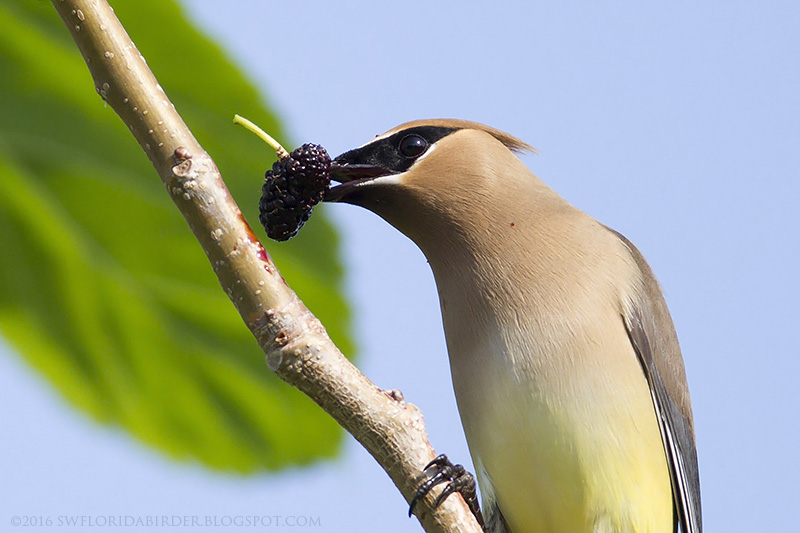
A large flock of Cedar Waxwing was also active at mid-morning near the Bay Pier. They were making very quick work of the Mulberries that were in various stages of ripeness. A few warblers species were observed along the southern end of Mullet Key with a lone Hooded Warbler making a very brief appearance.
The Fish Crow above (image 29) was photographed at Fort De Soto Park in April 2016.
The Black-and-white Warbler above (image 30) was photographed at Fort De Soto Park in April 2016.
The Summer Tanager above (image 31) was photographed at Fort De Soto Park in April 2016.
The Cedar Waxwing above (image 32) was photographed at Fort De Soto Park in April 2016.
The Cedar Waxwing above (image 33) was photographed at Fort De Soto Park in April 2016.
Always reluctant to leave a productive area, our next stop at Fort De Soto Park would be North Beach.
The Cedar Waxwing above (image 34) was photographed at Fort De Soto Park in April 2016.
The Red-eyed Vireo above (image 35) was photographed at Fort De Soto Park in April 2016.
Please be sure to be reminded about this weekly Southwest Florida Wildlife Blog with the email gadget located at the top of the page.
The Red-eyed Vireo above (image 36) was photographed at Fort De Soto Park in April 2016.
Please also see Fort De Soto Spring Migration: Part II
The Common Loon above (image 1) was photographed at Fort De Soto Park in April 2016.
Fort De Soto is a magnet for birds. In fact there have been 337 species sighted at the park and reported to eBird as of this writing. Ron Smith has noted that a Western Grebe was observed and photographed by Marvin Waas in late 1954 which was the first and last time the species was seen in Pinellas County. This sighting occurred about eight years before Fort De Soto Park opened to the public.
The sunrise above (image 2) was photographed at Fort De Soto Park in April 2016.
The Brown-headed Cowbird above (image 3) was photographed at Fort De Soto Park in April 2016.
The Short-billed Dowitcher above (image 4) was photographed at Fort De Soto Park in April 2016.
The Least Sandpiper above (image 5) was photographed at Fort De Soto Park in April 2016.
The Willet above (image 6) was photographed at Fort De Soto Park in April 2016.
The Willet above (image 7) was photographed at Fort De Soto Park in April 2016.
The Willet above (image 8) was photographed at Fort De Soto Park in April 2016.
The Piping Plover above (image 9) was photographed at Fort De Soto Park in April 2016.
The Dunlin above (image 10) was photographed at Fort De Soto Park in April 2016.
Tom Obrock and I made a mid April journey to Fort De Soto Park to enjoy the semi-annual migratory spectacle. We had discussed alternate venues to visit in the event Fort De Soto was quiet, but they were not necessary as there was good bird activity resulting in a full day's effort (including the four hour commute).
The Semipalmated Plover with Piping Plover above (image 11) was photographed at Fort De Soto Park in April 2016.
The Semipalmated Plover above (image 12) was photographed at Fort De Soto Park in April 2016.
The Black-bellied Plover above (image 13) was photographed at Fort De Soto Park in April 2016.
The Forster's Tern above (image 14) was photographed at Fort De Soto Park in April 2016.
The Forster's Tern above (image 15) was photographed at Fort De Soto Park in April 2016.
The Nanday Parakeet above (image 16) was photographed at Fort De Soto Park in April 2016.
The Nanday Parakeet above (image 17) was photographed at Fort De Soto Park in April 2016.
The Nanday Parakeet above (image 18) was photographed at Fort De Soto Park in April 2016.
The Nanday Parakeet above (image 19) was photographed at Fort De Soto Park in April 2016.
At the East Beach Turnaround there was some entertaining action as a pair of Willet seemed to be at odds with one another while a Piping Plover showed dominance over a Semipalmated Plover. While about a dozen Nanday Parakeet were observed at the entrance to the park, they would later congregate into a flock of 30 at East Beach. It was interesting to observe European Starling showing dominance over Nanday Parakeet here.
The Nanday Parakeet above (image 20) was photographed at Fort De Soto Park in April 2016.
The European Starling with Nanday Parakeet above (image 21) was photographed at Fort De Soto Park in April 2016.
The European Starling with Nanday Parakeet above (image 22) was photographed at Fort De Soto Park in April 2016.
The Nanday Parakeet above (image 23) was photographed at Fort De Soto Park in April 2016.
The Nanday Parakeet above (image 24) was photographed at Fort De Soto Park in April 2016.
The Nanday Parakeet above (image 25) was photographed at Fort De Soto Park in April 2016.
The Nanday Parakeet above (image 26) was photographed at Fort De Soto Park in April 2016.
The Nanday Parakeet above (image 27) was photographed at Fort De Soto Park in April 2016.
The Nanday Parakeet above (image 28) was photographed at Fort De Soto Park in April 2016.
A large flock of Cedar Waxwing was also active at mid-morning near the Bay Pier. They were making very quick work of the Mulberries that were in various stages of ripeness. A few warblers species were observed along the southern end of Mullet Key with a lone Hooded Warbler making a very brief appearance.
The Fish Crow above (image 29) was photographed at Fort De Soto Park in April 2016.
The Black-and-white Warbler above (image 30) was photographed at Fort De Soto Park in April 2016.
The Summer Tanager above (image 31) was photographed at Fort De Soto Park in April 2016.
The Cedar Waxwing above (image 32) was photographed at Fort De Soto Park in April 2016.
The Cedar Waxwing above (image 33) was photographed at Fort De Soto Park in April 2016.
Always reluctant to leave a productive area, our next stop at Fort De Soto Park would be North Beach.
The Cedar Waxwing above (image 34) was photographed at Fort De Soto Park in April 2016.
The Red-eyed Vireo above (image 35) was photographed at Fort De Soto Park in April 2016.
Please be sure to be reminded about this weekly Southwest Florida Wildlife Blog with the email gadget located at the top of the page.
The Red-eyed Vireo above (image 36) was photographed at Fort De Soto Park in April 2016.
Please also see Fort De Soto Spring Migration: Part II
Subscribe to:
Posts (Atom)