Showing posts with label egyptian goose. Show all posts

Friday, April 1, 2016

Crandon Park At Key Biscayne

Runs across Alligator Alley have become relatively frequent as rare birds continue to be found in south Florida.


The Indian Peafowl above (image 1) was photographed at Crandon Park in March 2016.

In mid-March another American Birding Association Code 5 specialty was discovered at Crandon Park in Key Biscayne by Otto and Jose Zequeira on the 13th. The Cuban Pewee with only four previously accepted records in the ABA area drew my attention.


The Great Crested Flycatcher above (image 2) was photographed at Crandon Park in March 2016.


The Cape May Warbler above (image 3) was photographed at Crandon Park in March 2016.


The Yellow-rumped Warbler above (image 4) was photographed at Crandon Park in March 2016.


The Egyptian Goose above (image 5) was photographed at Crandon Park in March 2016.


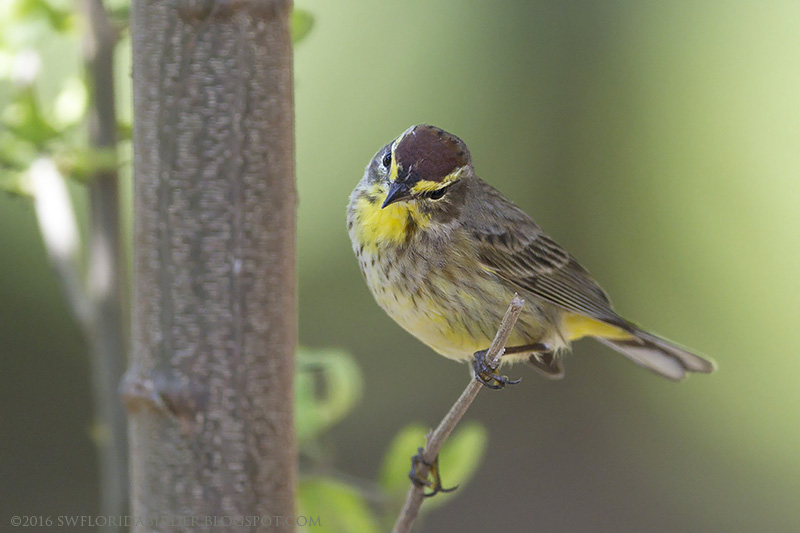
The Palm Warbler above (image 6) was photographed at Crandon Park in March 2016.


The Indian Peafowl above (image 7) was photographed at Crandon Park in March 2016.


The Indian Peafowl above (image 8) was photographed at Crandon Park in March 2016.


The Black-and-white Warbler with prey above (image 9) was photographed at Crandon Park in March 2016.


The Indian Peafowl above (image 10) was photographed at Crandon Park in March 2016.

The pewee was seen again on the 14th. This was a signal of sorts that there would be a much better chance to encounter the bird that didn't belong here. Thus navigator Tom Obrock and I made the trip across the Florida peninsula arriving at Crandon Park at about 0900.


The Indian Peafowl above (image 11) was photographed at Crandon Park in March 2016.


The Black-and-white Warbler with prey above (image 12) was photographed at Crandon Park in March 2016.


The Black-and-white Warbler with prey above (image 13) was photographed at Crandon Park in March 2016.


The Palm Warbler above (image 14) was photographed at Crandon Park in March 2016.


The Palm Warbler above (image 15) was photographed at Crandon Park in March 2016.


The Yellow-rumped Warbler above (image 16) was photographed at Crandon Park in March 2016.


The Anhinga above (image 17) was photographed at Crandon Park in March 2016.


The Cape May Warbler above (image 18) was photographed at Crandon Park in March 2016.


The Cape May Warbler above (image 19) was photographed at Crandon Park in March 2016.

The weather was good. The traffic was heavy. The litter at Crandon Park was prolific. It was difficult to ignore the latter in the seven hours of observation in hopes of seeing the Cuban Pewee. The wildlife didn't seem to mind.


The Yellow-rumped Warbler above (image 20) was photographed at Crandon Park in March 2016.


The Yellow-rumped Warbler above (image 21) was photographed at Crandon Park in March 2016.


The Palm Warbler above (image 22) was photographed at Crandon Park in March 2016.


The Indian Peafowl above (image 23) was photographed at Crandon Park in March 2016.


The Indian Peafowl above (image 24) was photographed at Crandon Park in March 2016.


The Black-and-white Warbler above (image 25) was photographed at Crandon Park in March 2016.


The Black-and-white Warbler above (image 26) was photographed at Crandon Park in March 2016.


The Turkey Vulture above (image 27) was photographed at Crandon Park in March 2016.


The Palm Warbler above (image 28) was photographed at Crandon Park in March 2016.

Trails are extensive at the southern end of Crandon Park which Tom explored much more than I did. I settled down at the area where the pewee had been seen and soaked up the shade. In addition to Tom's eBird checklist a European Starling and Anhinga were personally observed.


The Brown Basilisk above (image 29) was photographed at Crandon Park in March 2016.


The Black Spiny-tailed Iguana above (image 30) was photographed at Crandon Park in March 2016.


The Yellow-throated Vireo above (image 31) was photographed at Crandon Park in March 2016.


The Blue Jay above (image 32) was photographed at Crandon Park in March 2016.


The Eurasian Collared-Dove above (image 33) was photographed at Crandon Park in March 2016.


The Sandhill Crane above (image 34) was photographed at Crandon Park in March 2016.


The Great Black-backed Gull above (image 35) was photographed at Crandon Park in March 2016.


The Lesser Black-backed Gull above (image 36) was photographed at Crandon Park in March 2016.


The Lesser Black-backed Gull above (image 37) was photographed at Crandon Park in March 2016.

It was a disappointment that the Cuban Pewee was missed by Tom Obrock and me on the 15th. The Cuban Pewee has not been reported again at Crandon Park as of this writing. There was periodic warbler activity and a good collection of shorebirds on the beach which distracted me.


The Double-crested Cormorant above (image 38) was photographed at Crandon Park in March 2016.


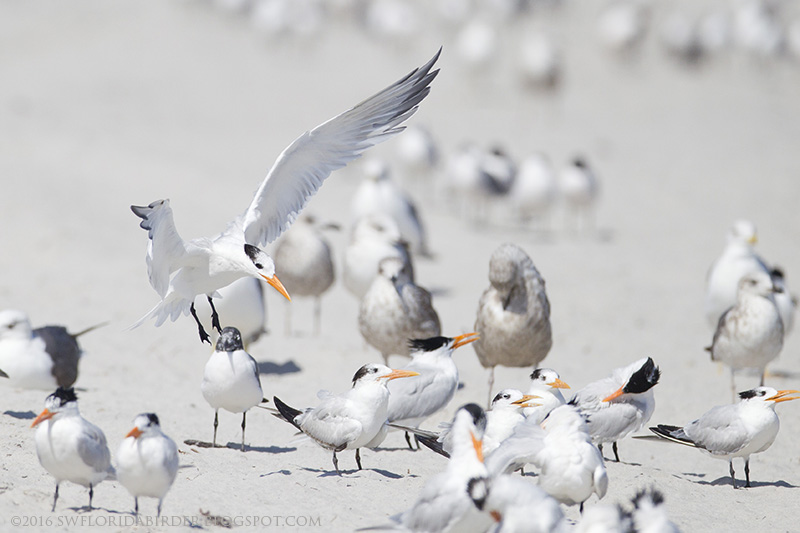
The Royal Tern above (image 39) was photographed at Crandon Park in March 2016.


The Double-crested Cormorant above (image 40) was photographed at Crandon Park in March 2016.


The Royal Tern above (image 41) was photographed at Crandon Park in March 2016.


The Laughing Gull above (image 42) was photographed at Crandon Park in March 2016.


The Double-crested Cormorant above (image 43) was photographed at Crandon Park in March 2016.


The Lesser Black-backed Gull above (image 44) was photographed at Crandon Park in March 2016.

For the record, image 29 was rotated 90 degrees clockwise to allow a significantly tighter view of the subject which improves its aesthetics. Some of you with keen eyes may have noticed that especially knowing that I present all images in the blog chronologically.


The Lesser Black-backed Gull above (image 45) was photographed at Crandon Park in March 2016.

Please be sure to be reminded about this weekly Southwest Florida Wildlife Blog with the email gadget located at the top of the page.


The Black Spiny-tailed Iguana above (image 46) was photographed at Crandon Park in March 2016.

Friday, March 25, 2016

In Search Of Miami Parakeets

The lush tropical vegetation in the Miami area is very conducive for large numbers and a great variety of parakeets and parrots that can be readily observed visually and audibly.


The Mitred Parakeet above (image 1) was photographed at Baptist Hospital of Miami in March 2016.

On 12 March I made a trip to Miami with the company of Frank Constantin, Suzanne Lanthier and Réal Jauvin, all visiting from Quebec. Our first stop was the Baptist Hospital of Miami offering a pair of Egyptian Geese as the first bird species seen. Mitred Parakeets could be heard overhead. There were in excess of 70 in a single flock before breaking up into smaller groups.


The Egyptian Goose above (image 2) was photographed at Baptist Hospital of Miami in March 2016.


The Graylag Goose (domestic type) above (image 3) was photographed at Baptist Hospital of Miami in March 2016.


The Swan Goose (domestic type) above (image 4) was photographed at Baptist Hospital of Miami in March 2016.


The Egyptian Goose above (image 5) was photographed at Baptist Hospital of Miami in March 2016.


The Rock Dove above (image 6) was photographed at Baptist Hospital of Miami in March 2016.

After photographing other species of birds at hand we followed the call of the Mitred Parakeets to the west side of the property. The parakeets were obviously very wary of the presence of an American Kestrel. At one point the parakeets took refuge in a berry laden tree before once again taking flight to keep a distance from the kestrel's approach of them.


The Egyptian Goose above (image 7) was photographed at Baptist Hospital of Miami in March 2016.


Réal Jauvin, Francois Constantin and Suzanne Lanthier (l-r) above (image 8) were photographed at Baptist Hospital of Miami in March 2016.


The Fish Crow with nesting material above (image 9) was photographed at Baptist Hospital of Miami in March 2016.


The Eurasian Collared-Dove above (image 10) was photographed at Baptist Hospital of Miami in March 2016.


The Mitred Parakeet above (image 11) was photographed at Baptist Hospital of Miami in March 2016.

Our next stop was the University of Miami where we were asked to leave by campus security as we did not have authorization to visit. A call of parakeets could be heard where we had parked, but they were not seen thus remaining unidentified. We next visited A. D. Barnes Park which was nearly completely devoid of birds save a pair of Black Vultures, a Northern Mockingbird, a Mourning Dove and a Blue Jay.


The Mitred Parakeet above (image 12) was photographed at Baptist Hospital of Miami in March 2016.


The American Kestrel above (image 13) was photographed at Baptist Hospital of Miami in March 2016.


The Mitred Parakeet above (image 14) was photographed at Baptist Hospital of Miami in March 2016.


The Mitred Parakeet above (image 15) was photographed at Baptist Hospital of Miami in March 2016.


The Mitred Parakeet above (image 16) was photographed at Baptist Hospital of Miami in March 2016.

Castellow Hammock Park was our next stop with hopes of photographing the Buff-bellied Hummingbird that was discovered by Colorado birder Connie Kogler. Word quickly got out about the rare to Florida hummingbird with eBird reports first appearing on 2 January. This was my second attempt to photograph the Buff-bellied Hummingbird, and was only fortunate enough to definitively see and hear it on this trip.


The Mitred Parakeet above (image 17) was photographed at Baptist Hospital of Miami in March 2016.


The Mitred Parakeet above (image 18) was photographed at Baptist Hospital of Miami in March 2016.


The Mitred Parakeet above (image 19) was photographed at Baptist Hospital of Miami in March 2016.


The Ruby-throated Hummingbird above (image 20) was photographed at Castellow Hammock Park in March 2016.


The Ruby-throated Hummingbird above (image 21) was photographed at Castellow Hammock Park in March 2016.

In the company of the Buff-bellied Hummingbird were no less than four Ruby-throated Hummingbirds which favored the depths of an approximately 15 foot tall by 35 foot wide Chinese hat plant. Again a parakeet was heard, but not seen. A White-winged Dove was a pleasure to find as I had not photographed this species in quite some time.


The Ruby-throated Hummingbird above (image 22) was photographed at Castellow Hammock Park in March 2016.


The Ruby-throated Hummingbird above (image 23) was photographed at Castellow Hammock Park in March 2016.


The White-winged Dove above (image 24) was photographed at Castellow Hammock Park in March 2016.


The Palm Warbler above (image 25) was photographed at Castellow Hammock Park in March 2016.


The Northern Cardinal above (image 26) was photographed at Castellow Hammock Park in March 2016.

Onward in the direction of home we made a brief stop at the Shark Valley Visitor Center where the water level was very high in the canals due to January's rainfall. The expected wading birds were absent as a result.


The Mourning Dove above (image 27) was photographed at Castellow Hammock Park in March 2016.

Please be sure to be reminded about this weekly Southwest Florida Wildlife Blog with the email gadget located at the top of the page.


The Ruby-throated Hummingbird above (image 28) was photographed at Castellow Hammock Park in March 2016.