Friday, January 7, 2011

Near Perfect Tide With Kites

An avid fisherman told me a couple of years ago that winter tides are lower than those at other times of the year.

The sunrise above was photographed at Bunche Beach Preserve in January 2011.

I haven't been able to corroborate that any more than being in agreement through my own experience.

The tides that impact Bunche Beach should be considered relevant although I have had remarkable experiences under all conditions at this place.
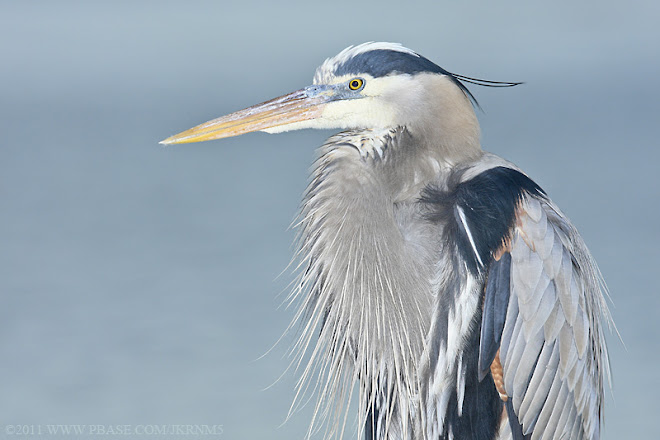
The Great Blue Heron above was photographed at Bunche Beach Preserve in January 2011.

After a glance at the tides about an hour before sunrise with an opportunity for wildlife observation, I was pleased to see that the low tide at Matanzas Pass was slightly pre-dawn and ripe for a long overdue visit to Bunche Beach Preserve.

Hemant Kishan had told me via email that he had observed Long-billed Curlew at Bunche Beach late last week.

Eva and Martha above were photographed at Bunche Beach Preserve in January 2011.

Since I've only observed this species of bird twice before, it was a great hope to see the curlew again.

Hemant had noted that he has seen a Far Eastern Curlew in China, a Eurasian Curlew in India, and the Long-billed Curlew in California, while his sighting of the latter was his first observation of the LBC in the state of Florida.

The crab trap above was photographed at Bunche Beach Preserve in January 2011.

I wasn't a mile down the road when I realized I had forgotten to bring the flash with me again, so I turned around to retrieve it.

The tide was lower at the beach than I had seen before allowing me to walk further into into San Carlos Bay than I have been before.

The Cockle Clam above was photographed at Bunche Beach Preserve in January 2011.

My initial perception of the morning was disappointment as I initially only saw a Great Blue Heron and what appeared to be White Ibis on the horizon.

A visitor with an out of state plate on his vehicle made an effort to capture fresh marine life with a shovel.

The harvester above was photographed at Bunche Beach Preserve in January 2011.

The heron was entertaining to watch as it went into a sleeping posture after preening itself several times.

As I reached the point in which I would settle down and observe the action, it became evident the birds I initially thought were ibis were actually White Pelican.

The Ring-billed Gull above was photographed at Bunche Beach Preserve in January 2011.

Other White Pelicans were observed in high altitude flight while Brown Pelicans offered close flybys with strong evidence of breeding colors.

Though the seascape appeared desolate initially, it would prove to offer great diversity.
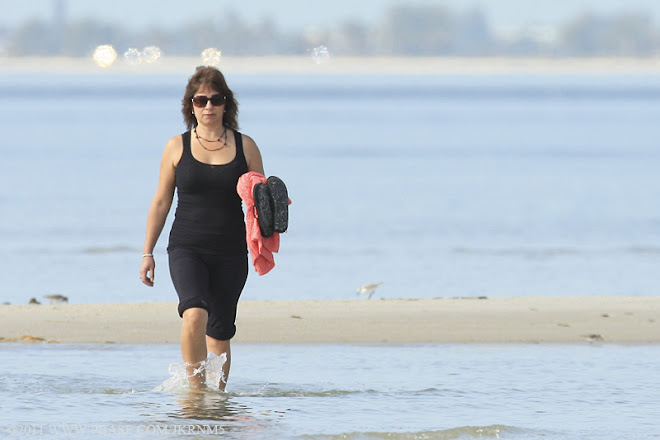
Genevive above was photographed at Bunche Beach Preserve in January 2011.

There were a number of fellow wildlife observers that were present throughout the morning.

It was interesting to see marine life in shells that were exposed as the water had retreated so far into the bay.

The Brown Pelican above was photographed at Bunche Beach Preserve in January 2011.

It was learned that the mollusks are called Cockle Clams while I also found that Sanibel Island is considered one of the top three shelling destinations in the world.

Black Skimmers were prolific at the preserve about an hour after my arrival.

The Spotted Sandpiper above was photographed at Bunche Beach Preserve in January 2011.

It would be very unusual not to see the species at Bunche Beach this time of year.

It was regrettable that I didn't see the Long-billed Curlew as hoped, but the visit to Bunche Beach Preserve was extremely rewarding nonetheless.

The Black-bellied Plover above was photographed at Bunche Beach Preserve in January 2011.

My second excursion of the week led me to Harns Marsh Preserve to meet up with Frank Constantin whom I coincidentally met while observing the curlew for the first time at Estero Lagoon two years earlier.

It was a remarkably clear morning with a light fog on the marsh which burned off within an hour after sunrise unlike preceding trips where the fog lasted for hours.

The Limpkin above was photographed at Harns Marsh Preserve in January 2011.

Frank had arrived at the preserve earlier than me and was in position to capture a stunning image of Cattle Egret in perfect light which he showed me on the viewfinder of his camera.

The few hours spent at the preserve with Frank passed too quickly.

The Mottled Duck above was photographed at Harns Marsh Preserve in January 2011.

The Snail Kite would tantalize with their presence for good photography.

A review of images taken has shown that at least one female kite at Harns Marsh is banded.

The Osprey above was photographed at Harns Marsh Preserve in January 2011.

Contention between a pair of Snail Kites was observed at the time of a kite's capture of an Apple Snail.

It was interesting to observe as well the attack of a juvenile Bald Eagle by an Osprey.

The Bald Eagle juvenile with Osprey above was photographed at Harns Marsh Preserve in January 2011.

Limpkin, the other species near assured to be seen at Harns Marsh were entertaining to observe as well.

Frank had told me that that he observed their feeding behavior for the first time.

The Snail Kite above was photographed at Harns Marsh Preserve in January 2011.

A visitor to the preserve approached us at one point seemingly apologetic for his tardiness noting that he had an encounter with Florida State police.

A group of wildlife enthusiasts arrived well after first light whom I learned were visiting from Quebec as Frank explained to me with the visitors speaking in the French language.

The wildlife observer above was photographed at Harns Marsh Preserve in January 2011.

Frank's conversation with one of the participants led to the understanding that they were each charged $2000 for food, lodging, and tours to wildlife venues for ten days.

There were a few in the group that had the sense to explore on their own making a good walk toward the area of the marsh where an unusual sighting of waterfowl might be observed.

The Snail Kite above was photographed at Harns Marsh Preserve in January 2011.

I thought it odd that they were communicated to with whistles seemingly in an attempt to call them back.

Frank's stunning imagery where he is not afraid to push his ISO high may be seen at his pbase site here.

The Quebecans above were photographed at Harns Marsh Preserve in January 2011.

Sandhill Cranes remained at a distance while the Crested Caracara failed to make another appearance.

Friday, December 31, 2010

Christmas Morning At Harns Marsh Preserve

It was a very foggy and chilly morning at Harns Marsh Preserve on Christmas Day 2010.

The sunrise above was photographed at Harns Marsh Preserve in December 2010.

That didn't deter me from an attempt to have a very rewarding time observing the wildlife which I did.

The first active flight observed was that of Roseate Spoonbill from the area where Limpkin are sometimes seen while always heard.

The Roseate Spoonbill above was photographed at Harns Marsh Preserve in December 2010.

The vultures were seen across the lake on the ground perhaps in their attempt to stay warmer while they're typically observed in the trees at first light.

A juvenile Great Blue Heron was very docile seemingly waiting for the sun to warm its bones.

The Great Blue Heron juvenile above was photographed at Harns Marsh Preserve in December 2010.

Limpkin were observed in flight more so than I had observed at Harns Marsh before.

This species has a tendency to stay very low to the ground even while in flight.

The Cattle Egret above was photographed at Harns Marsh Preserve in December 2010.

Snail Kite were active in their search of Apple Snails shortly before the fog burned off.

Osprey were again observed hunting successfully for their prey.

The Glossy Ibis above was photographed at Harns Marsh Preserve in December 2010.

What would become a remarkable observation for me was an inbound flight of a solitary Sandhill Crane that landed directly in front of me from the north.

As I observed this bird in amazement, two more cranes were walking toward me along the marsh's frontage road and emerged from the fog a short while later.

The Snadhill Crane above was photographed at Harns Marsh Preserve in December 2010.

Before the Sandhill Cranes arrived, a small flock of Cattle Egret appeared to become active from their slumber.

It was at this time that I was chiding myself for failing to bring the flash and Better Beamer.

The Snadhill Crane above was photographed at Harns Marsh Preserve in December 2010.

Always have them at the ready in case they're needed if you have them.

It was a special occasion to meet Hemant Kishan again at the preserve.

Hemant Kishan above was photographed at Harns Marsh Preserve in December 2010.

Hemant, a prolific American Birding Association contributor, was intently observing an American Bittern that he sighted at relatively close range.

He was kind enough to point my camera in the direction of the bird at one point as the bird was so well camouflaged in the reeds.

The American Bittern above was photographed at Harns Marsh Preserve in December 2010.

Hemant mentioned his interest in Celery Fields which he believes best visited in September.

It was interesting to observe a scuffle between a pair of Anhinga while the Tree Swallows seemed to be in lesser numbers than usual.

The Anhinga with Pied-billed Grebe above was photographed at Harns Marsh Preserve in December 2010.

The same pair of Great Egret observed a couple of weeks earlier offered their same repose in nearly the exact same spot I had last seen them.

Since my visit to Harns Marsh Preserve this week, I have read that the Crested Caracara is often seen in flight in the presence of vultures.

The Limpkin above was photographed at Harns Marsh Preserve in December 2010.

When I visit the preserve again, my first objective will be to scan the trees where the vultures are typically resting before they fly off to take advantage of the thermals in the absence of wind.

Friday, December 24, 2010

December 2010 Low Tide At Estero Lagoon

Prior to a potential predawn departure to observe and photograph wildlife often requires if I can see stars clearly in the night sky.

The European Starling above was photographed at Estero Lagoon in December 2010.

Weather conditions that I often hear on the radio often contradict what is actually seen at the time.

A forecast for the day in the climate of southwest Florida is given little credence though a link to a weather related website you may wish to investigate may be seen by clicking here.

The Brown Pelican above was photographed at Estero Lagoon in December 2010.

A day this past week which was cold and dreary and an initial opportunity to get into the field for some wildlife observation was foregone for warmth inside.

Day two was initially overcast, but the clouds dissipated to offer an opportunity for wildlife photography that I prefer to shoot in.

The White Ibis above was photographed at Estero Lagoon in December 2010.

Though conditions would have been ideal at the time to explore Bunche Beach Preserve, I chose to see what might be happening at the less frequently visited Estero Lagoon.

I've found visits to Estero Lagoon to be extremely rewarding at any time of day or tide conditions.

The explorer above was photographed at Estero Lagoon in December 2010.

The late afternoon visit to the lagoon this week was at an unusually low tide.

There happened to be a remarkable lunar eclipse that would occur early the next morning which I took a gander at for a few seconds at 0330 local (an impressive sight).

The full moon (required for a lunar eclipse) above was photographed at Estero Lagoon in December 2010.

Upon arrival at Estero Lagoon, a large number of European Starling were perched on the power lines along the adjacent highway.

There was a disappointing absence of the Yellow-crowned Night-Heron that is occasionally seen near the Holiday Inn at the lagoon.

The scene above was photographed at Estero Lagoon in December 2010.

With the water level as low as it was, I'm thinking that there simply weren't enough fish to attract abundant wading birds.

The fish that I've seen captured by wading birds regrettably appear to have been getting smaller.

The Double-crested Cormorant above was photographed at Estero Lagoon in December 2010.

The abnormally cold conditions in winter months the last couple of years may be the cause.

Several photographers were about and I learned that one was from Vancouver and another was from Eastern Europe while I regrettably don't remember their names.

The Great Egret above was photographed at Estero Lagoon in December 2010.

Although a good representation of many of the species of bird of the area was seen, by far the highlight of my visit to Estero Lagoon was my observation of Chelsea Hall.

I first saw Chelsea approaching the lagoon with her camera in hand.

Chelsea above was photographed at Estero Lagoon in December 2010.

Chelsea was an unmistakable presence on the scene with her sense of purpose.

From the moment I captured an image of her to the distraction of wildlife walking right in front of me, Chelsea was gone.

Chelsea above was photographed at Estero Lagoon in December 2010.

I looked around to see that she was on the beach headed south.

There were many people in the immediate area shelling, relaxing on the beach, jogging or cycling by.

Chelsea above was photographed at Estero Lagoon in December 2010.

Chelsea told me that she was from North Carolina and that she was using the Nikon D5000.

She also noted that she has always had an interest in photography and that her boyfriend was a world traveler.

Chelsea above was photographed at Estero Lagoon in December 2010.

A particular subject of interest to her was a sea creature washed up on the beach.

I waded the Gulf water in an attempt to get a better photograph of her.

The enthusiast above was photographed at Estero Lagoon in December 2010.

As we chatted briefly, a sheller wandered by to place the creature in a bag while I advised she release the living thing which she did.

I believe that Chelsea will have a remarkable record of wildlife imagery that I would be glad to link to if she ever creates such an opportunity.

The Tricolored Heron above was photographed at Estero Lagoon in December 2010.

Chelsea was extremely comfortable handling her gear under rugged conditions.

As the sun approached the horizon, I had a few more minutes of optimal light to observe a Tricolored Heron that unfortunately remained at a poor angle but for a brief second for an acceptable shot.

The sunset above was photographed at Estero Lagoon in December 2010.

My learned use of flash remains in its infancy.

Friday, December 17, 2010

Ellusive Caracara At Harns Marsh Preserve

The immense excitement I had in the sighting of the Crested Caracara at Harns Marsh Preserve last week would remain the sole sighting of the species after two additional visits to the preserve this week.

The American Bittern above was photographed at Harns Marsh Preserve in December 2010.

One of the visits to Harns Marsh occurred on the morning when heavy fog enveloped much of Florida though offered my first personal sighting of American Bittern confirmed by Tom Obrock.

It was on this morning that two fellow Birdphotographer.net contributors were at the preserve with hopes for some good wildlife observation and photography.

The Snail Kite above was photographed at Harns Marsh Preserve in December 2010.

I had met Conrad Tan, visiting from California, at Estero Lagoon the day before who mentioned that one of the species he particularly had an interest in photographing was Snail Kite and was excited with the prospect of seeing it at Harns Marsh.

Troy Lim was at the preserve as well having made the trip from Sarasota.

The Blue-winged Teal above was photographed at Harns Marsh Preserve in December 2010.

The Collier County Audubon Society (CCAS) had a presence as a troop made a drive through Harns Marsh Preserve under the foggy and cold conditions with a half dozen vehicles making the normally prohibited trip along the perimeter of the preserve.

Pedestrian traffic is permitted to explore Harns Marsh Preserve throughout the year.

The Snail Kite above was photographed at Harns Marsh Preserve in December 2010.

A report from the CCAS has been made at their website which can be seen by clicking here.

The image including some of the CCAS participants immediately below was enhanced primarily with CS5's HDR toning function.

The CCAS members above were photographed at Harns Marsh Preserve in December 2010.

On the following day, the conditions at dawn were much improved with a striking cloud formation to the west which was discussed with Bob J. Blanchard whom had arrived at Harns Marsh right behind me.

Bob had mentioned his regret in not bringing a wide angle lens to capture the scene.

The Little Blue Heron above was photographed at Harns Marsh Preserve in December 2010.

The cloud that may have been ten miles wide seemingly vanished before our eyes.

Bob speculated that it may have been a fog bank, but it appeared to have too much altitude.

Conrad Tan above was photographed at Harns Marsh Preserve in December 2010.

Although I had met Bob at Harns Marsh four months earlier, it was at this time that I had the opportunity to learn more about him and hear of some of his wildlife experiences.

Bob told me of his use of manual exposure in his photography which he noted he had learned from Artie Morris.

The Black-crowned Night-Heron with Apple Snail casing visible above was photographed at Harns Marsh Preserve in December 2010.

He described it as extremely easy and effective once you get the hang of it.

A short while later, wildlife enthusiasts would approach us and chat briefly.

The Double-crested Cormorant above was photographed at Harns Marsh Preserve in December 2010.

It was noted by Reinhard Geisler that the Snow Bunting was reported in Flagler County which he had observed a couple days earlier.

Tom Obrock advised me that he made the sighting of the Snow Bunting this week although he was initially reluctant to make the drive.

The Wood Stork juvenile above was photographed at Harns Marsh Preserve in December 2010.

Reinhard was transporting his camera gear which included the Nikon D200 and D300 cameras in a baby stroller that he was very enthusiastic in talking about.

He was utilizing the souped up stroller due to a fall from an observation tower which resulted in a back injury.

Reinhard Geisler above was photographed at Harns Marsh Preserve in December 2010.

Bob and I observed a lot of primarily distant avian activity while perhaps the second most disappointing thing for me was to be focused on a Turkey Vulture at very close range to miss the shot of it yawning by a fraction of a second as I was distracted by a low flyover of an Osprey.

A pair of fishermen in a kayak at Harns told of the abundant birds they observed in the marsh.

Bob Blanchard above was photographed at Harns Marsh Preserve in December 2010.

Bob was intrigued getting a kayak for closer observation of the birds and I advised him to consider a "surf" kayak for its stability characteristic.

The greatest disappointment was my failure to again observe the Crested Caracara last seen at Harns Marsh Preserve on 8 December 2010.

The fishermen above were photographed at Harns Marsh Preserve in December 2010.

My initial wildlife trip of the week was a 4pm (96 minutes from sunset) visit to Estero Lagoon.

The lighting was stunning as an observation of a Reddish Egret with uncharacteristic white morph feathers was made.

The Snowy Egret juvenile above was photographed at Estero Lagoon in December 2010.

This particular bird flew into the area after initially observing an immature Reddish Egret.

When the two birds got close together, I was anticipating a confrontation.

The Reddish Egret juvenile above was photographed at Estero Lagoon in December 2010.

What I was ultimately led to believe was that the immature bird was the offspring of the adult bird as the younger bird appeared to be begging for food from the adult several times.

As the younger bird often approached me too close to focus on it, it would raise its head feathers in a dramatic fashion with the presence of a Bald Eagle on one of the condo towers.

The Reddish Egret (semi-white morph) with juvenile above was photographed at Estero Lagoon in December 2010.

At this time, I again learned the critical importance of using a higher f-stop to get more of the subject in focus when possible.

The lack of confrontation between the Reddish Egrets would be observed similarly over at Harns Marsh as two Great Egrets approached each other, appearing very tolerant of each other with perhaps a mating instinct involved.

The Great Egret above was photographed at Harns Marsh Preserve in December 2010.

The feeding behavior of the Reddish Egrets at Estero Lagoon was of course extremely entertaining to observe.

Conrad Tan's hopes of getting photos of Roseate Spoonbill at the lagoon, a species of rare occurrence in California, was difficult with the few birds in the area roosting in the mangroves just across the lagoon in shadow.

The Semipalmated Plover above was photographed at Estero Lagoon in December 2010.

Conrad made the comment about how tame Florida birds are compared to those he haunts in California.

I'll continue efforts to again observe the Crested Caracara at Harns Marsh Preserve in the future.

The Great Blue Heron above was photographed at Estero Lagoon in December 2010.