Bunche Beach Preserve might be a contender for one of your favorite wildlife venues if you ever happen to visit.
The Black Skimmer above (image 1) was photographed at Bunche Beach Preserve in December 2014.
This is the case for me with a trip on 14 December particularly enjoyable after not visiting for a while with the first species sighted at the preserve a pair of Bufflehead directly off the parking area in pre-dawn light. The birds were drifting to the east at a considerable speed.
The Black Skimmer above (image 2) was photographed at Bunche Beach Preserve in December 2014.
The Royal Tern above (image 3) was photographed at Bunche Beach Preserve in December 2014.
The Royal Tern above (image 4) was photographed at Bunche Beach Preserve in December 2014.
The Snowy Egret above (image 5) was photographed at Bunche Beach Preserve in December 2014.
The Laughing Gull above (image 6) was photographed at Bunche Beach Preserve in December 2014.
The Ring-billed Gull above (image 7) was photographed at Bunche Beach Preserve in December 2014.
The Ring-billed Gull above (image 8) was photographed at Bunche Beach Preserve in December 2014.
Since I was early in meeting up with Frank Constantin visiting from Quebec this day, I debated "chasing" those birds to the east channel, and regrettably made the decision not to walk the quarter to half mile necessary to get ahead of the birds.
The Ring-billed Gull above (image 9) was photographed at Bunche Beach Preserve in December 2014.
The Laughing Gull above (image 10) was photographed at Bunche Beach Preserve in December 2014.
The Laughing Gull above (image 11) was photographed at Bunche Beach Preserve in December 2015.
The Ring-billed Gull above (image 12) was photographed at Bunche Beach Preserve in December 2014.
The Reddish Egret above (image 13) was photographed at Bunche Beach Preserve in December 2014.
The Royal Tern above (image 14) was photographed at Bunche Beach Preserve in December 2014.
The Forster's Tern above (image 15) was photographed at Bunche Beach Preserve in December 2014.
It would have additionally required wading in the water at more than waist depth with hopes of at least halving the distance to them from shore for a decent pic in better light. After meeting up with Frank, we went to the west channel where a greater number of birds had congregated.
The Ring-billed Gull above (image 16) was photographed at Bunche Beach Preserve in December 2014.
The Ring-billed Gull above (image 17) was photographed at Bunche Beach Preserve in December 2014.
The Willet above (image 18) was photographed at Bunche Beach Preserve in December 2014.
The Ring-billed Gull above (image 19) was photographed at Bunche Beach Preserve in December 2014.
The Ring-billed Gull above (image 20) was photographed at Bunche Beach Preserve in December 2014.
The Short-billed Dowitcher above (image 21) was photographed at Bunche Beach Preserve in December 2014.
The Short-billed Dowitcher with Dunlin above (image 22) was photographed at Bunche Beach Preserve in December 2015.
It was rewarding to have the very good light of the morning at this time of year which is hit and miss. A few places were chosen for observation with the main focus a hope for overflights and flybys of waders. Neither were overly impressive unfortunately.
The Little Blue Heron with prey and Great Blue Heron above (image 23) was photographed at Bunche Beach Preserve in December 2014.
The Little Blue Heron with prey above (image 24) was photographed at Bunche Beach Preserve in December 2014.
The Little Blue Heron with prey above (image 25) was photographed at Bunche Beach Preserve in December 2014.
The Black-bellied Plover above (image 26) was photographed at Bunche Beach Preserve in December 2014.
The Piping Plover above (image 27) was photographed at Bunche Beach Preserve in December 2014.
The Black Skimmer above (image 28) was photographed at Bunche Beach Preserve in December 2014.
The Black Skimmer above (image 29) was photographed at Bunche Beach Preserve in December 2014.
It was rewarding to see the large numbers of birds loafing and doing their thing, take flight as one inexplicably, and return to the near same place they were on a few occasions. My favorite species of the day photographed was Forster's Tern. It stands out like a sore thumb amongst the other terns.
The Black Skimmer above (image 30) was photographed at Bunche Beach Preserve in December 2014.
The Black Skimmer above (image 31) was photographed at Bunche Beach Preserve in December 2014.
The Forster's Tern above (image 32) was photographed at Bunche Beach Preserve in December 2014.
The Sandwich Tern with Forster's Tern above (image 33) was photographed at Bunche Beach Preserve in December 2014.
The Short-billed Dowitcher above (image 34) was photographed at Bunche Beach Preserve in December 2014.
The Short-billed Dowitcher above (image 35) was photographed at Bunche Beach Preserve in December 2014.
The Dunlin above (image 36) was photographed at Bunche Beach Preserve in December 2014.
It was also interesting to observe a Great Blue Heron stalk a Little Blue Heron with prey. After reading reports of a Great Blue consuming ducks at the seasonal Oil Well Road Duck Pond, it seems anything is possible with the wild ones.
The Ring-billed Gull with Royal Tern above (image 37) was photographed at Bunche Beach Preserve in December 2014.
The Black-bellied Plover above (image 38) was photographed at Bunche Beach Preserve in December 2014.
With this late report, I am already approaching another need to visit Bunche.
The Least Sandpiper above (image 39) was photographed at Bunche Beach Preserve in December 2014.
Friday, February 13, 2015
Friday, February 6, 2015
Church Road Crested Caracara Overload: Part II
Church Road in Felda, Florida, is a wildlife amusement park with images presented here from 3 and 6 December.
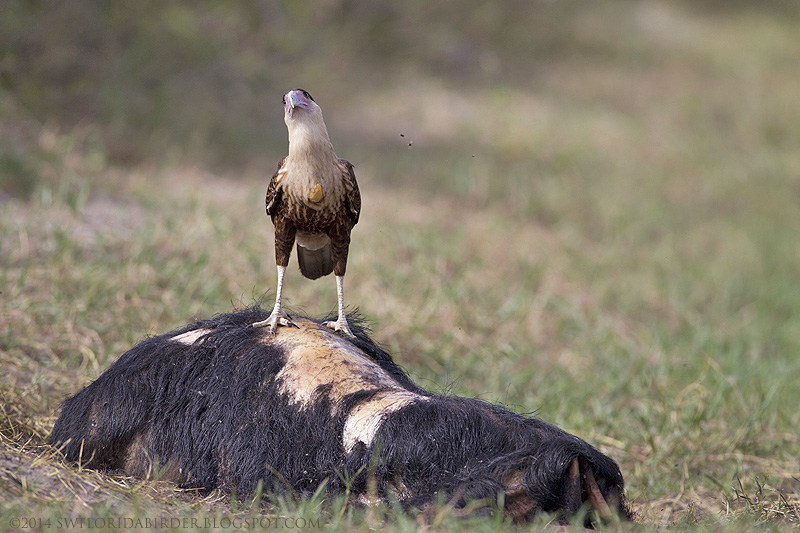
The Crested Caracara above (image 1) was photographed at Church Road in January 2015.
There should definitely be a concern for vehicular traffic on this road which travels at a high speed. Weekend days are best for minimal disturbance. If you are inclined to stop on the road, which you will, make sure to use care at all times.
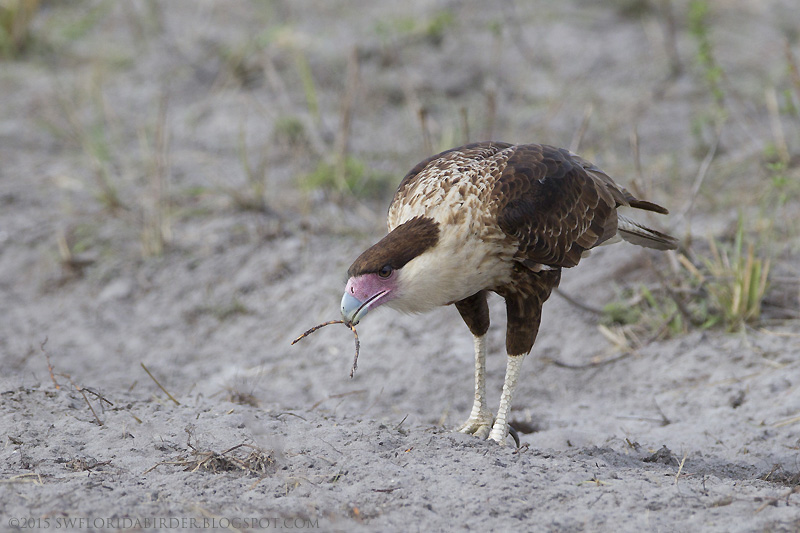
The Crested Caracara above (image 2) was photographed at Church Road in January 2015.
The Crested Caracara above (image 3) was photographed at Church Road in January 2015.
The Crested Caracara above (image 4) was photographed at Church Road in January 2015.
The Crested Caracara above (image 5) was photographed at Church Road in January 2015.
The Black Vulture above (image 6) was photographed at Church Road in January 2015.
This two-part article highlights the prolific Northern Crested Caracara which can be seen at Church Road ideally near sunrise or sunset. Many dozens of other species of bird and mammal shouldn't be overlooked including prolific butterflies and dragonflies.
The Black Vulture above (image 7) was photographed at Church Road in January 2015.
The Turkey Vulture above (image 8) was photographed at Church Road in January 2015.
The Western Kingbird above (image 9) was photographed at Church Road in January 2015.
The Great Southern White Butterfly above (image 10) was photographed at Church Road in January 2015.
The Crested Caracara above (image 11) was photographed at Church Road in January 2015.
I mention the caracara as Northern Crested Caracara for the first time here due to my research on the Florida subspecies which was learned to be a remnant of the last ice age that occurred about 10,500 BC. Crested Caracara could not escape their plight through migration since they don't engage in that behavior.
The Wood Stork above (image 12) was photographed at Church Road in January 2015.
The Wood Stork above (image 13) was photographed at Church Road in January 2015.
The Wood Stork above (image 14) was photographed at Church Road in January 2015.
The Wood Stork above (image 15) was photographed at Church Road in January 2015.
The Crested Caracara above (image 16) was photographed at Church Road in January 2015.
Caracara with a pink face indicate juveniles. It was noted by J. Lyons' Wildlife Rehabilitation (1984) that the face of Crested Caracara will be orange-red in color when the bird is at rest, though when under stress will change to a pumpkin color to yellow.
The Crested Caracara above (image 17) was photographed at Church Road in January 2015.
The Crested Caracara above (image 18) was photographed at Church Road in January 2015.
The Crested Caracara above (image 19) was photographed at Church Road in January 2015.
The Crested Caracara above (image 20) was photographed at Church Road in January 2015.
The Crested Caracara above (image 21) was photographed at Church Road in January 2015.
Caracara during breeding season will sport a bump on its breast in my observations at Church Road. I have not seen this characteristic reported anywhere in my research. It was determined that this occurs on the female while observing a copulation event.
The Crested Caracara above (image 22) was photographed at Church Road in January 2015.
The Crested Caracara above (image 23) was photographed at Church Road in January 2015.
The Crested Caracara above (image 24) was photographed at Church Road in January 2015.
The Crested Caracara above (image 25) was photographed at Church Road in January 2015.
The Crested Caracara above (image 26) was photographed at Church Road in January 2015.
This unusual anatomical characteristic of the caracara is missing from birding resources including the oiseaux-birds website. Their notation of the caracara's face changing color is otherwise interesting, though I have never seen this happen in real time.
The Crested Caracara above (image 27) was photographed at Church Road in January 2015.
The Crested Caracara above (image 28) was photographed at Church Road in January 2015.
The Crested Caracara above (image 29) was photographed at Church Road in January 2015.
The Crested Caracara above (image 30) was photographed at Church Road in January 2015.
The Crested Caracara above (image 31) was photographed at Church Road in January 2015.
The Northern Crested Caracara is noted to be a protected bird, though of "Least Concern." Caracara is a food source in southern parts of its range in a report from 2010. In this 2014/2015 season, there have been very good numbers of caracara observed.
The Crested Caracara above (image 32) was photographed at Church Road in January 2015.
The copulating Crested Caracara above (image 33) were photographed at Church Road in January 2015.
The Boat-tailed Grackle above (image 34) was photographed at Church Road in January 2015.
The Black Vulture above (image 35) was photographed at Church Road in January 2015.
The Black Vulture above (image 36) was photographed at Church Road in January 2015.
Copulation of the caracara observed during my 6 December visit to Church Road is considered early for the nesting season. This is an especially great time of year to make a trip to Church Road in Felda off of highway 82, just west of highway 29.
The Black Vulture above (image 37) was photographed at Church Road in January 2015.
Please also see Church Road Crested Caracara Overload: Part I
Subscribe to:
Posts (Atom)