Friday, April 8, 2016

CREW Bird Rookery Swamp

Bird Rookery Swamp shares 60,000+ acres of the Corkscrew Regional Ecosystem Watershed (CREW) with Flint Pen Strand, Corkscrew Marsh, Camp Keais Strand and the National Audubon Society's Corkscrew Swamp Sanctuary.


The Little Blue Heron above (image 1) was photographed at Bird Rookery Swamp in March 2016.

CREW is in Lee and Collier Counties situated East of Interstate 75 and predominantly between Corkscrew Road and Immokalee Road. While the watershed has favorable habitat for the Florida Black Bear and Florida Panther, the Bird Rookery Swamp's 12 miles of trails with a relatively short boardwalk is not an ideal venue to walk a dog with hopes of seeing such endangered beasts as alligators are known to be prolific and intimidating at times.


The juvenile Little Blue Heron above (image 2) was photographed at Bird Rookery Swamp in March 2016.


The Pied-billed Grebe above (image 3) was photographed at Bird Rookery Swamp in March 2016.

I have been following in recent years the journal of Dick Brewer who very rarely misses a weekly trip to Bird Rookery Swamp. He also compiles a list of birds, butterflies, dragonflies, mammals as well as reptiles and amphibians he encounters on each of his visits to the swamp. Dick is a volunteer for the CREW Land and Water Trust. So on the cool morning of 22 March, Tom Obrock joined me on my first visit to Bird Rookery Swamp.


The Red-shouldered Hawk above (image 4) was photographed at Bird Rookery Swamp in March 2016.


The Red-shouldered Hawk above (image 5) was photographed at Bird Rookery Swamp in March 2016.

While I chose to end my walk at the 1.25 mile marker, Tom continued further on. It was hoped to see a lot of warbler activity on this day, however they were very limited and were heard more than seen. Perhaps due to the cool temperature and relatively short distance walked I did not see any alligators. A low overflight of a Roseate Spoonbill was a nice surprise. Back at the parking area Tom pointed out a Purple Martin which I hadn't seen in years while a Black-bellied Whistling-Duck was observed on the North side of Shady Hollow Boulevard.


The Red-shouldered Hawk above (image 6) was photographed at Bird Rookery Swamp in March 2016.


The Blue Dasher Dragonfly above (image 7) was photographed at Bird Rookery Swamp in March 2016.

Bird Rookery Swamp appeared to offer a lot of opportunities beyond birds. In fact there was the largest concentration of dragonflies I have yet seen at any one venue. There were many dozens of Eastern Pondhawk dragonflies observed with the females outnumbering the males by at least 5 to 1. My future visits to this venue will require the use of my bicycle to fully explore the trails of the Swamp. CREW's Cypress Dome Trails allows bicycle use as well.


The Anhinga above (image 8) was photographed at Bird Rookery Swamp in March 2016.


The Anhinga above (image 9) was photographed at Bird Rookery Swamp in March 2016.

Please be sure to be reminded about this weekly Southwest Florida Wildlife Blog with the email gadget located at the top of the page.


The Swallow-tailed Kite above (image 10) was photographed at Bird Rookery Swamp in March 2016.

Friday, April 1, 2016

Crandon Park At Key Biscayne

Runs across Alligator Alley have become relatively frequent as rare birds continue to be found in south Florida.


The Indian Peafowl above (image 1) was photographed at Crandon Park in March 2016.

In mid-March another American Birding Association Code 5 specialty was discovered at Crandon Park in Key Biscayne by Otto and Jose Zequeira on the 13th. The Cuban Pewee with only four previously accepted records in the ABA area drew my attention.


The Great Crested Flycatcher above (image 2) was photographed at Crandon Park in March 2016.


The Cape May Warbler above (image 3) was photographed at Crandon Park in March 2016.


The Yellow-rumped Warbler above (image 4) was photographed at Crandon Park in March 2016.


The Egyptian Goose above (image 5) was photographed at Crandon Park in March 2016.


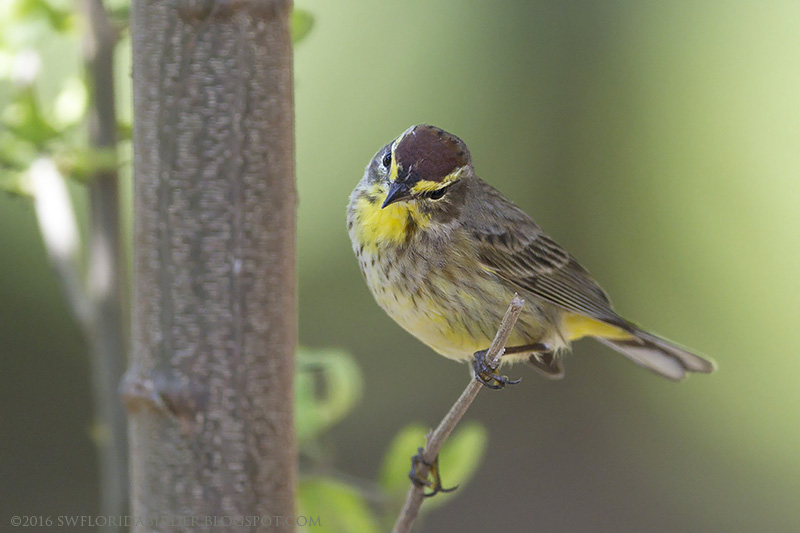
The Palm Warbler above (image 6) was photographed at Crandon Park in March 2016.


The Indian Peafowl above (image 7) was photographed at Crandon Park in March 2016.


The Indian Peafowl above (image 8) was photographed at Crandon Park in March 2016.


The Black-and-white Warbler with prey above (image 9) was photographed at Crandon Park in March 2016.


The Indian Peafowl above (image 10) was photographed at Crandon Park in March 2016.

The pewee was seen again on the 14th. This was a signal of sorts that there would be a much better chance to encounter the bird that didn't belong here. Thus navigator Tom Obrock and I made the trip across the Florida peninsula arriving at Crandon Park at about 0900.


The Indian Peafowl above (image 11) was photographed at Crandon Park in March 2016.


The Black-and-white Warbler with prey above (image 12) was photographed at Crandon Park in March 2016.


The Black-and-white Warbler with prey above (image 13) was photographed at Crandon Park in March 2016.


The Palm Warbler above (image 14) was photographed at Crandon Park in March 2016.


The Palm Warbler above (image 15) was photographed at Crandon Park in March 2016.


The Yellow-rumped Warbler above (image 16) was photographed at Crandon Park in March 2016.


The Anhinga above (image 17) was photographed at Crandon Park in March 2016.


The Cape May Warbler above (image 18) was photographed at Crandon Park in March 2016.


The Cape May Warbler above (image 19) was photographed at Crandon Park in March 2016.

The weather was good. The traffic was heavy. The litter at Crandon Park was prolific. It was difficult to ignore the latter in the seven hours of observation in hopes of seeing the Cuban Pewee. The wildlife didn't seem to mind.


The Yellow-rumped Warbler above (image 20) was photographed at Crandon Park in March 2016.


The Yellow-rumped Warbler above (image 21) was photographed at Crandon Park in March 2016.


The Palm Warbler above (image 22) was photographed at Crandon Park in March 2016.


The Indian Peafowl above (image 23) was photographed at Crandon Park in March 2016.


The Indian Peafowl above (image 24) was photographed at Crandon Park in March 2016.


The Black-and-white Warbler above (image 25) was photographed at Crandon Park in March 2016.


The Black-and-white Warbler above (image 26) was photographed at Crandon Park in March 2016.


The Turkey Vulture above (image 27) was photographed at Crandon Park in March 2016.


The Palm Warbler above (image 28) was photographed at Crandon Park in March 2016.

Trails are extensive at the southern end of Crandon Park which Tom explored much more than I did. I settled down at the area where the pewee had been seen and soaked up the shade. In addition to Tom's eBird checklist a European Starling and Anhinga were personally observed.


The Brown Basilisk above (image 29) was photographed at Crandon Park in March 2016.


The Black Spiny-tailed Iguana above (image 30) was photographed at Crandon Park in March 2016.


The Yellow-throated Vireo above (image 31) was photographed at Crandon Park in March 2016.


The Blue Jay above (image 32) was photographed at Crandon Park in March 2016.


The Eurasian Collared-Dove above (image 33) was photographed at Crandon Park in March 2016.


The Sandhill Crane above (image 34) was photographed at Crandon Park in March 2016.


The Great Black-backed Gull above (image 35) was photographed at Crandon Park in March 2016.


The Lesser Black-backed Gull above (image 36) was photographed at Crandon Park in March 2016.


The Lesser Black-backed Gull above (image 37) was photographed at Crandon Park in March 2016.

It was a disappointment that the Cuban Pewee was missed by Tom Obrock and me on the 15th. The Cuban Pewee has not been reported again at Crandon Park as of this writing. There was periodic warbler activity and a good collection of shorebirds on the beach which distracted me.


The Double-crested Cormorant above (image 38) was photographed at Crandon Park in March 2016.


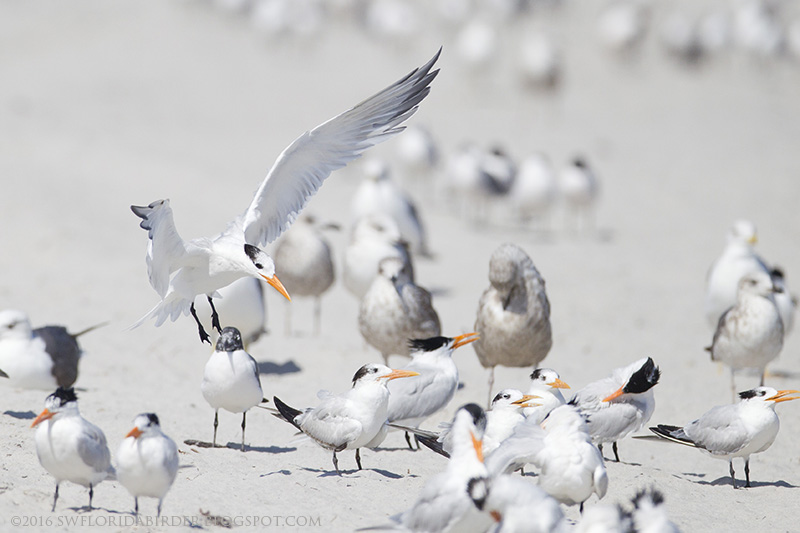
The Royal Tern above (image 39) was photographed at Crandon Park in March 2016.


The Double-crested Cormorant above (image 40) was photographed at Crandon Park in March 2016.


The Royal Tern above (image 41) was photographed at Crandon Park in March 2016.


The Laughing Gull above (image 42) was photographed at Crandon Park in March 2016.


The Double-crested Cormorant above (image 43) was photographed at Crandon Park in March 2016.


The Lesser Black-backed Gull above (image 44) was photographed at Crandon Park in March 2016.

For the record, image 29 was rotated 90 degrees clockwise to allow a significantly tighter view of the subject which improves its aesthetics. Some of you with keen eyes may have noticed that especially knowing that I present all images in the blog chronologically.


The Lesser Black-backed Gull above (image 45) was photographed at Crandon Park in March 2016.

Please be sure to be reminded about this weekly Southwest Florida Wildlife Blog with the email gadget located at the top of the page.


The Black Spiny-tailed Iguana above (image 46) was photographed at Crandon Park in March 2016.