Although there was a very welcome breeze at dawn on the morning of 11 August, I was not prepared to walk miles from Carlos Pointe at Big Carlos Pass along Little Estero Lagoon with the temperature already at 78 degrees.
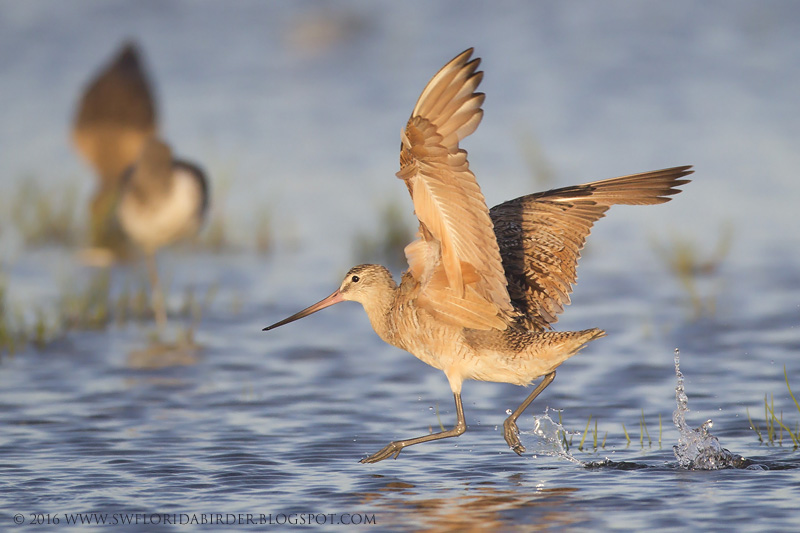
The Marbled Godwit above (image 1) was photographed at Carlos Pointe in August 2016.
The primary purpose of my visit to the freshwater pool at Carlos Pointe was to investigate whether a Whimbrel reported for nearly a week was still present at the expansive venue. The Whimbrel arrival nearly coincided with a stalled weather system over the Gulf of Mexico that created overcast conditions and a lot of rain in Florida this past week.
The Marbled Godwit above (image 2) was photographed at Carlos Pointe in August 2016.
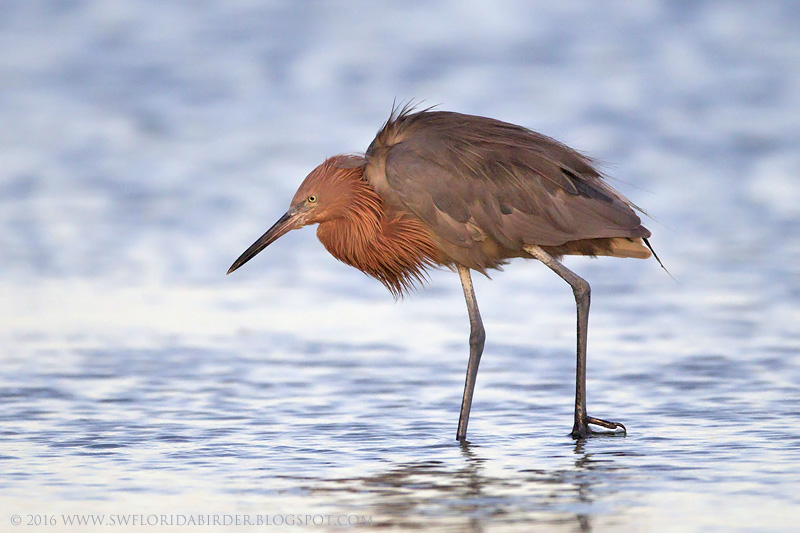
The Reddish Egret above (image 3) was photographed at Carlos Pointe in August 2016.
The Laughing Gull above (image 4) was photographed at Carlos Pointe in August 2016.
The Laughing Gull above (image 5) was photographed at Carlos Pointe in August 2016.
The Marbled Godwit above (image 6) was photographed at Carlos Pointe in August 2016.
My approach to the pool offered a view of what appeared a decent number of shorebirds. A Roseate Spoonbill stood out like a sore thumb. Ospreys were prolific and actively calling from their roosts at the top of the adjacent high-rise condo buildings.
The Black Skimmer above (image 7) was photographed at Carlos Pointe in August 2016.
The Ruddy Turnstone above (image 8) was photographed at Carlos Pointe in August 2016.
The Ruddy Turnstone above (image 9) was photographed at Carlos Pointe in August 2016.
The Ruddy Turnstone above (image 10) was photographed at Carlos Pointe in August 2016.
The Marbled Godwit above (image 11) was photographed at Carlos Pointe in August 2016.
Upon arrival at my observation point I attempted to take representative shots of the spoonie and Reddish Egret. The posture of the spoonbill didn't seem right to me, so I gave it no attention until it became mobile. The Reddish Egret was unusually placid as well, so its representative image will have to due with it in no mood to dance.
The Marbled Godwit above (image 12) was photographed at Carlos Pointe in August 2016.
The Snowy Egret above (image 13) was photographed at Carlos Pointe in August 2016.
The Black-bellied Plover above (image 14) was photographed at Carlos Pointe in August 2016.
The Western Sandpiper above (image 15) was photographed at Carlos Pointe in August 2016.
The Marbled Godwit above (image 16) was photographed at Carlos Pointe in August 2016.
There were a good number of very active Marbled Godwit on hand. A preferred view of Red Knots in transitional plumage was challenging with it requiring me to disturb the loafing Whimbrel to get decent shots of them. No dice.
The Semipalmated Plover above (image 17) was photographed at Carlos Pointe in August 2016.
The Least Sandpiper above (image 18) was photographed at Carlos Pointe in August 2016.
The juvenile Least Tern above (image 19) was photographed at Carlos Pointe in August 2016.
The juvenile Least Tern above (image 20) was photographed at Carlos Pointe in August 2016.
The Black-bellied Plover above (image 21) was photographed at Carlos Pointe in August 2016.
The lingering Whimbrel remained primarily in sleep mode among a few godwits and a Willet with periodic preening observed. The behavior of the birds was exhilarating to watch with a dominant Marbled Godwit and Ruddy Turnstone seemingly making names for themselves.
The Willet above (image 22) was photographed at Carlos Pointe in August 2016.
The Ruddy Turnstone above (image 23) was photographed at Carlos Pointe in August 2016.
The Marbled Godwit above (image 24) was photographed at Carlos Pointe in August 2016.
The Marbled Godwit with Red Knot above (image 25) was photographed at Carlos Pointe in August 2016.
The Laughing Gull above (image 26) was photographed at Carlos Pointe in August 2016.
An unfortunate event would unfold before I had the opportunity to satisfy my interest in learning more about the behavior of the Whimbrel.
The Short-billed Dowitcher above (image 27) was photographed at Carlos Pointe in August 2016.
The Short-billed Dowitcher above (image 28) was photographed at Carlos Pointe in August 2016.
The Short-billed Dowitcher above (image 29) was photographed at Carlos Pointe in August 2016.
The Marbled Godwit above (image 30) was photographed at Carlos Pointe in August 2016.
Please be sure to be reminded about this weekly Southwest Florida Wildlife Blog with the email gadget located at the top of the page.
The Roseate Spoonbill above (image 31) was photographed at Carlos Pointe in August 2016.
Please also see Whimbrel At Carlos Pointe: Part II
Friday, August 12, 2016
Friday, August 5, 2016
Early Migration At The Everglades Ag Area
A spectacular destination for the observation of migrating shorebirds is within the Everglades Agricultural Area adjacent to Belle Glade, Florida.
The Black-crowned Night-Heron above (image 1) was photographed at Everglades Agricultural Area in August 2016.
The Everglades agricultural fields encompass about 700,000 acres which are predominately planted with sugarcane. Preceding crop rotation the fields are flooded to control pests, with rice typically grown offering a conditioning of the soil as a side benefit. Sod fields are also prevalent with vegetables grown in winter months.
The Black-bellied Whistling-Duck above (image 2) was photographed at Everglades Agricultural Area in August 2016.
The Cattle Egret above (image 3) was photographed at Everglades Agricultural Area in August 2016.
The Glossy Ibis with juvenile above (image 4) was photographed at Everglades Agricultural Area in August 2016.
The Yellow-crowned Night-Heron above (image 5) was photographed at Everglades Agricultural Area in August 2016.
The Black-necked Stilt above (image 6) was photographed at Everglades Agricultural Area in August 2016.
The Black-necked Stilt above (image 7) was photographed at Everglades Agricultural Area in August 2016.
The Black-necked Stilt above (image 8) was photographed at Everglades Agricultural Area in August 2016.
A mid-summer visit to the EAA offered very distant views of a very large inaccessible flooded field at the intersection of Browns Farm Road and County Road 880 known as Six Mile Bend. Navigator Tom Obrock and I arrived here shortly after sunrise. A Red-shouldered Hawk was seen with what appeared a blackbird in its talons.
The juvenile Glossy Ibis above (image 9) was photographed at Everglades Agricultural Area in August 2016.
The Solitary Sandpiper above (image 10) was photographed at Everglades Agricultural Area in August 2016.
The Black-necked Stilt above (image 11) was photographed at Everglades Agricultural Area in August 2016.
The juvenile White Ibis above (image 12) was photographed at Everglades Agricultural Area in August 2016.
The Killdeer above (image 13) was photographed at Everglades Agricultural Area in August 2016.
The Fulvous Whistling-Duck above (image 14) was photographed at Everglades Agricultural Area in August 2016.
The Fulvous Whistling-Duck above (image 15) was photographed at Everglades Agricultural Area in August 2016.
We next traveled south on Browns Farm Road for about ten miles to a side road we had explored last year. Images #1 through #20 were captured in this area. There was a very good variety and number of birds seen here. However, there were were unfortunately no flooded fields.
The Gull-billed Tern above (image 16) was photographed at Everglades Agricultural Area in August 2016.
The Gull-billed Tern above (image 17) was photographed at Everglades Agricultural Area in August 2016.
The Black-bellied Whistling-Duck above (image 18) was photographed at Everglades Agricultural Area in August 2016.
The juvenile Glossy Ibis above (image 19) was photographed at Everglades Agricultural Area in August 2016.
The Barn Swallow above (image 20) was photographed at Everglades Agricultural Area in August 2016.
The Red-winged Blackbird above (image 21) was photographed at Everglades Agricultural Area in August 2016.
The Red-winged Blackbird above (image 22) was photographed at Everglades Agricultural Area in August 2016.
Tom and I continued back to Six Mile Bend where the flooded field observed earlier had become accessible. Images #21 through #38 represent what was seen in very small part with nearly 30 bird species tallied. Most were still too far to be photographed even marginally.
The Wood Stork above (image 23) was photographed at Everglades Agricultural Area in August 2016.
The Wilson's Phalarope above (image 24) was photographed at Everglades Agricultural Area in August 2016.
The Wilson's Phalarope above (image 25) was photographed at Everglades Agricultural Area in August 2016.
The Wilson's Phalarope above (image 26) was photographed at Everglades Agricultural Area in August 2016.
The Stilt Sandpiper above (image 27) was photographed at Everglades Agricultural Area in August 2016.
The Black-necked Stilt above (image 28) was photographed at Everglades Agricultural Area in August 2016.
The Mourning Dove above (image 29) was photographed at Everglades Agricultural Area in August 2016.
While the Stilt Sandpiper was the best species seen at the flooded field, we also had an impressive number of Wilson's Phalarope with five at relatively close range and two remaining at a great distance. With very good fortune, an Upland Sandpiper may show up in the sod fields in early autumn.
The Semipalmated Sandpiper above (image 30) was photographed at Everglades Agricultural Area in August 2016.
The Black Tern above (image 31) was photographed at Everglades Agricultural Area in August 2016.
The Roseate Spoonbill above (image 32) was photographed at Everglades Agricultural Area in August 2016.
The Wilson's Phalarope above (image 33) was photographed at Everglades Agricultural Area in August 2016.
The Stilt Sandpiper with Wilson's Phalarope above (image 34) was photographed at Everglades Agricultural Area in August 2016.
The Stilt Sandpiper with Semipalmated Sandpiper above (image 35) was photographed at Everglades Agricultural Area in August 2016.
The Stilt Sandpiper above (image 36) was photographed at Everglades Agricultural Area in August 2016.
Our next stop was Belle Glade Marina with hopes of observing a Shiny Cowbird and Orchard Oriole reported earlier. The oriole was missed while Tom got a photo of an unexpected Great White Heron. With it well after noon we opted to postpone a trip along Miami Canal Road.
The Black Tern above (image 37) was photographed at Everglades Agricultural Area in August 2016.
The Wilson's Phalarope above (image 38) was photographed at Everglades Agricultural Area in August 2016.
The Red-shouldered Hawk above (image 39) was photographed at Belle Glade Marina in August 2016.
Please be sure to be reminded about this weekly Southwest Florida Wildlife Blog with the email gadget located at the top of the page.
The Shiny Cowbird above (image 40) was photographed at Belle Glade Marina in August 2016.
The Common Nighthawk above (image 41) was photographed at Belle Glade Marina in August 2016.
Subscribe to:
Posts (Atom)