Friday, March 4, 2011

SWFL Early 2011 Birding Bonanza

While typically attempting to highlight a particular focus of interest here in Southwest Florida, I'm this week able to report on a handful of venues of great interest to me and hopefully you as well.

The Savannah Sparrow above was photographed at Devils Garden in February 2011.

I missed seeing Tom Obrock at STA5 last week as I would especially find it an enviable opportunity to accompany such an accomplished birder as himself to learn from.

Frank Constantin made his rounds of the local area while I regret not being able to meet up with him either.

The Snail Kite above was photographed at Devils Garden in February 2011.

Devils Garden Bird Park is a venue I was compelled to visit while I had the chance after hearing enthusiastic comments about it.

Devils Garden was officially opened to public wildlife tours in late 2010.

The Red-shouldered Hawk above was photographed at Devils Garden in February 2011.

The full day (9-4) tour was made with Jose Santiago as guide while accompanied by a fun couple from Minnesota.

I had thought Snail Kite were prolific at Harns Marsh Preserve, and then STA5, but Devil's Garden has the best opportunity to view this species of bird at close range I've yet to see.

The Limpkin above was photographed at Devils Garden in February 2011.

Jose told about the farming endeavors made on a visibly small portion of the 7000 acres that encompass Devils Garden.

He noted the hunting characteristics of hawks preying on doves that are flushed from the stands of sugar cane that serve as wind breaks for the vegetable plantings.

The Eastern Meadowlark above was photographed at Devils Garden in February 2011.

The tour additionally traversed the working ranch's wetlands, tree hammocks, and prairie wildlife habitats.

A stunning Northern Harrier was observed though stayed tantalizingly just out of photographic range.

The Red-shouldered Hawk in its nest above was photographed at Devils Garden in February 2011.

A never before seen nest of Red-shouldered Hawk was a highlight of the tour.

In addition, a nice sighting of a pair of American Bittern at very close range was made at Devils Garden.

The alligator above was photographed at Devils Garden in February 2011.

Sandhill Crane, White Pelican, Eastern Meadowlark, Savannah Sparrow, Osprey, Tricolored Heron, Crested Caracara and additionally seen wading and shore birds were welcome as well.

A future visit to Devils Garden will perhaps involve my investigation of one of the venue's covered viewing platforms.

The American Bittern above was photographed at Devils Garden in February 2011.

Additional visits to the venue will be required before I'm confident in "designing my own tour" of Devils Garden to take full advantage of its offerings.

Jose also commented that we have had little rain these past weeks.

The Red-shouldered Hawk above was photographed at Devils Garden in February 2011.

This certainly doesn't favor Devils Garden and its birds when compared to the conditions at STA 5 where the water is intentionally pumped into its cells.

Six Mile Cypress Slough Preserve was overdue for a visit and thus spent a morning making my way along the boardwalk at this venue that I strongly encourage you to visit.

The Pileated Woodpecker above was photographed at Six Mile Cypress Slough Preserve in February 2011.

The Carolina Wren is a species expected to be seen here, but is too often missed.

The Pileated Woodpecker was also a species of interest at Six Mile Cypress as it foraged near Otter Pond with the water's namesake yet to be seen.

The Carolina Wren above was photographed at Six Mile Cypress Slough Preserve in February 2011.

A follow-up trip to J.N. Ding Darling NWR this week was timed to take advantage of a low tide which I've found to offer best conditions for wildlife viewing at this jewel on Sanibel Island.

My expectations were exceeded with a greater abundance of wading and shore birds than ever seen before along Wildlife Drive.

The White Pelican above was photographed at J. N. Ding Darling National Wildlife Refuge in February 2011.

At first light, it was particularly entertaining to observe the feeding behavior of snowy, great, and Reddish Egrets, not to mention the White Pelicans at very close range.

I found myself particularly entranced as well by no less than a dozen Red-breasted Mergansers that I have not had the opportunity to study at such close range and for such an extended period of time before.

The Tricolored Heron above was photographed at J. N. Ding Darling National Wildlife Refuge in February 2011.

The White Pelicans were much closer to the drive than seen before with their trek northward soon to be underway.

It was interesting to observe Tricolored Heron to have dominance over Little Blue Heron with control over a pair of logs fallen in the water.

The Snowy Egret above was photographed at J. N. Ding Darling National Wildlife Refuge in February 2011.

A very unusual observation of a Double-crested Cormorant was made where it is undetermined whether the bird was engaged in nesting, playful, or feeding behavior with a stick.

I overheard a refuge volunteer note that low tide occurred at 6:00am while low tide took place at 1:00am at nearby Matanzas Pass.

The Double-crested Cormorant above was photographed at J. N. Ding Darling National Wildlife Refuge in February 2011.

A 1:00-2:00am low tide at Matanzas Pass is thus the time we need to be noting ideally with the refuge opening at 7:00am while remembering that Ding Darling is closed to the public on Fridays.

Great numbers of shorebirds flew in to the primary area observed while many dozens of visitors had moved on.

The Osprey above was photographed at J. N. Ding Darling National Wildlife Refuge in February 2011.

Closing out my wildlife observations for the week, I had the chance to meet up with Hemant Kishan visiting the area for observation of Bald Eagle 862 and its nest at Big Carlos Pass.

The adult eagles were regrettably not cooperative in staying within view of the nest through much of the early morning while the juvenile laid low.

The Western Sandpiper above was photographed at J. N. Ding Darling National Wildlife Refuge in February 2011.

After investigating New Pass nearly two miles south where Double-crested Cormorant with Brown Pelicans and an Osprey hunting for a meal were primarily observed, Hemant and I headed to the southern end of Estero Lagoon at his recommendation.

The target species was Snowy Plover with anticipation of seeing more from my perspective as I had never walked on this particular ground before.

The Red-breasted Merganser above was photographed at J. N. Ding Darling National Wildlife Refuge in February 2011.

A small flock of Royal Tern was initially seen (with one of the species in the group sporting near prime breeding plumage) in the company of quite a few Forster's Tern with a solitary Common Tern and a couple of Laughing Gull.

Numerous resting Western Sandpiper were in this group of resting birds as well.

Hemant Kishan above was photographed at Estero Lagoon in February 2011.

The walk was led by Hemant from Big Carlos Pass whom was very familiar with his surroundings and the wildlife that could be seen here while many personal walks from the Holiday Inn south never reached this point.

When Hemant returned after walking ahead of me, he noted that he had seen Red-breasted Merganser and American Oystercatcher which I would attempt to photograph as he left the beach to meet up with his family.

The American Oystercatcher above was photographed at Estero Lagoon in February 2011.

Hemant also told me that he made a rare sighting of and photographed a Great Black-backed Gull near the Big Carlos Pass bridge adjacent to the Gulf of Mexico.

I finally heard from the USGS bird banding laboratory late this week regarding my inquiry of eagle 862 with my surprise that they are requesting additional information from me.

The Great Blue Heron above was photographed at Estero Lagoon in February 2011.

I'll be seeking a more timely and efficient resource to submit information about and learn of banded birds and their history.

All of the wildlife venues mentioned above are deserving of as many repeat visits as possible.

The Snowy Plover above was photographed at Estero Lagoon in February 2011.

I will include an image of eagle 862's band engraving in next week's blog entry.

Friday, February 25, 2011

Feature: STA5

A visit to Stormwater Treatment Area 5, south of Clewiston, Florida, was finally made this past week after an interest in doing so for the past couple of years.

The Eastern Phoebe above was photographed at STA5 in February 2011.

As of this writing, access to STA5 for wildlife viewing remains limited to a typically once or twice a month scheduled tour made possible in part by the Hendry-Glades Audubon Society.

The annual Great Backyard Bird Count and Big “O” Birding Festival offer consecutive three and four day opportunities to visit STA5 in the months of February and March.

The Palm Warbler above was photographed at STA5 in February 2011.

STA5 is a man made wetland impoundment facility with its water cells a mile wide on the shortest side and two miles on the longest designed to primarily filter agricultural phosphorus from the groundwater before it flows into the Everglades ecosystem.

Eighteen miles of levees are driven on with great care allowing exploration within and around this 5120 acre wildlife mecca.

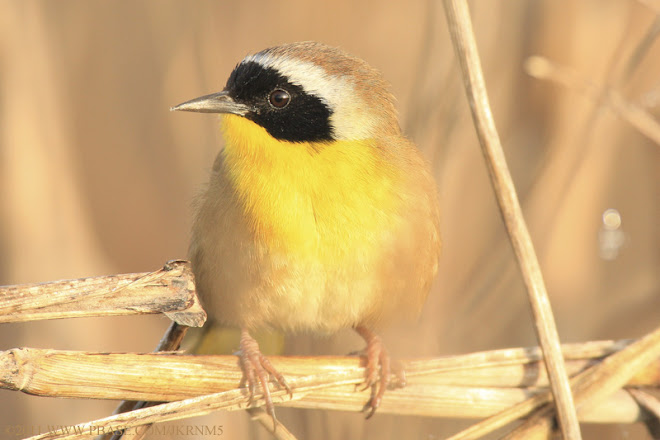
The Common Yellowthroat above was photographed at STA5 in February 2011.

The South Florida Water Management District has authority of STA5 and surrounding STAs with the SFWMD, under strict conditions, periodically permitting the hunting of alligators at the STAs as well as that of small game at STA5.

It is the hunting activity at STA5 which is perhaps responsible for the apparent skittish behavior of the wildlife that is not typical of Florida's birds and alligators as I've observed at other inland and coastal wildlife venues across the state.

The wildlife enthusiasts above were photographed at STA5 in February 2011.

Among my interests this week were the thousands of waterfowl seen at STA5 while in all a total of at least 75 species were reportedly seen by at least 83 observers in the immediate area.

Canadian wildlife photographer Frank Constantin had made a trip to STA5 a month earlier and forewarned me of the distance of the wildlife which he compared to that at Harns Marsh Preserve in Lehigh Acres.

The Blue-winged Teal above was photographed at STA5 in February 2011.

I thus acquired a 2X converter/extender for my camera's lens for the STA5 trip with the expectation that the wildlife would be much more distant than typically seen at other wildlife venues.

Frank's visit to STA5 was less than a few hours as he reported, while I chose to make a second trip along the levees allowing me in excess of nine hours of observation time inclusive of areas around the STA.

The Cattle Egret above was photographed at STA5 in February 2011.

Although my initial intent was to take full advantage of additional opportunity in visiting STA5 this month, I first opted to determine the effectiveness of using the 2X accessory before devoting more time to the documentation of my observations.

Even with the benefit of the 2X converter, it would prove necessary to crop virtually all of the images included in this report.

The Cattle Egret above was photographed at STA5 in February 2011.

STA5 is especially appreciated with a Spotting Scope that is often seen used by birding aficionados.

Spotting Scopes that I've been permitted to look through when offered the opportunity have always allowed for a remarkable view of a distant subject that cannot be appreciated anywhere near as equally as seen through the lens of a camera.

The Cattle Egret above was photographed at STA5 in February 2011.

A little research on these remarkable optical devices seems to show the manufacturer of Kowa products to be the leader in its field, with the TSN-883 spotting scope perhaps the best available as reviewed by Optics4birding.

It's my understanding that digiscopy offers much greater challenges in the photography of wildlife verses dare I say "traditional" digital photography.

The White Pelican above was photographed at STA5 in February 2011.

It was my anticipation to see some new species of bird at STA5 that I had yet to encounter at my preferred wildlife venues closer to the Gulf of Mexico frequently visited in Southwest Florida.

With great fortune, I was able to add Fulvous Whistling-Duck, Northern Harrier, Western Kingbird, and Scissor-tailed Flycatcher to my list of bird species photographed for the first time with abnormalities of previously seen species documented.

The Ring-necked Duck above was photographed at STA5 in February 2011.

I'm especially grateful to Margaret England who led me to the latter two species that were seen near the proposed entrance to STA5.

Margaret currently serves as President of the Hendry-Glades Audubon Chapter and is remarkably timely and helpful with all inquiries made of her via email.

The Great Blue Heron above was photographed at STA5 in February 2011.

In addition to the waterfowl seen, I was captivated by a large flock of Cattle Egret where among them was an individual of the species that sported a rare aberrant plumage that I had never seen before.

With my attention focused at one point on an overflight of one of the abundant Northern Harriers (unsure of its identification at the time) that can be seen at STA5, a Great Blue Heron would make a catch of a very large catfish that initially appeared much too large for the bird to handle.

The Northern Harrier above was photographed at STA5 in February 2011.

Much thanks are extended to local birding expert Vincent Lucas as well whom assisted me in the positive identification of the raptor NOHA further described through the alpha banding code with it a female of the species.

Vince additionally offered insight of the Ring-necked Duck sporting a leucism in its primaries observed only on its right side.

The sugar harvest above was photographed at STA5 in February 2011.

The fires seen on the horizon I learned to coincide with the sugar harvest which rained ashes on STA5 throughout the day.

It was interesting to see the birds in the water seemingly oblivious to the alligators that were observed in great numbers.

The Savannah Sparrow above was photographed at STA5 in February 2011.

A Red-tailed Hawk was sighted for the first time since my interest in wildlife observation began, though I failed to photograph the stunningly beautiful raptor which took flight from a power line.

I consider the Canada Goose observed by others at STA5 the most interesting as it will require a revision of the species' range in David Sibley's Guide to Birds.

The Scissor-tailed Flycatcher above was photographed at STA5 in February 2011.

The goose is only noted to reach barely below the Georgia/ Florida border during Winter months in Sibley's guide while STA5 regularly produces surprises.

STA5 is a must see venue when the chance arises.

The Anhinga above was photographed at STA5 in February 2011.

Friday, February 18, 2011

The Chicken Or The Egg

As the 2011 Great Backyard Bird Count (February 18-21) is underway, I ponder the question why one would want to be a "birder."

The Bald Eagle above was photographed at Lovers Key State Park at Big Carlos Pass in February 2011.

A harder question answered is "what is a birder?"

If you've ever taken interest in the flight of a bird that may have crossed your path or winged creature that may have merely been within your view, you might consider yourself a birder.

The Mourning Dove above was photographed at Lovers Key State Park at Big Carlos Pass in February 2011.

There are certainly birders with qualifications raging far and wide from filling a box with seed to traveling the world.

It's been my great pleasure to encounter birders in my travels whom have the ability to identify birds with a skill that seems to be acquired with many years of observation and faithful dedication.

The Blue-headed Vireo above was photographed at Lovers Key State Park at Big Carlos Pass in February 2011.

It has taken me several years to reach the point in which I consider myself a novice birder devoting as much time to Southwest Florida wildlife observation as I can which typically averages seven hours a week.

I occasionally ponder the question asked of me by someone I've worked with if I would ever lose interest in photographing birds.

The Downy Woodpecker above was photographed at Lovers Key State Park at Big Carlos Pass in February 2011.

As I immediately answered then, and as I feel today, definitely not.

There's simply too much unexpected opportunity with appreciation for the fact that these creatures are believed to be descendants of dinosaurs with a fossil indicating a winged creature lived 150 million years ago.

The Blue-headed Vireo above was photographed at Lovers Key State Park at Big Carlos Pass in February 2011.

I have thus far documented 137 different species of bird in Florida, with a lifetime endeavor to merely observe as many of these beautiful creatures as I am able.

A greater personal endeavor is to study the behavior of birds.

The Bald Eagle above was photographed at Lovers Key State Park at Big Carlos Pass in February 2011.

This week's effort was to continue my observation of a Bald Eagle's nest that has a solitary fledgling.

A contentious behavior between the adult eagles and Ospreys was again noted.

The Bald Eagle juvenile above was photographed at Lovers Key State Park at Big Carlos Pass in February 2011.

The aerial dogfights between the species, if you will, are quite extraordinary and very difficult to document effectively through photography.

It was also particularly interesting to observe the eagle I call "862," as indicated by the metal band on its right leg.

The Bald Eagle with Osprey above was photographed at Lovers Key State Park at Big Carlos Pass in February 2011.

I reported the identification of the bird to the United States Geological Survey for information on the bird's history, but have not received a reply after two weeks.

What was of particular interest to me about the eagle's behavior which lasted 12 minutes was the manner in which it apparently was attempting to cool itself down on the morning when the temperature was about 70 degrees in the shade.

The Yellow-throated Warbler above was photographed at Lovers Key State Park at Big Carlos Pass in February 2011.

I have only seen similar behavior made by a Great Blue Heron on a couple of occasions and never before by the eagles.

This behavior should not be mistaken as similar by an Anhinga which stretches its wings in a similar manner to dry its feathers which lack waterproof characteristics of other birds.

The Roseate Spoonbill (note the middle bird's interest) above was photographed at Lovers Key State Park at Big Carlos Pass in February 2011.

While observing the eagle's nest I again saw the Blue-headed Vireo which was favoring the seeds of a nearby Gumbo-limbo tree, with the bird both eating and regurgitating them.

Although this tree is known to be used for a great number of reasons including carousel horses, medicinal purposes, and Haitian musical drums, I pondered at the time while observing the vireo if the brightly colored seeds of the tree may have been cultivated by native American Indians as a resource for pigment in their paints.

The Bald Eagle above was photographed at Lovers Key State Park at Big Carlos Pass in February 2011.

If you have the opportunity to offer a landscape addition in your yard where climate should be of concern, consider my favorite shrub known as Pineapple Guava (Acca sellowiana) which is incredibly fragrant while in bloom.

In the past, I have observed the Red-belied Woodpecker as another bird species that regurgitates seeds.

The Blue-headed Vireo above was photographed at Lovers Key State Park at Big Carlos Pass in February 2011.

Other bird species easily captivated my attention as a Yellow-throated Warbler was observed for the first time in over four years, coincidentally within a few miles from where I observed it last.

I also had the opportunity to photograph the Downy Woodpecker in the company of the much more common Red-bellied.

The Blue-gray Gnatcatcher above was photographed at Lovers Key State Park at Big Carlos Pass in February 2011.

The Downy Woodpecker is quite distinctive in the sound it makes which would allow its identification without seeing it.

Another rare observation was made with the sighting of an American Kestrel.

The Northern Mockingbird above was photographed at Lovers Key State Park at Big Carlos Pass in February 2011.

When I first caught a glimpse of the bird as it flew overhead, while not immediately able to identify it, I knew that it was unusual with regard to its flight characteristics.

I learned some valuable lessons in camera settings that need to be used in the future to offer consistently improved images.

The Gulf Fritillary Butterfly above was photographed at Lovers Key State Park at Big Carlos Pass in February 2011.

It was interesting to observe as well the carcass of a turtle that possibly had its shell penetrated by the Black Vulture in the tree directly above it.

Though I've only picked up and kept one shell from the beach in my travels, it was interesting this week to meet someone that told me I had to give up my Alphabet Cone if I found one.

The American Kestrel above was photographed at Lovers Key State Park at Big Carlos Pass in February 2011.

I'll leave the reason why a mystery.

I was particularly intrigued with the workings of photo editing this week (which I attempt to keep to a minimum of crop and sharpening) as I attempted to remove a color cast in the Downy Woodpecker image included in this post where utilizing CS5, the opposite of what I thought should happen occurred.

The turtle carcass above was photographed at Lovers Key State Park at Big Carlos Pass in February 2011.

Though I'm not sure what caused the color cast to begin with as it's not often produced in my images taken, the hue/contrast feature in CS5 minimized the effect by moving the slider darker after selecting the color I thought closest to that I wished to remove.

The fledgling eagle is progressing well.

The Bald Eagle above was photographed at Lovers Key State Park at Big Carlos Pass in February 2011.