Friday, July 9, 2010

Aunt Nettie

The weather was inclement on my days off from work which made for a challenge to get some fresh wildlife photography included in this post.

The Little Blue Heron above was photographed at Bunche Beach Preserve in July 2010.

It wasn't until hours ago that it all came together for a message you will hopefully appreciate.

The sky finally cleared on Friday and offered some of the best light I remember from experiences I've had the last couple of years during the rainy season in southwest Florida.

The fellow visitors above were photographed at Bunche Beach Preserve in July 2010.

Weather conditions were ideal with little chance of rain with a low tide a couple of hours before sunset at Matanzas Pass.

Therefore I chose to visit Bunche Beach to see what kind of wildlife action was happening there.

The Willet above was photographed at Bunche Beach Preserve in July 2010.

Just before I left for the venue, I sent an email to Tom Obrock reminding him of the low tide at the preserve.

I was pleased to see that he had made the effort to travel there to observe the wildlife as well.

The Little Blue Heron above was photographed at Bunche Beach Preserve in July 2010.

He told me of future plans he has to visit Idaho where he will undoubtedly report in his blog some exciting observations.

After parking the car in the late afternoon, I headed toward the west channel with relatively light winds at the time and more birds seen that direction.

The Short-billed Dowitcher above was photographed at Bunche Beach Preserve in July 2010.

The tide at the beach was about as low as it gets in the summer months and offered an interesting scene where numerous sand bars are beginning to form into the bay perpendicular from the beach.

They will allow great opportunity for birds to rest, feed, and be observable in the future.

The Western Sandpiper above was photographed at Bunche Beach Preserve in July 2010.

If the wind was strong from the west, I think I would have made my way to the east channel as I've had success with photographing wildlife under those conditions in the past.

Under such conditions I think I would have also been concerned about the possibility of methane in the air due to the British Petroleum gusher feeding oil to the surface of the Gulf of Mexico.
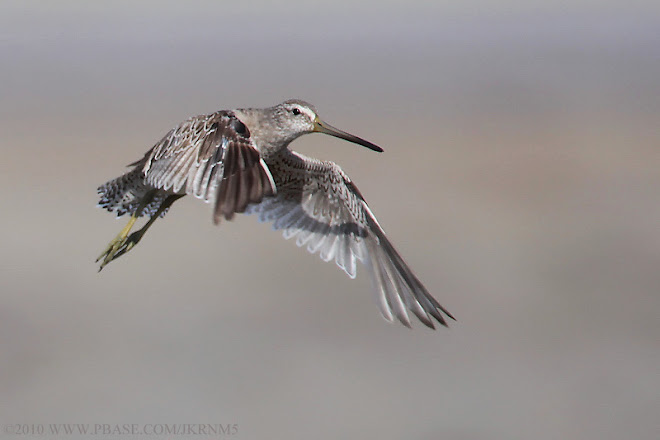
The Short-billed Dowitcher above was photographed at Bunche Beach Preserve in July 2010.

It seems unfathomable to me the potential adverse impact to this venue from the BP disaster.

With the west channel much shallower than that to the east, it attracts much more fishermen.

The White Ibis above was photographed at Bunche Beach Preserve in July 2010.

Today was no exception as there were a lot of patrons to the preserve that were throwing cast nets for bait certainly with plans to fish elsewhere as they didn't have poles with them.

Their activity caused most of the birds I was observing to exit the area on a few occasions as the men made their way back and forth along the channel.

The fisherman above was photographed at Bunche Beach Preserve in July 2010.

As usual, when I plant myself down for viewing of the birds at Bunche Beach in the west channel, it was a little unnerving as small fish, crabs, and plant debris made contact with me in the water that is very murky.

I had the opportunity to experience a tide change and the resulting stillness of the water that seemingly lasts only seconds.

The Roseate Spoonbill above was photographed at Bunche Beach Preserve in July 2010.

An unusually cloudless sky to the west at the time of sunset had me completely focused on the birds in great light more so than the opportunity to capture the setting sun.

I walked much further west than expected after both Tom and another visitor to the preserve had told me of the black-crowned herons observed beyond where I was.

The Sanderling above was photographed at Bunche Beach Preserve in July 2010.

The view of the preserve and San Carlos Bay from a scenic point of view was stunning under such great weather conditions.

With the loss of my Aunt Nettie this past month, I've decided to name my long lens in remembrance of her.

The Semipalmated Plover above was photographed at Bunche Beach Preserve in July 2010.

Fellow Pbaser, Susan Rovera, made a comment at my Bunche Beach Preserve gallery recently expressing the thought, "You get the most from your (70-)300mm zoom."

Just before my latest trip to the preserve this past week, I made settings on the 5DM2 as recommended by Artie Morris for the 1DM3 as best was possible with what can be done with the former camera.

Tom Obrock above was photographed at Bunche Beach Preserve in July 2010.

The most radical change made was setting the "picture style" to Neutral.

Most recently I was using "landscape" thinking that it might provide some more sharpness and color in the wildlife images I take.

The Black-crowned Night-Heron above was photographed at Bunche Beach Preserve in July 2010.

I'll have to report later if I see a significant improvement in image quality.

One of the better results in changes the camera's settings apparently has improved the loss of quality while brightening dark shadows.

The Black-crowned Night-Heron juvenile above was photographed at Bunche Beach Preserve in July 2010.

Closer to the wildlife is definitely better if you can manage it with great care.

Friday, July 2, 2010

Cat And Mouse

Among a pair of efforts to observe wildlife this past week, an unplanned early morning trip to Harns Marsh Preserve was made.

The Snail Kite above was photographed at Harns Marsh Preserve in June 2010.

I was thus able to accomplish my hope of visiting this fine venue at least monthly for two consecutive months now.

I was amazed by the apparent complete absence of wildlife at the preserve after setting up my gear and deleting the images on the camera's memory card from my last venture.

The Snail Kite above was photographed at Harns Marsh Preserve in June 2010.

Doing that reminded me of an opinion I recently read where memory cards are so relatively inexpensive these days that images should remain on them for storage, but I don't think the cards are that inexpensive yet, especially if you're shooting RAW.

It was mere minutes after settling down that I observed a Snail Kite land on a perch across the water directly in front of me.

The Snail Kite above was photographed at Harns Marsh Preserve in June 2010.

A moment later an Osprey flew in from the south and drove the kite from its perch which remained unoccupied for the next hour until the Osprey landed on it after appearing again seemingly out of nowhere.

There is rarely visual evidence of snails in the water at the preserve which the kites pluck from the water's surface while countless numbers of shells should be seen all along the preserve's water's edge in a couple of months based on my observations last year.

The Snail Kite above was photographed at Harns Marsh Preserve in June 2010.

Since my visit to Harns Marsh Preserve last month, the grass along the shoreline had been cut and most of the litter was removed.

The clean-up effort was possibly done by a local Boy Scout troop as I had read was a preserve sponsor last year.

The Little Blue Heron above was photographed at Harns Marsh Preserve in June 2010.

Within a short while of arriving at the preserve, the bird activity was prolific.

There was significantly more Snail Kite activity than observed last month while disappointingly less Limpkin activity visually.

The Osprey above was photographed at Harns Marsh Preserve in June 2010.

The Snail Kite that had been driven from its perch reappeared over the tree line and upon having a view of the Osprey preening itself on it, the kite meekly flew back out of view.

All the regulars for this time of year and area were seen while I was extremely fortunate to observe the Wild Turkey for the first time.

The Glossy Ibis above was photographed at Harns Marsh Preserve in June 2010.

It took some effort, due to the turkeys walking through taller grass and the long distance, to ultimately count what I think were ten in the flock which makes for a very large family of offspring.

A laggard juvenile in the group was as far as 35 feet back from the adult in the lead at one point.

The White Morph Great Blue Heron above was photographed at Harns Marsh Preserve in June 2010.

It was extremely exciting for me to add the Wild Turkey to my "lifer" list and was especially a treat to see the large family of Wild Turkey I did.

Earlier in the week I made a trip to the Cape Coral Library to see how the Burrowing Owl pair were fairing I had last observed six weeks earlier.

The Wild Turkey above was photographed at Harns Marsh Preserve in June 2010.

While I've seen the owls and their offspring at burrows I had been observing south of the library earlier this spring, the owls at the burrow adjacent to the library this past week appeared unsuccessful in rearing young as none were observed.

Mating activity of the owls this week due to the absence of juveniles wasn't observed as expected.

The Snail Kite above was photographed at Harns Marsh Preserve in June 2010.

The absence of juveniles at this particular burrow is possibly due to weather conditions of an unusually cold winter and very prolific rainfall of late.

I was able to photograph the female carrying a sock to the burrow which is mating or nesting behavior.

The Burrowing Owl above was photographed at Cape Coral Library in June 2010.

It's my plan to send the shot to National Geographic in response to their story in the July issue of the magazine to make a correlation between the behaviors of the Burrowing Owl and their featured "Birds That Decorate," the Bowerbird.

In the magazine's article, 17 of the 20 known species of this bird genera are noted where the male will build a lair of sorts out of twigs and sticks to attract a mate.

The Burrowing Owl above was photographed at Cape Coral Library in June 2010.

At the front of the lair, the males will decorate the ground with natural and unnatural items they find including trash when available as they attempt to seduce a female to mate.

When successful, the female will lay eggs at another location.

The Burrowing Owl above was photographed at Cape Coral Library in June 2010.

The female Burrowing Owl observed "decorating" the entrance to its burrow lends a degree of protection from predators to its young as I have observed and read, but wonder if there is any additional intent in its behavior, perhaps bonding with its mate.

The male was observed bringing the female an insect, but I couldn't photograph the event as I was unprepared for the low light conditions.

The Burrowing Owl above was photographed at Cape Coral Library in June 2010.

The differences between the Burrowing Owl and Bowerbirds are significant, but it's interesting how similarly the two species behave, isn't it?

Friday, June 25, 2010

Bunche Beach Preserve Dedication

In the age of segregation in the United States, greatness and legacy was born.

Ranger Hitchcock with Lee County Parks and Recreation above was photographed at San Carlos Bay: Bunch Beach Preserve in June 2010.

In southwest Florida, in 1949, a half acre parcel of land was purchased on San Carlos Bay by those with foresight in Lee County which would in the following year be dedicated to Dr. Ralph Johnson Bunche and was called Bunche Beach.

At its dedication, an estimated 3000 people certainly reveled at one of the first "black" beaches during the historical age of segregation with Bunche Beach today part of and bearing Dr. Bunche's name at San Carlos Bay: Bunch Beach Preserve.

The gentlelady above was photographed at San Carlos Bay: Bunch Beach Preserve in June 2010.

During this earlier period, Dr. Bunch had traveled a path that led him to receive the 1950 Nobel Peace Prize for his United Nations negotiations between Israelis and Arab States in the creation of the Palestine accord.

Dr. Bunche also received the Medal of Freedom from President Kennedy in 1963.

The gentlelady above was photographed at San Carlos Bay: Bunch Beach Preserve in June 2010.

The history of Dr. Bunche is very interesting and I encourage you to research his life.

A remarkable facility constructed for the use of future Bunche Beach Preserve visitors was dedicated on 19 June 2010, while also honoring D.J. "Petro" Petruccelli who served as an executive of the Fort Myers Beach Chamber of Commerce for 22 years and was a 25 year member of the Lee County Parks and Recreation Services Advisory Committee.

Tom Obrock above was photographed at San Carlos Bay: Bunch Beach Preserve in June 2010.

If it weren't for fellow Florida wildlife enthusiast, Tom Obrock, who advised me of the dedication and ribbon cutting at the preserve, I would always regret missing it.

The building on the current 719-acre preserve site has greatly benefited from further land purchases and donations while utilizing solar power for its electrical needs and has composting restrooms with no running water available.

The gentleman above was photographed at San Carlos Bay: Bunch Beach Preserve in June 2010.

The name of the road to Bunche Beach is John Morris, but I thought I heard it referred to as Bunche Road during the ceremony.

This road now terminating at San Carlos Bay from the north was once the primary route across the bay with its wooden bridge destroyed by a hurricane in 1926.

Ranger Miller with Lee County Parks and Recreation above was photographed at San Carlos Bay: Bunch Beach Preserve in June 2010.

The officials re-dedicating the preserve and its new facilities were all passionate in their words and well received by the crowd at hand.

While additional parking spaces were created in the 2010 renovation of the preserve, many were lost seemingly as a compromise.

Senior Supervisor, Cindy Carter, with Lee County Parks and Recreation above was photographed at San Carlos Bay: Bunch Beach Preserve in June 2010.

Significant parking closer to the beach has been eliminated.

Bunche Beach Preserve is one of my favorite venues to visit at any time, but particularly at low tide when one can walk over a large expanse of the bay to observe the often prolific bird activity there.

The gentleman above was photographed at San Carlos Bay: Bunch Beach Preserve in June 2010.

At the time of the ceremony, I was fortunate to observe an Osprey with prey while a few other bird species also passed overhead.

Bunche Beach Preserve has a proclivity to attract the endangered Piping Plover which currently receives federal protection.

Lee County Florida District 4 Commissioner, Tammy Hall, above was photographed at San Carlos Bay: Bunch Beach Preserve in June 2010.

My first observation of the Piping Plover was in the infancy of my interest in birding while at Bunche Beach Preserve.

My interest was of course heightened when I observed this bird species with evidence of numerous captures of it due to the bands on its legs.

The blessing above was photographed at San Carlos Bay: Bunch Beach Preserve in June 2010.

My research of banding has led me to believe that there can be great importance in the pursuit of birding.

While the Piping Plover is rarely seen, wading birds, and shore birds such as Wilson's Plover and Black Skimmer are much more frequently observed at Bunche Beach Preserve and are equally welcome and seen nearly year round.

Lee County Florida District 3 Commissioner, Ray Judah, above was photographed at San Carlos Bay: Bunch Beach Preserve in June 2010.

Least Terns were again observed near the west channel of Bunche Beach Preserve this past week and were actively feeding.

I'm now in my second year of observation of the Least Tern at Bunche Beach Preserve and am wondering where these particular birds are nesting and feeding their young.

The gentlelady above was photographed at San Carlos Bay: Bunch Beach Preserve in June 2010.

Many of my very favored wildlife photographs have been taken at Bunche Beach Preserve and include an image of the Little Blue Heron that I was humbled by having published in the 2010 Jan/Feb issue of Audubon magazine as an editors' choice in the inaugural photo issue of the periodical.

Another photograph taken at this must see venue involves interesting feeding behavior of the Yellow-crowned Night-Heron.

The gentlelady above was photographed at San Carlos Bay: Bunch Beach Preserve in June 2010.

This particular image which I have chosen to use on my contact card was culled from hundreds of thousands of images taken at wildlife venues around Florida.

Google maps has a current snapshot of the site available which was interestingly captured at an apparently very high tide.

The gentlelady above was photographed at San Carlos Bay: Bunch Beach Preserve in June 2010.

Additional writing of my experiences and observations at Bunche Beach Preserve can be seen by clicking here.

A representation of what might be seen through photography at Bunche Beach Preserve can be seen by clicking here.

Roger Clark with Lee County Parks and Recreation offering a tour of the preserve's grounds above was photographed at San Carlos Bay: Bunch Beach Preserve in June 2010.

Visit this astounding venue ideally around sunrise or sunset at low tide when you can.

Be prepared to walk in the water in the bay, while swimming is now an available option at the recreation facility which also offers two kayak launches, two fishing piers, and 310 feet of boardwalk for wildlife viewing.

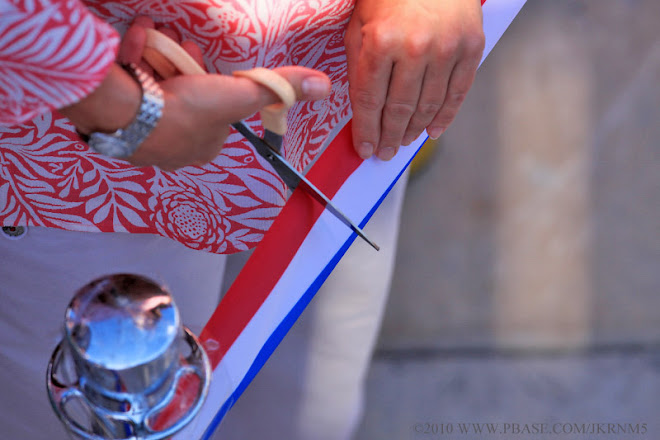
The ribbon cutting above was photographed at San Carlos Bay: Bunch Beach Preserve in June 2010.

There was a tremendous amount of activity and hard work by many in the hours preceding the dedication.

Bunche Beach Preserve is open from dawn to dusk year round.

Friday, June 18, 2010

Florida Rainy Season

Just in time, the rainy season in southwest Florida brings relief from hot temperatures in the late afternoon.

The wildlife photographer above was photographed at Little Estero Lagoon in June 2010.

This past week only allowed one trip to see some wildlife action going on in the area which was again chosen as Estero Lagoon at Fort Myers Beach.

The sky on that day appeared favorable for what I thought would be a great evening of wildlife observation and photography, but the storm that developed from the southeast was formidable and cut short the trip to the beach.

The Reddish Egret above was photographed at Little Estero Lagoon in June 2010.

At that time, I met the Virginian who told me of wildlife that walks up to him at home.

My new friend, Kevinn Fung, has recently advised me of an area of wildlife observation opportunity that I will hopefully be able to report about next week.

The Wilson's Plover above was photographed at Little Estero Lagoon in June 2010.

One of the species he noted observed recently has never been seen before in my travels and will be an exciting find even among the bugs he warns about.

In the sometimes uncomfortable environmental conditions of a Florida summer, it's my hope to get together with my recent acquaintances, as well as enthusiasts Bob Duckwall, Alena King, and the local birding master I've yet to meet, Tom Obrock, for some better observation of the next generation of wildlife in the area.

The wildlife observers above were photographed at Little Estero Lagoon in June 2010.

Stay tuned.

Friday, June 11, 2010

Little Estero Lagoon North And South

Wildlife activity at Little Estero Lagoon was so interesting to me last week that I was compelled to return.

The Tricolored Heron above was photographed at Little Estero Lagoon in June 2010.

These treks have been relatively unusual for me as I haven't made a diligent effort before now to see what might be happening at the critical wildlife area in the summer months.

Although I again observed the Least Tern in flight almost immediately having a very limited view of the beach, I chose to stay in the north lagoon itself adjacent to the Holiday Inn earlier in the week.

The wildlife photographer above was photographed at Little Estero Lagoon in June 2010.

My observations were therefore limited as to what might be happening at the shore line.

After my sighting of the terns in flight on the horizon, I had the opportunity to observe for a few moments the Tricolored Heron which can be counted on as a regular at the lagoon.

The Black Skimmer above was photographed at Little Estero Lagoon in June 2010.

I then focused my attention on a solitary Black Skimmer that made a few passes through the north lagoon.

It was a thrill to see the skimmer as I don't recall seeing it at this venue before while it was somewhat disappointing not to see it capture any fish which relentlessly pecked at me.

The Black Skimmer above was photographed at Little Estero Lagoon in June 2010.

The skimmer has otherwise been observed during virtually every visit I've made to Bunche Beach Preserve at any time of year, typically to the west from the parking area.

At the lagoon, a Willet flew in to stretch its wings as a Great Blue Heron walked by.

The Black Skimmer above was photographed at Little Estero Lagoon in June 2010.

I didn't see the white morph Great Blue Heron as I had a few days earlier although I wasn't in the exact same area it might have been again.

A pair of wading birds observed and often seen together when the Roseate Spoonbill is present included it and the Snowy Egret.

The Willet above was photographed at Little Estero Lagoon in June 2010.

My observations have me believe that the Snowy Egret is attracted to the foraging activity of the spoonbill which makes the egret's hunting for prey more successful.

A Reddish Egret shortly thereafter made its entrance to the lagoon and offered a great show in its feeding behavior through its magnificent dance.

The Great Blue Heron above was photographed at Little Estero Lagoon in June 2010.

Regrettably the light had waned to the point where my final shots were taken at 1/10th of a second which did not lend very well to an appealing image of it in action.

I need to remember to bring the flash under all circumstances which would certainly be useful in improving my photography.

The Roseate Spoonbill above was photographed at Little Estero Lagoon in June 2010.

My second visit to Little Estero Lagoon this week had me favor a walk south from the Holiday Inn between the finger lagoon and Gulf of Mexico leading me nearly to Big Carlos Pass which separates Little Estero Island and Lovers Key State Park.

It was on this route that I spent much time observing while continuing my effort through photography to capture the feeding behavior of the Least Tern.

The Least Tern above was photographed at Little Estero Lagoon in June 2010.

The birds flew from their nesting area at me in waves of a half dozen or fewer and often flew out of sight to the north into the blinding sun on the horizon unless they captured a fish in front of me and immediately headed back to their mates and young.

A successful catch for the Least Tern after its hover and dive behavior I would place at one in three for an individual bird observed.

The Least Tern above was photographed at Little Estero Lagoon in June 2010.

Fisherman casting their bait along the beach were apparently only having luck with catfish at the time.

There were of course White Ibis with a pair of juveniles observed feeding in the surf.

The Least Tern above was photographed at Little Estero Lagoon in June 2010.

There was an exciting overflight of a Great Blue Heron which glided gracefully to the north.

At the Least Tern nesting area, the birds somewhat ignored me as the sun was about to set.

The Great Blue Heron above was photographed at Little Estero Lagoon in June 2010.

It was my hope to photograph the Least Tern juveniles in the last remaining sunlight of the day.

A couple of the juveniles observed took flight which indicates they are a few weeks old or more and upwards of eight weeks from inception.

The Least Tern juvenile above was photographed at Little Estero Lagoon in June 2010.

As I was looking through the viewfinder of the camera studying a juvenile, the Straightness of terns (as a group of terns is known), had a completely different atmosphere about it as the Least Tern's vocal calls changed dramatically.

I looked up to see dozens of the birds in flight over the nesting area while several were in close pursuit of a Black-crowned Night-Heron that was making a flyover from the south.

The Least Tern juvenile above was photographed at Little Estero Lagoon in June 2010.

The predatory heron left my view until I began the long walk back to the car.

A mere hundred yards up the beach, I observed that the Black-crowned Night-Heron had landed near a Great Blue Heron in the south lagoon as both species of heron were harassed by a persistent Least Tern.

The Black-crowned Night-Heron with Least Tern above was photographed at Little Estero Lagoon in June 2010.

Though neither heron took flight, they did significantly flinch at each close dive bombing by the tern.

A little further on my walk I observed a trio of Roseate Spoonbill in the very last remaining light of the day.

The Black-crowned Night-Heron above was photographed at Little Estero Lagoon in June 2010.

Well published writer and photographer Ken Platt, in The Island Sand Paper (online subscription recommended), advised me this week that some wildlife observers apparently got too close to the spoonbills at the north lagoon while photographing them as he had not observed the birds for several days.

The more secluded area of the lagoon further to the south offers some bird species more than others a level of tranquility.

The Least Tern juvenile above was photographed at Little Estero Lagoon in June 2010.

A very favorable low tide of -0.4 was observed at Little Estero Lagoon on 10 June 2010.

The Yellow-crowned Night-Heron has been elusive during my recent visits to Little Estero Lagoon last observed here in cooler weather.

The sunset above was photographed at Little Estero Lagoon in June 2010.

Future returns to this very appealing wildlife venue are assured.