On 12 June 2016, wildlife blogger France Paulsen observed a Fork-tailed Flycatcher at Sanibel Gardens Preserve just north of the Ding Darling National Wildlife Refuge Bailey Tract on Sanibel Island.
The Anhinga above (image 1) was photographed at Sanibel Gardens Preserve in June 2016.
Fork-tailed Flycatcher is a rare Code 3 vagrant in the ABA area. The species' breeding range is in Central and South America. The Fork-tailed Flycatcher at Sanibel Gardens Preserve proved to be a one day wonder which is generally the case for sightings of this species in the United States.
The Mottled Duck above (image 2) was photographed at Sanibel Gardens Preserve in June 2016.
The Northern Cardinal above (image 3) was photographed at Sanibel Gardens Preserve in June 2016.
The Pileated Woodpecker above (image 4) was photographed at Sanibel Gardens Preserve in June 2016.
The Pileated Woodpecker above (image 5) was photographed at Sanibel Gardens Preserve in June 2016.
The Pileated Woodpecker above (image 6) was photographed at Sanibel Gardens Preserve in June 2016.
The Pileated Woodpecker above (image 7) was photographed at Sanibel Gardens Preserve in June 2016.
The Great Egret above (image 8) was photographed at Sanibel Gardens Preserve in June 2016.
The juvenile Fish Crow above (image 9) was photographed at Sanibel Gardens Preserve in June 2016.
The Fish Crow with juvenile above (image 10) was photographed at Sanibel Gardens Preserve in June 2016.
The Fish Crow with juvenile above (image 11) was photographed at Sanibel Gardens Preserve in June 2016.
The White Ibis above (image 12) was photographed at Sanibel Gardens Preserve in June 2016.
The juvenile Little Blue Heron with Snowy Egret above (image 13) was photographed at Sanibel Gardens Preserve in June 2016.
While it has been my intention to explore the 265 acre Sanibel Gardens Preserve extensively, my first visit on 13 June was primarily with hopes of finding the flycatcher. I made my observations primarily at the cell phone tower where France had reported the vagrant the previous day. I stayed until thunder could be heard.
The Tricolored Heron above (image 14) was photographed at Sanibel Gardens Preserve in June 2016.
The Magnificent Frigatebird above (image 15) was photographed at Sanibel Gardens Preserve in June 2016.
Please be sure to be reminded about this weekly Southwest Florida Wildlife Blog with the email gadget located at the top of the page.
The Swallow-tailed Kite above (image 16) was photographed at Sanibel Gardens Preserve in June 2016.
Friday, June 17, 2016
Friday, June 10, 2016
Florida June Flashbacks: 2011- 2015
With plenty of indoor time available due to Tropical Storm Colin and a persistent stormy weather pattern this past week in Southwest Florida, I made flashbacks of June visits to five different wildlife venues going back to 2011.
The Ruddy Turnstone above (image 1) was photographed at Little Estero Lagoon in June 2015.
Two species have been selected from each venue offering newly presented images. It should be readily expected to see all the species in this post at their respective venue in June with the exception of the Horned Lark at Fort De Soto Park and Black-necked Stilt at Harns Marsh Preserve. Additional information about all the venues except Harns Marsh Preserve (no restroom facilities) can be found at the Great Florida Birding and Wildlife Trail website. Otherwise, please search for abundant information in this blog.
The Least Tern with chick above (image 2) was photographed at Little Estero Lagoon in June 2015.
The Brown Noddy above (image 3) was photographed at Dry Tortugas National Park in June 2014.
The Magnificent Frigatebird above (image 4) was photographed at Dry Tortugas National Park in June 2014.
The juvenile White Ibis above (image 5) was photographed at Bunche Beach Preserve in June 2013.
The Roseate Spoonbill above (image 6) was photographed at Bunche Beach Preserve in June 2013.
The Horned Lark above (image 7) was photographed at Fort De Soto Park in June 2012.
The Reddish Egret above (image 8) was photographed at Fort De Soto Park in June 2012.
If you have the time while seeking Florida wildlife in June, I strongly encourage newfound experiences be created at all of these noted venues. Traveling from Fort Myers, a visit to Fort De Soto Park should have at least a half day dedicated to it (be sure to stop at Celery Fields on the way back), while Dry Tortugas National Park should require a minimum of two days travel for the day trip to Fort Jefferson via the Yankee Freedom. Bunche Beach Preserve, my favorite wildlife venue, is best visited at a low tide. A dawn arrival at Harns Marsh Preserve is recommended.
The Black-necked Stilt above (image 9) was photographed at Harns Marsh Preserve in June 2011.
Please be sure to be reminded about this weekly Southwest Florida Wildlife Blog with the email gadget located at the top of the page.
The Limpkin above (image 10) was photographed at Harns Marsh Preserve in June 2011.
The Ruddy Turnstone above (image 1) was photographed at Little Estero Lagoon in June 2015.
Two species have been selected from each venue offering newly presented images. It should be readily expected to see all the species in this post at their respective venue in June with the exception of the Horned Lark at Fort De Soto Park and Black-necked Stilt at Harns Marsh Preserve. Additional information about all the venues except Harns Marsh Preserve (no restroom facilities) can be found at the Great Florida Birding and Wildlife Trail website. Otherwise, please search for abundant information in this blog.
The Least Tern with chick above (image 2) was photographed at Little Estero Lagoon in June 2015.
The Brown Noddy above (image 3) was photographed at Dry Tortugas National Park in June 2014.
The Magnificent Frigatebird above (image 4) was photographed at Dry Tortugas National Park in June 2014.
The juvenile White Ibis above (image 5) was photographed at Bunche Beach Preserve in June 2013.
The Roseate Spoonbill above (image 6) was photographed at Bunche Beach Preserve in June 2013.
The Horned Lark above (image 7) was photographed at Fort De Soto Park in June 2012.
The Reddish Egret above (image 8) was photographed at Fort De Soto Park in June 2012.
If you have the time while seeking Florida wildlife in June, I strongly encourage newfound experiences be created at all of these noted venues. Traveling from Fort Myers, a visit to Fort De Soto Park should have at least a half day dedicated to it (be sure to stop at Celery Fields on the way back), while Dry Tortugas National Park should require a minimum of two days travel for the day trip to Fort Jefferson via the Yankee Freedom. Bunche Beach Preserve, my favorite wildlife venue, is best visited at a low tide. A dawn arrival at Harns Marsh Preserve is recommended.
The Black-necked Stilt above (image 9) was photographed at Harns Marsh Preserve in June 2011.
Please be sure to be reminded about this weekly Southwest Florida Wildlife Blog with the email gadget located at the top of the page.
The Limpkin above (image 10) was photographed at Harns Marsh Preserve in June 2011.
Friday, June 3, 2016
Wildlife At Miami's Matheson Hammock Park
At the suggestion of Tom Obrock we made a late May trip to Florida's east coast with the possibility of observing Bahama Mockingbird, a rare bird species in Florida, that had been reported in Fort Lauderdale at eBird.
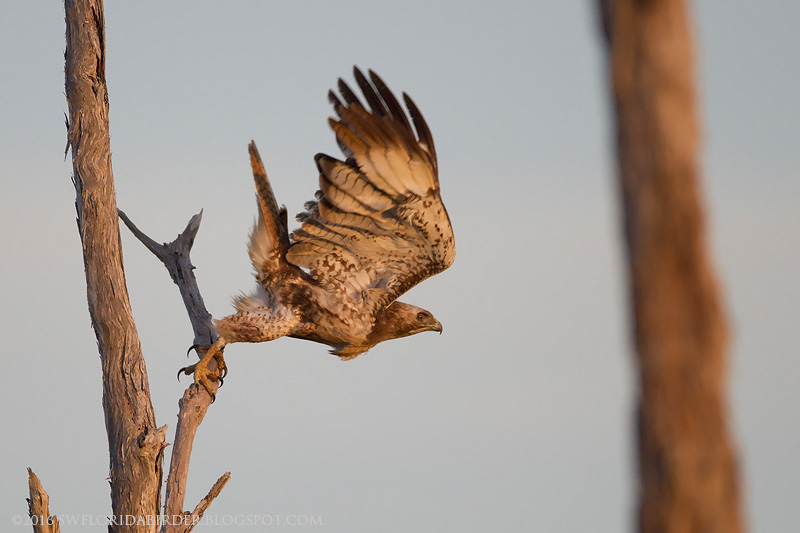
The immature Red-tailed Hawk above (image 1) was photographed near Homestead in May 2016.
Before leaving the limits of Fort Myers we decided instead to head toward Miami as the mockingbird had not been reported in a couple of days. The Baptist Hospital of Miami was our first stop after observing a Red-tailed Hawk being harassed by a Red-winged Blackbird north of Homestead. There was no luck in finding Egyptian Geese that should be expected. Tom and I then devoted much time in a search of Red-whiskered Bulbul in the area of the hospital which was elusive as well.
The immature Red-tailed Hawk above (image 2) was photographed near Homestead in May 2016.
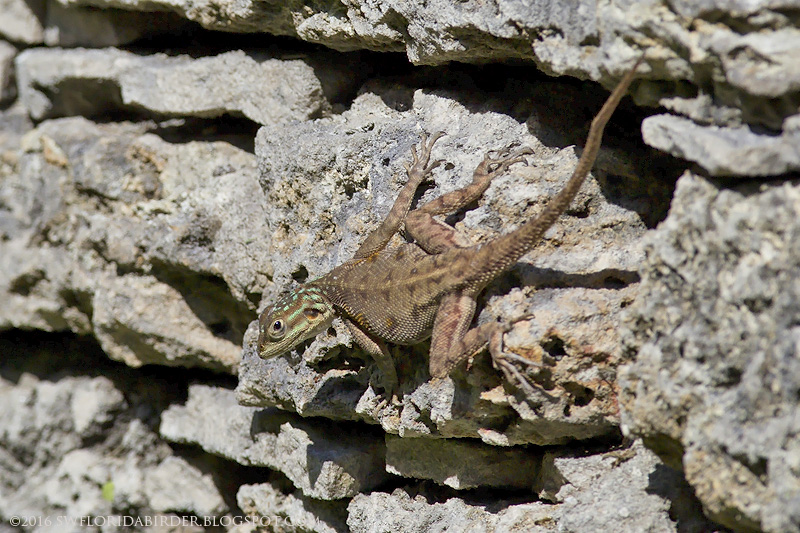
The Red-headed Rock Agama above (image 3) was photographed at Matheson Hammock Park in May 2016.
The Eastern Puerto Rican Crested Anole above (image 4) was photographed at Matheson Hammock Park in May 2016.
Matheson Hammock, our next stop, offered a lifebird for both Tom and I as a handful of Orange-winged Parrot made a direct flyover from the north in the area north of Camp Mahachee at the far west fringe of the park. I regrettably had to forfeit the photography of the birds to put Tom on them. Many invasive lizards were seen at this park as well which turned out to be a highlight of the trip.
The Red-headed Rock Agama above (image 5) was photographed at Matheson Hammock Park in May 2016.
The Zebra Longwing Butterfly above (image 6) was photographed at Matheson Hammock Park in May 2016.
The Red-headed Rock Agama above (image 7) was photographed at Matheson Hammock Park in May 2016.
After leaving Matheson Hammock Park we devoted much time in search of parakeets in the neighborhoods north and northeast of Miami International Airport. We remained unsuccessful in our search with David A. Sibley noting that no native parrot species remain in North America though 65 imported species have been recorded in Florida at the October 2000 publication of his Guide to Birds. He noted that many feral populations may exist. Sibley's 2nd Edition would certainly be the preferred version to consider at the time of this writing.
The Red-headed Rock Agama above (image 8) was photographed at Matheson Hammock Park in May 2016.
The Red-bellied Woodpecker above (image 9) was photographed at Matheson Hammock Park in May 2016.
The Green Iquana above (image 10) was photographed at Matheson Hammock Park in May 2016.
Without the help of the Tropical Audubon Society it is hoped that at least one more journey to the Miami area can be made in search of exotics to add a few more unseen species of parakeet to the list.
The Red-headed Rock Agama above (image 11) was photographed at Matheson Hammock Park in May 2016.
The Red-headed Rock Agama above (image 12) was photographed at Matheson Hammock Park in May 2016.
Please be sure to be reminded about this weekly Southwest Florida Wildlife Blog with the email gadget located at the top of the page.
The Red-headed Rock Agama above (image 13) was photographed at Matheson Hammock Park in May 2016.
The immature Red-tailed Hawk above (image 1) was photographed near Homestead in May 2016.
Before leaving the limits of Fort Myers we decided instead to head toward Miami as the mockingbird had not been reported in a couple of days. The Baptist Hospital of Miami was our first stop after observing a Red-tailed Hawk being harassed by a Red-winged Blackbird north of Homestead. There was no luck in finding Egyptian Geese that should be expected. Tom and I then devoted much time in a search of Red-whiskered Bulbul in the area of the hospital which was elusive as well.
The immature Red-tailed Hawk above (image 2) was photographed near Homestead in May 2016.
The Red-headed Rock Agama above (image 3) was photographed at Matheson Hammock Park in May 2016.
The Eastern Puerto Rican Crested Anole above (image 4) was photographed at Matheson Hammock Park in May 2016.
Matheson Hammock, our next stop, offered a lifebird for both Tom and I as a handful of Orange-winged Parrot made a direct flyover from the north in the area north of Camp Mahachee at the far west fringe of the park. I regrettably had to forfeit the photography of the birds to put Tom on them. Many invasive lizards were seen at this park as well which turned out to be a highlight of the trip.
The Red-headed Rock Agama above (image 5) was photographed at Matheson Hammock Park in May 2016.
The Zebra Longwing Butterfly above (image 6) was photographed at Matheson Hammock Park in May 2016.
The Red-headed Rock Agama above (image 7) was photographed at Matheson Hammock Park in May 2016.
After leaving Matheson Hammock Park we devoted much time in search of parakeets in the neighborhoods north and northeast of Miami International Airport. We remained unsuccessful in our search with David A. Sibley noting that no native parrot species remain in North America though 65 imported species have been recorded in Florida at the October 2000 publication of his Guide to Birds. He noted that many feral populations may exist. Sibley's 2nd Edition would certainly be the preferred version to consider at the time of this writing.
The Red-headed Rock Agama above (image 8) was photographed at Matheson Hammock Park in May 2016.
The Red-bellied Woodpecker above (image 9) was photographed at Matheson Hammock Park in May 2016.
The Green Iquana above (image 10) was photographed at Matheson Hammock Park in May 2016.
Without the help of the Tropical Audubon Society it is hoped that at least one more journey to the Miami area can be made in search of exotics to add a few more unseen species of parakeet to the list.
The Red-headed Rock Agama above (image 11) was photographed at Matheson Hammock Park in May 2016.
The Red-headed Rock Agama above (image 12) was photographed at Matheson Hammock Park in May 2016.
Please be sure to be reminded about this weekly Southwest Florida Wildlife Blog with the email gadget located at the top of the page.
The Red-headed Rock Agama above (image 13) was photographed at Matheson Hammock Park in May 2016.
Friday, May 27, 2016
Little Estero Lagoon Spring Nesting: Part II
For good reason Little Estero Lagoon comes in a close second as a favorite Southwest Florida wildlife venue behind Bunche Beach Preserve.
The Black Scoter above (image 1) was photographed at Little Estero Lagoon in May 2016.
The birds were very accommodating as I continued my walk south toward Carlos Pointe and back. The Black Scoter was an especially nice find with their behavior "ridiculously tame" as world wildlife photographer Artie Morris would say.
The Black Scoter above (image 2) was photographed at Little Estero Lagoon in May 2016.
The Black Scoter above (image 3) was photographed at Little Estero Lagoon in May 2016.
As was normal the wildlife came to me. A particularly interesting observation was an Osprey that dropped from the sky to the pool at Carlos Point. I thought the bird would take a bath, but it appeared more concerned with another Osprey overhead and took flight inexplicably.
The Least Tern above (image 4) was photographed at Little Estero Lagoon in May 2016.
The Magnificent Frigatebird above (image 5) was photographed at Little Estero Lagoon in May 2016.
The Ruddy Turnstone above (image 6) was photographed at Little Estero Lagoon in May 2016.
The Least Tern above (image 7) was photographed at Little Estero Lagoon in May 2016.
The Least Tern above (image 8) was photographed at Little Estero Lagoon in May 2016.
The Least Tern above (image 9) was photographed at Little Estero Lagoon in May 2016.
The Ruddy Turnstone with Willet above (image 10) was photographed at Little Estero Lagoon in May 2016.
The Ruddy Turnstone above (image 11) was photographed at Little Estero Lagoon in May 2016.
The Ruddy Turnstone above (image 12) was photographed at Little Estero Lagoon in May 2016.
The Brown Pelican above (image 13) was photographed at Little Estero Lagoon in May 2016.
The Osprey above (image 14) was photographed at Little Estero Lagoon in May 2016.
The Osprey above (image 15) was photographed at Little Estero Lagoon in May 2016.
The Osprey above (image 16) was photographed at Little Estero Lagoon in May 2016.
The Osprey above (image 17) was photographed at Little Estero Lagoon in May 2016.
The Osprey above (image 18) was photographed at Little Estero Lagoon in May 2016.
The Osprey above (image 19) was photographed at Little Estero Lagoon in May 2016.
The Black-bellied Plover above (image 20) was photographed at Little Estero Lagoon in May 2016.
The Marbled Godwit above (image 21) was photographed at Little Estero Lagoon in May 2016.
The Marbled Godwit above (image 22) was photographed at Little Estero Lagoon in May 2016.
The Marbled Godwit above (image 23) was photographed at Little Estero Lagoon in May 2016.
The Marbled Godwit above (image 24) was photographed at Little Estero Lagoon in May 2016.
The Least Tern above (image 25) was photographed at Little Estero Lagoon in May 2016.
The Western Sandpiper above (image 26) was photographed at Little Estero Lagoon in May 2016.
The Least Sandpiper above (image 27) was photographed at Little Estero Lagoon in May 2016.
The Black Skimmer above (image 28) was photographed at Little Estero Lagoon in May 2016.
The Laughing Gull above (image 29) was photographed at Little Estero Lagoon in May 2016.
The Royal Tern above (image 30) was photographed at Little Estero Lagoon in May 2016.
The Black Scoter above (image 31) was photographed at Little Estero Lagoon in May 2016.
The Great Egret above (image 32) was photographed at Little Estero Lagoon in May 2016.
The Reddish Egret above (image 33) was photographed at Little Estero Lagoon in May 2016.
The Reddish Egret above (image 34) was photographed at Little Estero Lagoon in May 2016.
The Reddish Egret with prey above (image 35) was photographed at Little Estero Lagoon in May 2016.
The Reddish Egret with prey above (image 36) was photographed at Little Estero Lagoon in May 2016.
The Marl Pennant Dragonfly above (image 37) was photographed at Little Estero Lagoon in May 2016.
The White Ibis above (image 38) was photographed at Little Estero Lagoon in May 2016.
The scene above (image 39) was photographed at Little Estero Lagoon in May 2016.
The American Oystercatcher above (image 40) was photographed at Little Estero Lagoon in May 2016.
The American Oystercatcher above (image 41) was photographed at Little Estero Lagoon in May 2016.
The American Oystercatcher above (image 42) was photographed at Little Estero Lagoon in May 2016.
The American Oystercatcher with Willet above (image 43) was photographed at Little Estero Lagoon in May 2016.
Expected nesting bird species were present and in various stages of behavior. When observing the American Oystercatcher I was particularly intrigued by the protection of the nest. All species of bird loafing near it were flushed with the exception of Wilson's Plover.
The Anhinga above (image 44) was photographed at Little Estero Lagoon in May 2016.
The Double-crested Cormorant above (image 45) was photographed at Little Estero Lagoon in May 2016.
Please be sure to be reminded about this weekly Southwest Florida Wildlife Blog with the email gadget located at the top of the page.
The European Starling with prey above (image 46) was photographed at Little Estero Lagoon in May 2016.
Please also see Little Estero Lagoon Spring Nesting: Part I
The Black Scoter above (image 1) was photographed at Little Estero Lagoon in May 2016.
The birds were very accommodating as I continued my walk south toward Carlos Pointe and back. The Black Scoter was an especially nice find with their behavior "ridiculously tame" as world wildlife photographer Artie Morris would say.
The Black Scoter above (image 2) was photographed at Little Estero Lagoon in May 2016.
The Black Scoter above (image 3) was photographed at Little Estero Lagoon in May 2016.
As was normal the wildlife came to me. A particularly interesting observation was an Osprey that dropped from the sky to the pool at Carlos Point. I thought the bird would take a bath, but it appeared more concerned with another Osprey overhead and took flight inexplicably.
The Least Tern above (image 4) was photographed at Little Estero Lagoon in May 2016.
The Magnificent Frigatebird above (image 5) was photographed at Little Estero Lagoon in May 2016.
The Ruddy Turnstone above (image 6) was photographed at Little Estero Lagoon in May 2016.
The Least Tern above (image 7) was photographed at Little Estero Lagoon in May 2016.
The Least Tern above (image 8) was photographed at Little Estero Lagoon in May 2016.
The Least Tern above (image 9) was photographed at Little Estero Lagoon in May 2016.
The Ruddy Turnstone with Willet above (image 10) was photographed at Little Estero Lagoon in May 2016.
The Ruddy Turnstone above (image 11) was photographed at Little Estero Lagoon in May 2016.
The Ruddy Turnstone above (image 12) was photographed at Little Estero Lagoon in May 2016.
The Brown Pelican above (image 13) was photographed at Little Estero Lagoon in May 2016.
The Osprey above (image 14) was photographed at Little Estero Lagoon in May 2016.
The Osprey above (image 15) was photographed at Little Estero Lagoon in May 2016.
The Osprey above (image 16) was photographed at Little Estero Lagoon in May 2016.
The Osprey above (image 17) was photographed at Little Estero Lagoon in May 2016.
The Osprey above (image 18) was photographed at Little Estero Lagoon in May 2016.
The Osprey above (image 19) was photographed at Little Estero Lagoon in May 2016.
The Black-bellied Plover above (image 20) was photographed at Little Estero Lagoon in May 2016.
The Marbled Godwit above (image 21) was photographed at Little Estero Lagoon in May 2016.
The Marbled Godwit above (image 22) was photographed at Little Estero Lagoon in May 2016.
The Marbled Godwit above (image 23) was photographed at Little Estero Lagoon in May 2016.
The Marbled Godwit above (image 24) was photographed at Little Estero Lagoon in May 2016.
The Least Tern above (image 25) was photographed at Little Estero Lagoon in May 2016.
The Western Sandpiper above (image 26) was photographed at Little Estero Lagoon in May 2016.
The Least Sandpiper above (image 27) was photographed at Little Estero Lagoon in May 2016.
The Black Skimmer above (image 28) was photographed at Little Estero Lagoon in May 2016.
The Laughing Gull above (image 29) was photographed at Little Estero Lagoon in May 2016.
The Royal Tern above (image 30) was photographed at Little Estero Lagoon in May 2016.
The Black Scoter above (image 31) was photographed at Little Estero Lagoon in May 2016.
The Great Egret above (image 32) was photographed at Little Estero Lagoon in May 2016.
The Reddish Egret above (image 33) was photographed at Little Estero Lagoon in May 2016.
The Reddish Egret above (image 34) was photographed at Little Estero Lagoon in May 2016.
The Reddish Egret with prey above (image 35) was photographed at Little Estero Lagoon in May 2016.
The Reddish Egret with prey above (image 36) was photographed at Little Estero Lagoon in May 2016.
The Marl Pennant Dragonfly above (image 37) was photographed at Little Estero Lagoon in May 2016.
The White Ibis above (image 38) was photographed at Little Estero Lagoon in May 2016.
The scene above (image 39) was photographed at Little Estero Lagoon in May 2016.
The American Oystercatcher above (image 40) was photographed at Little Estero Lagoon in May 2016.
The American Oystercatcher above (image 41) was photographed at Little Estero Lagoon in May 2016.
The American Oystercatcher above (image 42) was photographed at Little Estero Lagoon in May 2016.
The American Oystercatcher with Willet above (image 43) was photographed at Little Estero Lagoon in May 2016.
Expected nesting bird species were present and in various stages of behavior. When observing the American Oystercatcher I was particularly intrigued by the protection of the nest. All species of bird loafing near it were flushed with the exception of Wilson's Plover.
The Anhinga above (image 44) was photographed at Little Estero Lagoon in May 2016.
The Double-crested Cormorant above (image 45) was photographed at Little Estero Lagoon in May 2016.
Please be sure to be reminded about this weekly Southwest Florida Wildlife Blog with the email gadget located at the top of the page.
The European Starling with prey above (image 46) was photographed at Little Estero Lagoon in May 2016.
Please also see Little Estero Lagoon Spring Nesting: Part I
Subscribe to:
Posts (Atom)